We ship to the United States, its territories and outlying islands. Returns are accepted within 30 days of receipt. Full warranty information can be found here.

Free Shipping on Orders $35+
✓ Plant with Confidence—Guaranteed Through 2027
Get it between -
We ship to the United States, its territories and outlying islands. Returns are accepted within 30 days of receipt. Full warranty information can be found here.
We guarantee our seed to be fresh, vigorous, untreated, and true to variety.
Each packet is guaranteed through the year printed on the packet, plus one full additional growing year.
If your seeds fail to germinate, arrive damaged, or do not grow true to type, please contact us and we will make it right through replacement seed, store credit, or refund when appropriate.
Full warranty policy here.
Open-pollinated varieties, perfect for seed saving.
Safe seeds, free of neonics and other treatments.
It's simple. If you have a problem, we make it right.
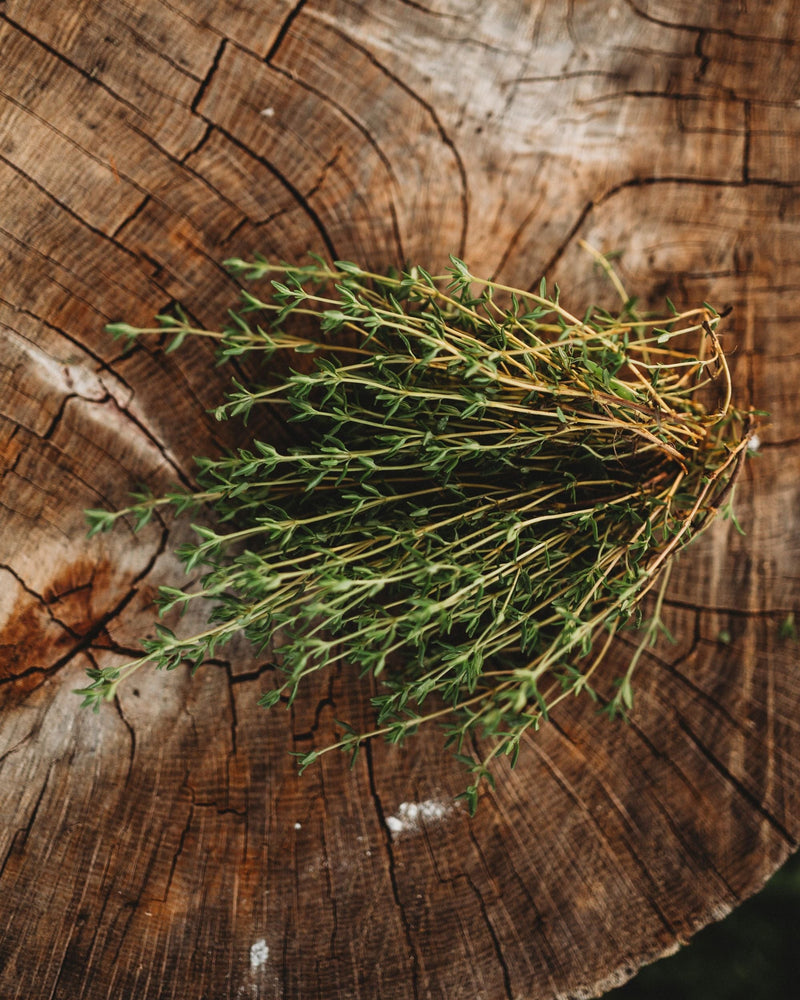
Thymus vulgaris
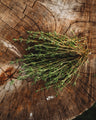
Thyme is a low-growing, woody perennial that forms tidy mounds of small, aromatic leaves. Reaching 8 to 12 inches in height, it’s a staple in the kitchen garden, valued for its savory flavor and versatility in seasoning meats, sauces, and dressings.
Beyond its culinary appeal, thyme has a long history of use in traditional herbal preparations and remains a favorite among herb gardeners for its fragrance and resilience. In summer, plants are dotted with delicate purple flowers that are highly attractive to bees and other pollinators.
Well-suited for borders, containers, and herb beds, thyme thrives in well-drained soil and full sun. Hardy in zones 5–8, it returns year after year with minima... More
Thymus vulgaris
Thyme is a low-growing, woody perennial that forms tidy mounds of small, aromatic leaves. Reaching 8 to 12 inches in height, it’s a staple in the kitchen garden, valued for its savory flavor and versatility in seasoning meats, sauces, and dressings.
Beyond its culinary appeal, thyme has a long history of use in traditional herbal preparations and remains a favorite among herb gardeners for its fragrance and resilience. In summer, plants are dotted with delicate purple flowers that are highly attractive to bees and other pollinators.
Well-suited for borders, containers, and herb beds, thyme thrives in well-drained soil and full sun. Hardy in zones 5–8, it returns year after year with minimal care. Each packet contains a minimum of 250 seeds.
Thymus vulgaris
Thyme is a low-growing, woody perennial that forms tidy mounds of small, aromatic leaves. Reaching 8 to 12 inches in height, it’s a staple in the kitchen garden, valued for its savory flavor and versatility in seasoning meats, sauces, and dressings.
Beyond its culinary appeal, thyme has a long history of use in traditional herbal preparations and remains a favorite among herb gardeners for its fragrance and resilience. In summer, plants are dotted wit... read more
Thymus vulgaris
Thyme is a low-growing, woody perennial that forms tidy mounds of small, aromatic leaves. Reaching 8 to 12 inches in height, it’s a staple in the kitchen garden, valued for its savory flavor and versatility in seasoning meats, sauces, and dressings.
Beyond its culinary appeal, thyme has a long history of use in traditional herbal preparations and remains a favorite among herb gardeners for its fragrance and resilience. In summer, plants are dotted with delicate purple flowers that are highly attractive to bees and other pollinators.
Well-suited for borders, containers, and herb beds, thyme thrives in well-drained soil and full sun. Hardy in zones 5–8, it returns year after year with minimal care. Each packet contains a minimum of 250 seeds.

We’re holding firm to the time-honored traditions and downhome ways that have brought up generations all across these fruited plains. In fact, the varieties offered here are the same ones we place on our own dinner table—and in this way of life, that says something.
Thyme prefers well-draining soil with a pH between 5.5 to 7.0. It can grow in a range of soils from sandy to loamy, but it doesn't do well in heavy, clay soils. Thyme requires full sun for optimal growth, so it's best to plant it in a location that receives at least 6-8 hours of direct sunlight per day. In areas with hot summers, some partial shade in the afternoon may be beneficial. Thyme is a drought-tolerant herb and doesn't require frequent watering, but it's important to water deeply when the soil dries out to ensure healthy growth.
Sow seeds indoors 8-10 weeks before last frost. Surface sow several seeds per pot and cover with a fine layer of soil. Keep moist until germination has occurred. Once seedlings have 3-4 true leaves, thin to one plant per 4" pot.
Transplant outdoors after danger of frost has passed, spacing plants 6-8" apart in rows 12-18" apart.
Insect Pests
Diseases & Other Problems
To harvest thyme, cut the stems about one-third of the way down from the top using sharp scissors or pruning shears. It's best to harvest thyme in the morning after the dew has dried but before the sun gets too hot. Thyme can be dried by hanging the stems upside down in a warm, dry place with good air circulation until the leaves are dry and brittle. Once the thyme is dry, remove the leaves from the stems and store them in an airtight container in a cool, dark place for up to six months. Alternatively, thyme can be frozen or stored in oil or vinegar for longer-term storage.
CONSIDERATIONS:
Thyme is a gynodioecious plant with some flowers bearing both male and female organs and others only female. It is predominantly pollinated by insects and therefore outcrossing is common. While not a concern for most gardeners, if you wish to preserve varietal purity of your cultivar and other varieties are present in your garden (or neighborhood) it is necessary to cage the plants and introduce pollinators to perform the pollination. Otherwise, plants may be left to pollinate freely.
HARVESTING SEED:
To harvest thyme seeds, wait for the plant to bloom and the seed heads to form. Cut the seed heads with clean scissors or pruning shears and place them in a paper bag or envelope to dry. Hang the bag or envelope in a warm, dry place with good air circulation for several days to a week. Once the seed heads are completely dry, gently shake or rub them to release the seeds and remove any debris or chaff. Place the thyme seeds in an airtight container labeled with the date and type of thyme and store in a cool, dry place until ready to use. Thyme seeds are very small and can be difficult to harvest and clean, so the yield may not be large.
SEED LONGETIVITY:
Thyme seeds can remain viable for up to three years if stored properly in a cool, dry place.
I received my Thyme, Winter seeds today I am excited to get some of them started in a seed tray and in the ground. I will update you when I get them planted in the ground.
Sign up to get the latest on sales, new releases, and more...