We ship to the United States, its territories and outlying islands. Returns are accepted within 30 days of receipt. Full warranty information can be found here.




✓ Plant with Confidence—Guaranteed Through 2027
 Get it between -
Open-pollinated varieties, perfect for seed saving.
Safe seeds, free of neonics and other treatments.
It's simple. If you have a problem, we make it right.

Sorghum bicolor
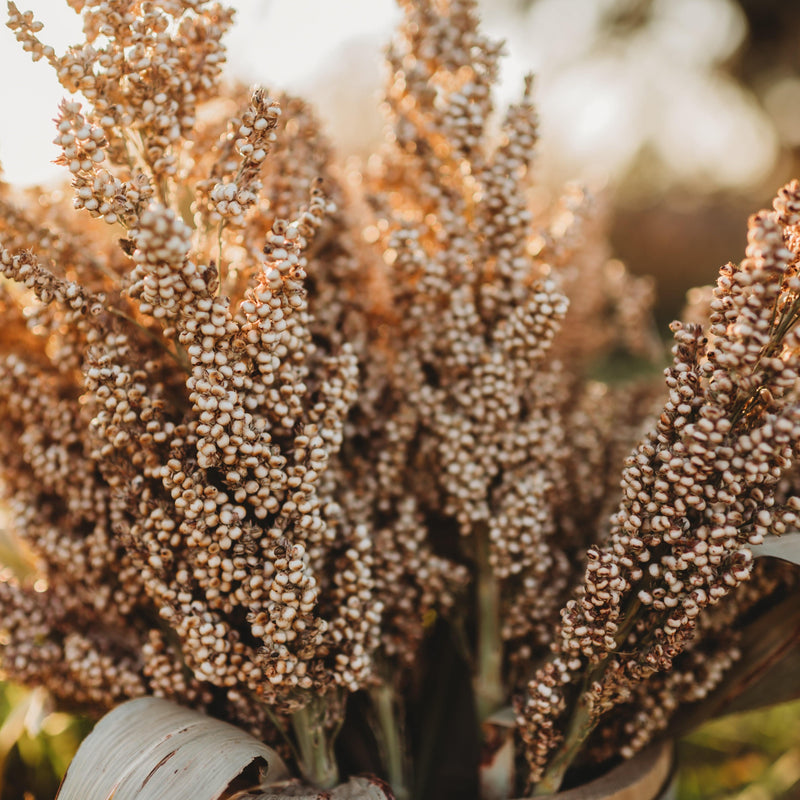
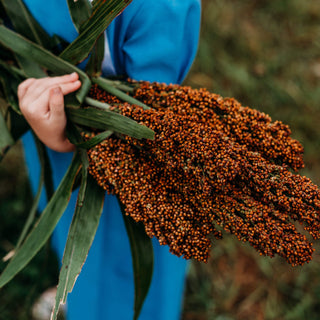
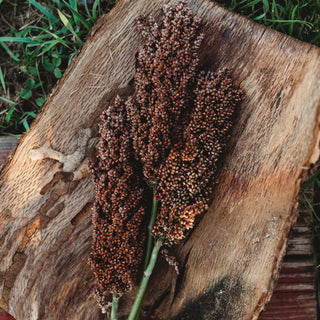
Red Seeded is a beautiful heirloom broomcorn variety that grows an impressive 10–11 feet tall, producing long, upright heads of golden-tan brush adorned with rich, mahogany seeds. The vigorous plants develop numerous productive tillers, each contributing to a generous harvest of attractive broomcorn heads measuring approximately 21-25 inches long. The striking contrast between the warm, straw-colored brush and deep reddish-brown seeds makes this variety especially beautiful for traditional broom making and dried arrangements.
Red Seeded has an unusual history preserved through Seed Savers Exchange. The variety was first listed in the 1983 Seed Savers Exchange Yearbook by an Oklahoma seed saver wh... More
Sorghum bicolor
Red Seeded is a beautiful heirloom broomcorn variety that grows an impressive 10–11 feet tall, producing long, upright heads of golden-tan brush adorned with rich, mahogany seeds. The vigorous plants develop numerous productive tillers, each contributing to a generous harvest of attractive broomcorn heads measuring approximately 21-25 inches long. The striking contrast between the warm, straw-colored brush and deep reddish-brown seeds makes this variety especially beautiful for traditional broom making and dried arrangements.
Red Seeded has an unusual history preserved through Seed Savers Exchange. The variety was first listed in the 1983 Seed Savers Exchange Yearbook by an Oklahoma seed saver who had obtained the original seed from a broom purchased at an Ohio craft fair. Through the efforts of generations of seed savers, this remarkable variety has survived as an Exchange heirloom. It is maintained in the Seed Savers Exchange collection as accession #119305.
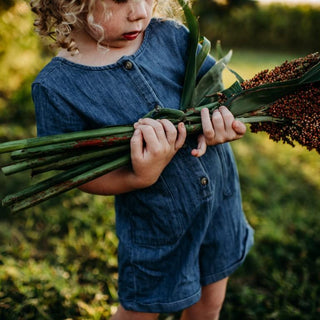
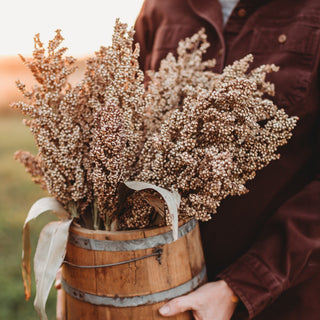
The long, sturdy brush of Red Seeded broomcorn is well suited for crafting traditional brooms, whisk brooms, and decorative arrangements. Harvest the heads while the brush is still supple, before the seeds have fully matured, for the best broom-making material. Alternatively, allow the heads to mature on the stalks to enjoy their beautiful mahogany-colored seeds in rustic dried bouquets and autumn displays. With its towering stature, abundant tillers, and handsome coloring, Red Seeded is a rewarding variety for gardeners and crafters alike. 120 days to harvest. Each packet contains a minimum of 100 seeds.
Sorghum bicolor
Red Seeded is a beautiful heirloom broomcorn variety that grows an impressive 10–11 feet tall, producing long, upright heads of golden-tan brush adorned with rich, mahogany seeds. The vigorous plants develop numerous productive tillers, each contributing to a generous harvest of attractive broomcorn heads measuring approximately 21-25 inches long. The striking contrast between the warm, straw-colored brush and deep reddish-brown seeds makes this variety espe... read more
Sorghum bicolor
Red Seeded is a beautiful heirloom broomcorn variety that grows an impressive 10–11 feet tall, producing long, upright heads of golden-tan brush adorned with rich, mahogany seeds. The vigorous plants develop numerous productive tillers, each contributing to a generous harvest of attractive broomcorn heads measuring approximately 21-25 inches long. The striking contrast between the warm, straw-colored brush and deep reddish-brown seeds makes this variety especially beautiful for traditional broom making and dried arrangements.
Red Seeded has an unusual history preserved through Seed Savers Exchange. The variety was first listed in the 1983 Seed Savers Exchange Yearbook by an Oklahoma seed saver who had obtained the original seed from a broom purchased at an Ohio craft fair. Through the efforts of generations of seed savers, this remarkable variety has survived as an Exchange heirloom. It is maintained in the Seed Savers Exchange collection as accession #119305.
The long, sturdy brush of Red Seeded broomcorn is well suited for crafting traditional brooms, whisk brooms, and decorative arrangements. Harvest the heads while the brush is still supple, before the seeds have fully matured, for the best broom-making material. Alternatively, allow the heads to mature on the stalks to enjoy their beautiful mahogany-colored seeds in rustic dried bouquets and autumn displays. With its towering stature, abundant tillers, and handsome coloring, Red Seeded is a rewarding variety for gardeners and crafters alike. 120 days to harvest. Each packet contains a minimum of 100 seeds.