We ship to the United States, its territories and outlying islands. Returns are accepted within 30 days of receipt. Full warranty information can be found here.




✓ Plant with Confidence—Guaranteed Through 2027
 Get it between -
Open-pollinated varieties, perfect for seed saving.
Safe seeds, free of neonics and other treatments.
It's simple. If you have a problem, we make it right.

Sorghum bicolor
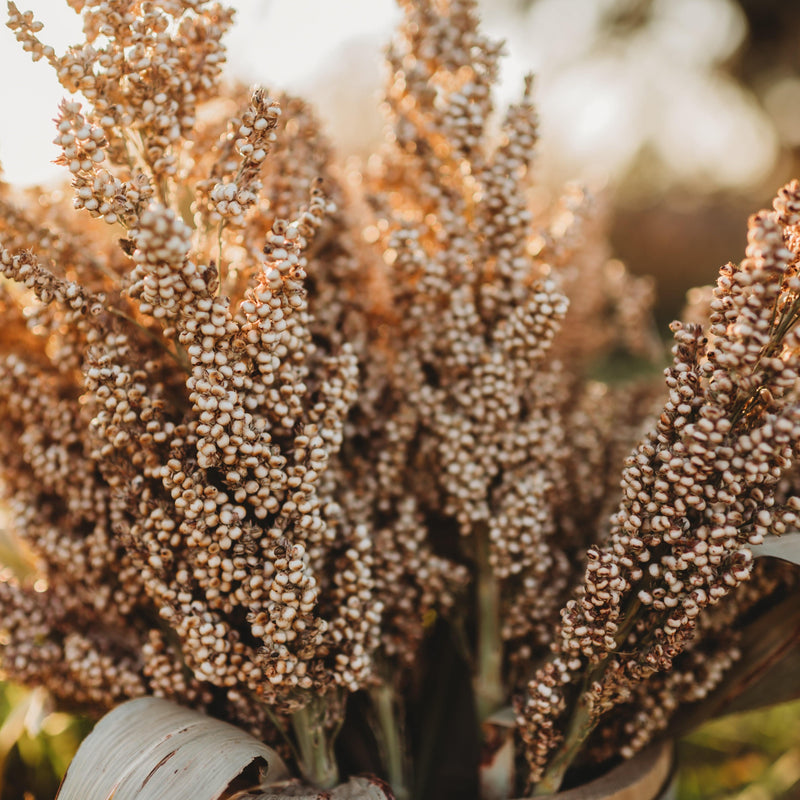
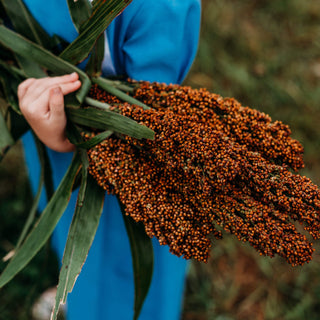
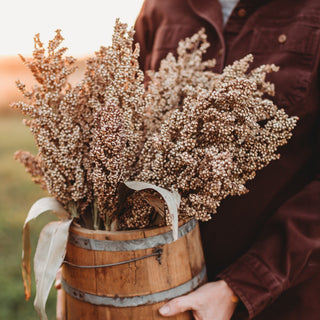
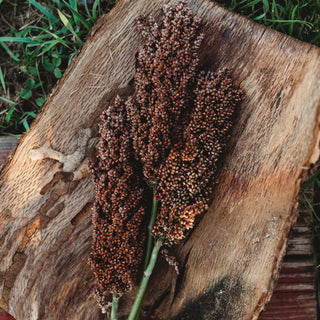
Hadley's T115 is a striking heirloom broomcorn variety that grows 8–11 feet tall and produces exceptionally long, golden-straw-colored brush measuring up to 28" in length. In our growing trials, this impressive variety developed the longest brush of any broomcorn we have grown, making it an outstanding choice for traditional broom making. The tall, sturdy stalks are topped with graceful, sweeping seed heads that mature to a beautiful golden hue, contrasting attractively with the small, tannish-brown seeds.
Developed by Professor Henry Hadley of the University of Illinois, T115 is a traditional broomcorn strain preserved for its distinctive characteristics and practical value. The variety was even... More
Sorghum bicolor
Hadley's T115 is a striking heirloom broomcorn variety that grows 8–11 feet tall and produces exceptionally long, golden-straw-colored brush measuring up to 28" in length. In our growing trials, this impressive variety developed the longest brush of any broomcorn we have grown, making it an outstanding choice for traditional broom making. The tall, sturdy stalks are topped with graceful, sweeping seed heads that mature to a beautiful golden hue, contrasting attractively with the small, tannish-brown seeds.
Developed by Professor Henry Hadley of the University of Illinois, T115 is a traditional broomcorn strain preserved for its distinctive characteristics and practical value. The variety was eventually donated to Seed Savers Exchange, where it has been maintained as part of the organization's collection of historically significant seeds. Like other broomcorn varieties, Hadley's T115 is a type of sorghum (Sorghum bicolor) selected for its elongated, flexible seed branches, which provide the natural bristles used in traditional broom making.
With its exceptionally long brush and attractive golden color, Hadley's T115 is particularly well suited for handcrafted brooms, decorative arrangements, and autumn displays. The graceful seed heads can be gathered into rustic bundles, incorporated into wreaths, or dried for lasting seasonal decorations. For gardeners interested in traditional crafts and useful heirloom crops, Hadley's T115 offers a beautiful opportunity to grow the very materials used in an enduring American craft. Matures approximately 120 days after sowing. Each packet contains a minimum of 100 seeds.
Sorghum bicolor
Hadley's T115 is a striking heirloom broomcorn variety that grows 8–11 feet tall and produces exceptionally long, golden-straw-colored brush measuring up to 28" in length. In our growing trials, this impressive variety developed the longest brush of any broomcorn we have grown, making it an outstanding choice for traditional broom making. The tall, sturdy stalks are topped with graceful, sweeping seed heads that mature to a beautiful golden hue, contrasting ... read more
Sorghum bicolor
Hadley's T115 is a striking heirloom broomcorn variety that grows 8–11 feet tall and produces exceptionally long, golden-straw-colored brush measuring up to 28" in length. In our growing trials, this impressive variety developed the longest brush of any broomcorn we have grown, making it an outstanding choice for traditional broom making. The tall, sturdy stalks are topped with graceful, sweeping seed heads that mature to a beautiful golden hue, contrasting attractively with the small, tannish-brown seeds.
Developed by Professor Henry Hadley of the University of Illinois, T115 is a traditional broomcorn strain preserved for its distinctive characteristics and practical value. The variety was eventually donated to Seed Savers Exchange, where it has been maintained as part of the organization's collection of historically significant seeds. Like other broomcorn varieties, Hadley's T115 is a type of sorghum (Sorghum bicolor) selected for its elongated, flexible seed branches, which provide the natural bristles used in traditional broom making.
With its exceptionally long brush and attractive golden color, Hadley's T115 is particularly well suited for handcrafted brooms, decorative arrangements, and autumn displays. The graceful seed heads can be gathered into rustic bundles, incorporated into wreaths, or dried for lasting seasonal decorations. For gardeners interested in traditional crafts and useful heirloom crops, Hadley's T115 offers a beautiful opportunity to grow the very materials used in an enduring American craft. Matures approximately 120 days after sowing. Each packet contains a minimum of 100 seeds.