We ship to the United States, its territories and outlying islands. Returns are accepted within 30 days of receipt. Full warranty information can be found here.






✓ Plant with Confidence—Guaranteed Through 2027
 Get it between -
Open-pollinated varieties, perfect for seed saving.
Safe seeds, free of neonics and other treatments.
It's simple. If you have a problem, we make it right.

Vigna unguiculata
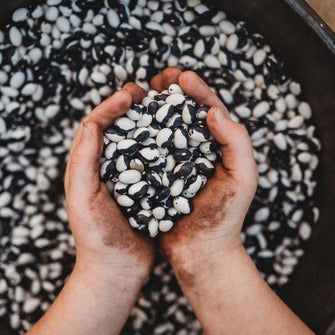
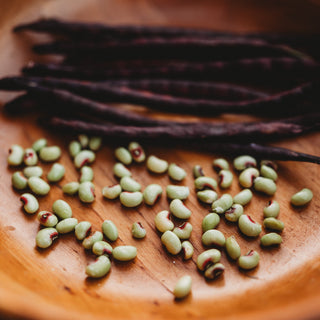
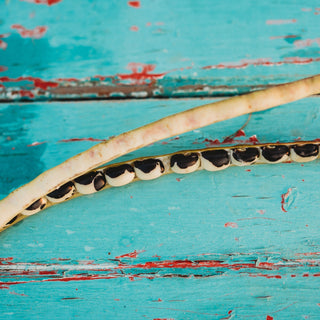
The Calico Crowder Pea—also known as the Hereford or Polecat pea—is a rare Southern heirloom with a story as distinctive as its appearance. Its seeds are boldly mottled in shades of red and buff, reminiscent of Hereford cattle, and have been grown in the South since at least the early 1800s. Long treasured for its flavor and reliability, this variety remains a staple in gardens throughout the region.
Calico Crowder is a vigorous climber, producing long, productive vines that can reach six feet or more, depending on the climate. The pods are tightly packed with “crowded” seeds—hence the name—and thrive in heat and marginal soils. These peas can be harvested young for fresh shelling or left to ma... More
Vigna unguiculata
The Calico Crowder Pea—also known as the Hereford or Polecat pea—is a rare Southern heirloom with a story as distinctive as its appearance. Its seeds are boldly mottled in shades of red and buff, reminiscent of Hereford cattle, and have been grown in the South since at least the early 1800s. Long treasured for its flavor and reliability, this variety remains a staple in gardens throughout the region.
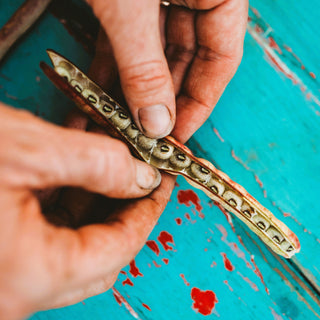
Calico Crowder is a vigorous climber, producing long, productive vines that can reach six feet or more, depending on the climate. The pods are tightly packed with “crowded” seeds—hence the name—and thrive in heat and marginal soils. These peas can be harvested young for fresh shelling or left to mature and dry on the vine. Their dense texture and rich, earthy flavor make them ideal for stews, succotash, and classic Southern dishes.
Our seed stock came to us from John Coykendall, the renowned seed saver and author, who preserved this variety through years of careful stewardship and oral history. With its unique coloring, climbing habit, and deep cultural roots, Calico Crowder offers gardeners a chance to grow not just a crop, but a living piece of history. Calico Crowder matures approximately 90-100 days after sowing. Each packet contains a minimum of 50 seeds.
Vigna unguiculata
The Calico Crowder Pea—also known as the Hereford or Polecat pea—is a rare Southern heirloom with a story as distinctive as its appearance. Its seeds are boldly mottled in shades of red and buff, reminiscent of Hereford cattle, and have been grown in the South since at least the early 1800s. Long treasured for its flavor and reliability, this variety remains a staple in gardens throughout the region.
Calico Crowder is a vigorous climber, producing l... read more
Vigna unguiculata
The Calico Crowder Pea—also known as the Hereford or Polecat pea—is a rare Southern heirloom with a story as distinctive as its appearance. Its seeds are boldly mottled in shades of red and buff, reminiscent of Hereford cattle, and have been grown in the South since at least the early 1800s. Long treasured for its flavor and reliability, this variety remains a staple in gardens throughout the region.
Calico Crowder is a vigorous climber, producing long, productive vines that can reach six feet or more, depending on the climate. The pods are tightly packed with “crowded” seeds—hence the name—and thrive in heat and marginal soils. These peas can be harvested young for fresh shelling or left to mature and dry on the vine. Their dense texture and rich, earthy flavor make them ideal for stews, succotash, and classic Southern dishes.
Our seed stock came to us from John Coykendall, the renowned seed saver and author, who preserved this variety through years of careful stewardship and oral history. With its unique coloring, climbing habit, and deep cultural roots, Calico Crowder offers gardeners a chance to grow not just a crop, but a living piece of history. Calico Crowder matures approximately 90-100 days after sowing. Each packet contains a minimum of 50 seeds.