We ship to the United States, its territories and outlying islands. Returns are accepted within 30 days of receipt. Full warranty information can be found here.






✓ Plant with Confidence—Guaranteed Through 2027
 Get it between -
Open-pollinated varieties, perfect for seed saving.
Safe seeds, free of neonics and other treatments.
It's simple. If you have a problem, we make it right.
Sorghum bicolor
Wheatland is a historic grain sorghum, commonly known as milo, developed from a kafir–milo cross made by J. B. Sieglinger at the United States Field Station in Woodward, Oklahoma. First introduced to farmers in 1931, Wheatland was widely grown across Kansas, Oklahoma, and Texas by the late 1930s, earning a reputation for dependable yields and broad adaptability. Unlike sweet sorghum, which is grown primarily for its sugary stalks, Wheatland was developed for grain production.
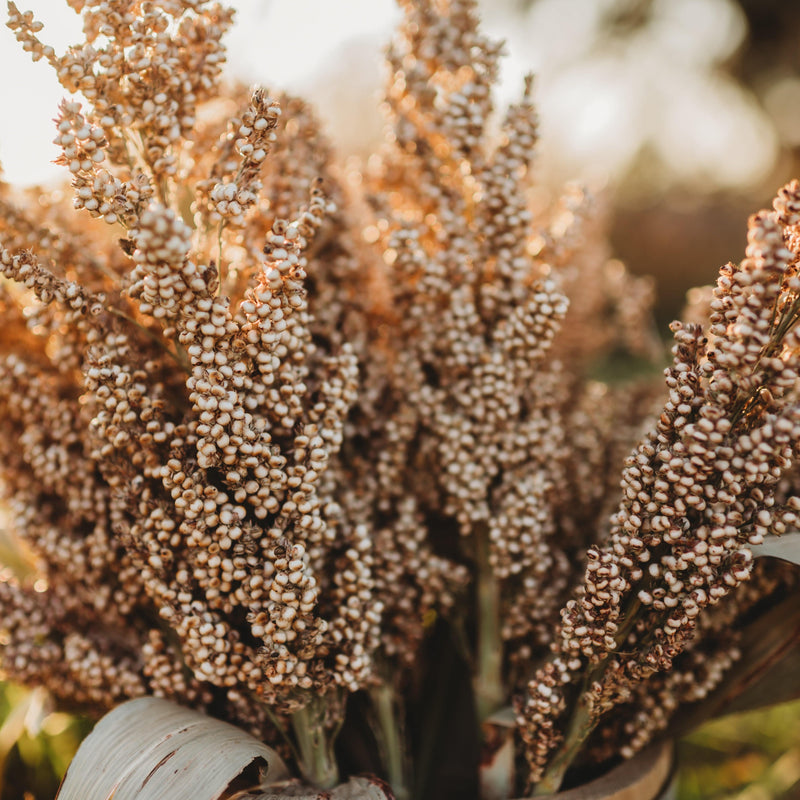
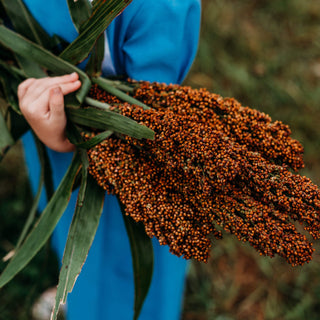
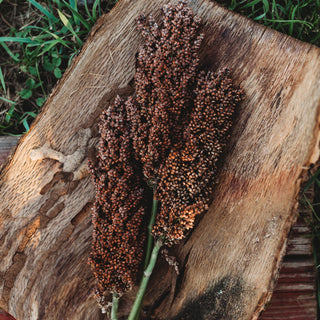
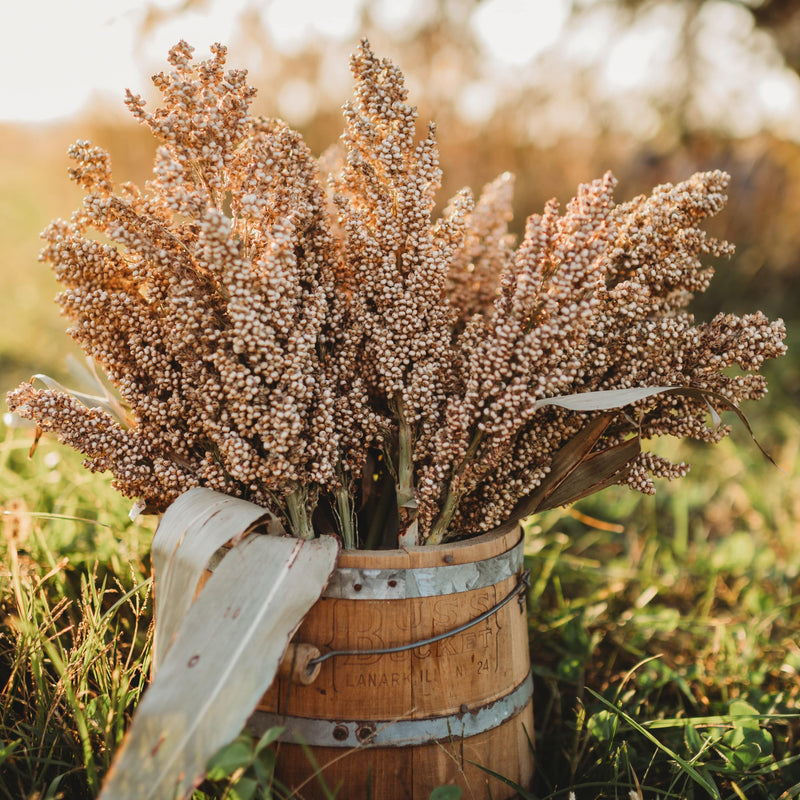
Plants reach 6 to 7 feet tall and produce large, well-filled heads of round, off-white grain. Under favorable conditions, secondary and even tertiary heads may develop, substantially increasing the harvest. Wheatland matures... More
Sorghum bicolor
Wheatland is a historic grain sorghum, commonly known as milo, developed from a kafir–milo cross made by J. B. Sieglinger at the United States Field Station in Woodward, Oklahoma. First introduced to farmers in 1931, Wheatland was widely grown across Kansas, Oklahoma, and Texas by the late 1930s, earning a reputation for dependable yields and broad adaptability. Unlike sweet sorghum, which is grown primarily for its sugary stalks, Wheatland was developed for grain production.
Plants reach 6 to 7 feet tall and produce large, well-filled heads of round, off-white grain. Under favorable conditions, secondary and even tertiary heads may develop, substantially increasing the harvest. Wheatland matures in approximately 110 days and remains a productive choice for home growers, homesteaders, and small-scale grain production.
The harvested grain can be ground into nutritious, naturally gluten-free flour for baking and cooking. It is also useful as livestock and poultry feed and performs well in food plots, where the heavy grain heads attract game birds and other wildlife in late summer and fall. Wheatland sorghum matures approximately 110 days after sowing. Each packet contains a minimum of 100 seeds.
At a recommended seeding rate of 30,000 plants per acre:
Sorghum bicolor
Wheatland is a historic grain sorghum, commonly known as milo, developed from a kafir–milo cross made by J. B. Sieglinger at the United States Field Station in Woodward, Oklahoma. First introduced to farmers in 1931, Wheatland was widely grown across Kansas, Oklahoma, and Texas by the late 1930s, earning a reputation for dependable yields and broad adaptability. Unlike sweet sorghum, which is grown primarily for its sugary stalks, Wheatland was developed for... read more
Sorghum bicolor
Wheatland is a historic grain sorghum, commonly known as milo, developed from a kafir–milo cross made by J. B. Sieglinger at the United States Field Station in Woodward, Oklahoma. First introduced to farmers in 1931, Wheatland was widely grown across Kansas, Oklahoma, and Texas by the late 1930s, earning a reputation for dependable yields and broad adaptability. Unlike sweet sorghum, which is grown primarily for its sugary stalks, Wheatland was developed for grain production.
Plants reach 6 to 7 feet tall and produce large, well-filled heads of round, off-white grain. Under favorable conditions, secondary and even tertiary heads may develop, substantially increasing the harvest. Wheatland matures in approximately 110 days and remains a productive choice for home growers, homesteaders, and small-scale grain production.
The harvested grain can be ground into nutritious, naturally gluten-free flour for baking and cooking. It is also useful as livestock and poultry feed and performs well in food plots, where the heavy grain heads attract game birds and other wildlife in late summer and fall. Wheatland sorghum matures approximately 110 days after sowing. Each packet contains a minimum of 100 seeds.
At a recommended seeding rate of 30,000 plants per acre: