We ship to the United States, its territories and outlying islands. Returns are accepted within 30 days of receipt. Full warranty information can be found here.





✓ Plant with Confidence—Guaranteed Through 2027
 Get it between -
Open-pollinated varieties, perfect for seed saving.
Safe seeds, free of neonics and other treatments.
It's simple. If you have a problem, we make it right.
Capsicum chinense
Likely originating from Jamaica, Red Scotch Bonnet is an heirloom pepper popular in Caribbean cooking and beloved for its unique shape, which resembles the wool "Tam" hats traditionally worn in Scotland. Also known as Bahama Mama, the Scotch Bonnet pepper is widely regarded as an essential ingredient in traditional dishes like jerk chicken and Jamaican curry. With a Scoville level between 100,000 and 350,000, the Scotch Bonnet packs a fiery intensity that is similar to a habanero. They're suitable for a variety of uses including sauces and marinades, but our favorite way to enjoy these spicy morsels is to thinly slice and pickle them in the fridge (this method preserves their crunchiness) and then s... More
Capsicum chinense
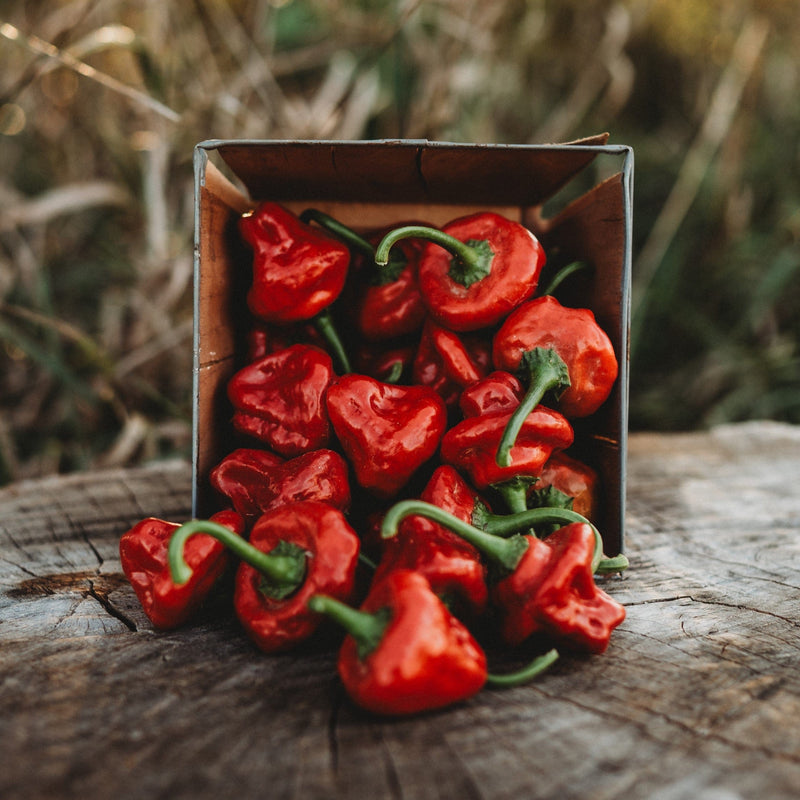
Likely originating from Jamaica, Red Scotch Bonnet is an heirloom pepper popular in Caribbean cooking and beloved for its unique shape, which resembles the wool "Tam" hats traditionally worn in Scotland. Also known as Bahama Mama, the Scotch Bonnet pepper is widely regarded as an essential ingredient in traditional dishes like jerk chicken and Jamaican curry. With a Scoville level between 100,000 and 350,000, the Scotch Bonnet packs a fiery intensity that is similar to a habanero. They're suitable for a variety of uses including sauces and marinades, but our favorite way to enjoy these spicy morsels is to thinly slice and pickle them in the fridge (this method preserves their crunchiness) and then serve them on crackers with a slice of Manchego cheese. Be warned, once you start eating them, it can be difficult to stop.
The Scotch Bonnet Pepper is easy to grow, with plants reaching 30 inches tall and producing huge (we'd almost say burdensome) yields of 1.5-inch-wide, vibrantly colored hot peppers. You'll be eating them fresh, pickling, drying, and giving them away. Take care to protect hands when handling fruit or seeds. They are very, very hot. Harvests begin approximately 90 days from transplant. Each packet contains a minimum of 10 seeds.
IMPORTANT: Super hot chilis can be challenging to grow as they have a long germination period (21-28 days) and require long, hot growing seasons. See our article on starting peppers indoors and ensure that you have enough warm, frost-free days to allow for maturity and a sufficient harvest period.
Capsicum chinense
Likely originating from Jamaica, Red Scotch Bonnet is an heirloom pepper popular in Caribbean cooking and beloved for its unique shape, which resembles the wool "Tam" hats traditionally worn in Scotland. Also known as Bahama Mama, the Scotch Bonnet pepper is widely regarded as an essential ingredient in traditional dishes like jerk chicken and Jamaican curry. With a Scoville level between 100,000 and 350,000, the Scotch Bonnet packs a fiery intensity that... read more
Capsicum chinense
Likely originating from Jamaica, Red Scotch Bonnet is an heirloom pepper popular in Caribbean cooking and beloved for its unique shape, which resembles the wool "Tam" hats traditionally worn in Scotland. Also known as Bahama Mama, the Scotch Bonnet pepper is widely regarded as an essential ingredient in traditional dishes like jerk chicken and Jamaican curry. With a Scoville level between 100,000 and 350,000, the Scotch Bonnet packs a fiery intensity that is similar to a habanero. They're suitable for a variety of uses including sauces and marinades, but our favorite way to enjoy these spicy morsels is to thinly slice and pickle them in the fridge (this method preserves their crunchiness) and then serve them on crackers with a slice of Manchego cheese. Be warned, once you start eating them, it can be difficult to stop.
The Scotch Bonnet Pepper is easy to grow, with plants reaching 30 inches tall and producing huge (we'd almost say burdensome) yields of 1.5-inch-wide, vibrantly colored hot peppers. You'll be eating them fresh, pickling, drying, and giving them away. Take care to protect hands when handling fruit or seeds. They are very, very hot. Harvests begin approximately 90 days from transplant. Each packet contains a minimum of 10 seeds.
IMPORTANT: Super hot chilis can be challenging to grow as they have a long germination period (21-28 days) and require long, hot growing seasons. See our article on starting peppers indoors and ensure that you have enough warm, frost-free days to allow for maturity and a sufficient harvest period.