We ship to the United States, its territories and outlying islands. Returns are accepted within 30 days of receipt. Full warranty information can be found here.

Free Shipping on Orders $35+
✓ Plant with Confidence—Guaranteed Through 2027
Get it between -
We ship to the United States, its territories and outlying islands. Returns are accepted within 30 days of receipt. Full warranty information can be found here.
We guarantee our seed to be fresh, vigorous, untreated, and true to variety.
Each packet is guaranteed through the year printed on the packet, plus one full additional growing year.
If your seeds fail to germinate, arrive damaged, or do not grow true to type, please contact us and we will make it right through replacement seed, store credit, or refund when appropriate.
Full warranty policy here.
Open-pollinated varieties, perfect for seed saving.
Safe seeds, free of neonics and other treatments.
It's simple. If you have a problem, we make it right.
Solanum melongena
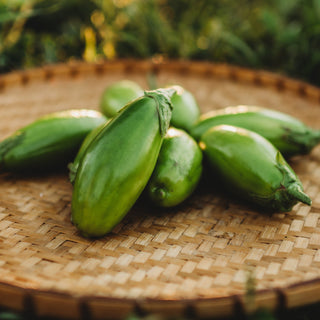
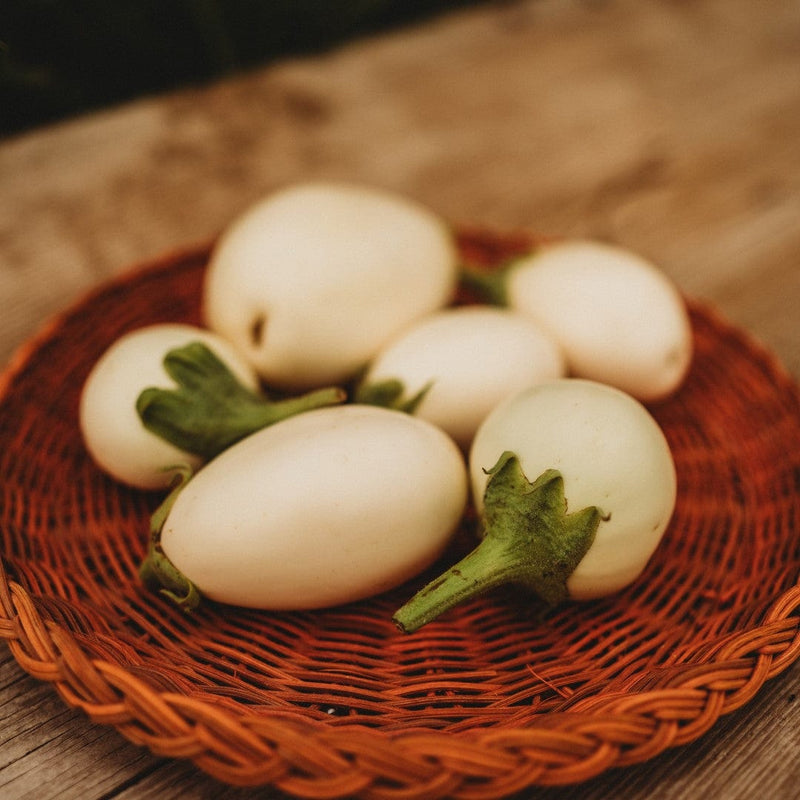
Japanese White Egg is a unique variety of eggplant that produces two to three-inch, egg-shaped fruit with glossy white skins. One of the most prolific varieties of eggplants we offer, Japanese White Egg produces dozens of fruit over a single season, seemingly picking up steam as the season rolls on. They have a smooth texture and a nice flavor that works well in a variety of dishes. If you're an eggplant fan, this is definitely a great, unique variety to try. Especially well-suited for northern and short season gardeners, where other eggplant varieties might not be as productive. Harvests begin approximately 65 days after transplant. Each packet contains a minimum of 25 seeds.Solanum melongena

Japanese White Egg is a unique variety of eggplant that produces two to three-inch, egg-shaped fruit with glossy white skins. One of the most prolific varieties of eggplants we offer, Japanese White Egg produces dozens of fruit over a single season, seemingly picking up steam as the season rolls on. They have a smooth texture and a nice flavor that works well in a variety of dishes. If you're an eggplant fan, this is definitely a great, unique variety to t... read moreSolanum melongena
Japanese White Egg is a unique variety of eggplant that produces two to three-inch, egg-shaped fruit with glossy white skins. One of the most prolific varieties of eggplants we offer, Japanese White Egg produces dozens of fruit over a single season, seemingly picking up steam as the season rolls on. They have a smooth texture and a nice flavor that works well in a variety of dishes. If you're an eggplant fan, this is definitely a great, unique variety to try. Especially well-suited for northern and short season gardeners, where other eggplant varieties might not be as productive. Harvests begin approximately 65 days after transplant. Each packet contains a minimum of 25 seeds.

We're seed savers first—and that attitude goes into everything we do. That's why we only offer varieties that are capable of producing true-to-type seed. What's more, our resealable, mylar-lined packaging can be reused when you're ready to harvest your own seed crop.
Eggplants require well-draining, nutrient-rich soil with a pH level of 5.5-6.5. They need full sun exposure for at least 6 hours per day, although some shade during the hottest part of the day can be beneficial.
Sow seeds indoors 8-10 weeks before the last frost. Plant seeds 1/4" deep in pre-moistened sterile seed starting media. Germination will be improved by using a growers heat mat. Transplant outdoors once soil temps have reached 60 degrees. Space transplants 18-24” apart in rows 36” apart. Harvest fruit while skin is still glossy and tender.
Transplant hardened-off seedlings outdoors once the soil temperature reaches at least 60°F. Dig a hole twice the size of the root ball and add a handful of fertilizer to the bottom. Carefully remove the eggplant seedling from its container, being careful not to disturb the roots. Place the seedling in the hole and backfill with soil, firming it gently around the stem. Water thoroughly and keep the soil evenly moist until the plant becomes established.
Insect Pests
Eggplants can be affected by several insect pests, including aphids, flea beetles, spider mites, and cutworms. Most of these pests can be controlled using organic insecticides, such as neem oil or insecticidal soap. Practicing consistent crop rotation and good garden hygiene, such as removing crop debris and weeds, can also aid in controlling populations.
Diseases & Other Problems
Although not common, eggplants are susceptible to several diseases, including verticillium wilt, fusarium wilt, bacterial wilt, and phytophthora blight, which are caused by soil-borne fungi and bacteria. Other problems include blossom-end rot, which is caused by calcium deficiency and uneven watering, and sunscald, which occurs when the fruit is exposed to direct sunlight for an extended period. To prevent these problems, plant disease-resistant varieties, rotate crops, maintain proper soil pH and moisture levels, and provide shade for the fruit. Additionally, ensure consistent watering and soil fertility to prevent nutrient deficiencies that can lead to blossom-end rot.
Eggplants can be harvested when the fruit is fully colored and the skin is glossy. Using a sharp knife or pruning shears, cut the stem 1-2 inches above the fruit. Avoid pulling or twisting the fruit, which can damage the plant. After harvesting, gently rinse the fruit in cool water and dry it thoroughly. Eggplants can be stored in the refrigerator for up to 5 days. To store for longer periods, slice the eggplant and blanch it in boiling water for 3-4 minutes, then drain and cool before freezing.
CONSIDERATIONS:
Eggplants are self-pollinating plants that do not generally need isolation; however isolation may be necessary depending on the number of varieties being grown and the number of pollinators present. Caging plants with netting can prevent cross-pollination from occurring.
HARVESTING SEED:
Allow fruit to fully ripen before harvesting. Once the skins are dull and/or have begun to change to a yellowish color (or bright red for Brazilian or African types), cut the fruit from the plant. An after-harvest ripening period of 7-10 days can improve germination. Scoop out the seeds and pulp and crush in a food processor fitted with a plastic blade. Add water to allow the pulp and non-viable seeds to float to the top. Pour off. Repeat until the water runs clean. Pour the remaining seeds onto a coffee filter, strain off any excess water and allow to dry in a warm, well-ventilated area.
SEED LONGETIVITY:
Eggplant seeds will maintain 50% germination for up to 7 years when stored under ideal conditions.
Sign up to get the latest on sales, new releases, and more...