We ship to the United States, its territories and outlying islands. Returns are accepted within 30 days of receipt. Full warranty information can be found here.






✓ Plant with Confidence—Guaranteed Through 2027
 Get it between -
Open-pollinated varieties, perfect for seed saving.
Safe seeds, free of neonics and other treatments.
It's simple. If you have a problem, we make it right.
Beta vulgaris
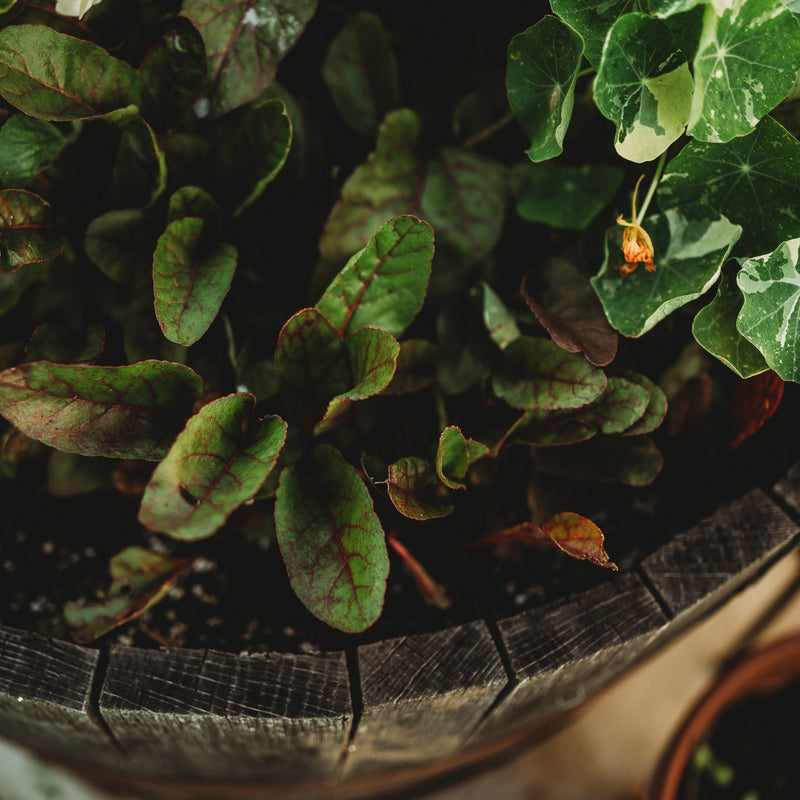
MacGregor’s Favorite is a curiosity among beets—rare, ornamental, and wrapped in a bit of mystery. Its historical roots (so to speak) are difficult to pin down, complicated by shifting names like MacGregor’s Favorite, McGregor’s Favourite Bunching, or even Mr. MacGregor’s Beet. The earliest reference we’ve found is an 1891 issue of The Gardener’s Chronicle, noting "McGregor’s Favourite" as the recipient of a First-Class Certificate from the Royal Horticultural Society. It was described then as having leaves “of a rich, bronzy-crimson colour, narrow arching, about 6–8 inches long”—a description that still holds today.
The leaves are indeed slow to grow, and gardeners shoul... More
Beta vulgaris
MacGregor’s Favorite is a curiosity among beets—rare, ornamental, and wrapped in a bit of mystery. Its historical roots (so to speak) are difficult to pin down, complicated by shifting names like MacGregor’s Favorite, McGregor’s Favourite Bunching, or even Mr. MacGregor’s Beet. The earliest reference we’ve found is an 1891 issue of The Gardener’s Chronicle, noting "McGregor’s Favourite" as the recipient of a First-Class Certificate from the Royal Horticultural Society. It was described then as having leaves “of a rich, bronzy-crimson colour, narrow arching, about 6–8 inches long”—a description that still holds today.
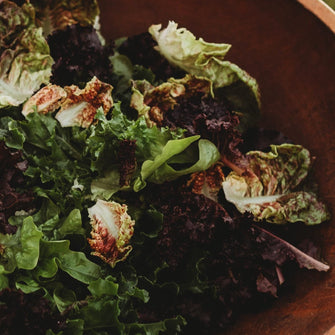
The leaves are indeed slow to grow, and gardeners should not expect the dark saturation of a bull’s blood type, at least not under warm weather conditions. Instead, they offer a luminous, bronzy-magenta tone that glows when tucked into flower borders, mixed containers, or anywhere space is limited. Their elegant arching form provides a splash of uncommon color without demanding much in return.
The roots, by contrast, are fibrous and visually unremarkable—not what this variety is about, and we chose not to photograph them for that reason. But for those who seek the truly rare, MacGregor’s Favorite is a living antique worth preserving: a Victorian-era beet that endures not for its yield, but for its rarity, beauty, and the whisper of history carried in its leaves. Harvests begin 55-65 days after sowing. Each packet contains a minimum of 100 seeds.
Beta vulgaris
MacGregor’s Favorite is a curiosity among beets—rare, ornamental, and wrapped in a bit of mystery. Its historical roots (so to speak) are difficult to pin down, complicated by shifting names like MacGregor’s Favorite, McGregor’s Favourite Bunching, or even Mr. MacGregor’s Beet. The earliest reference we’ve found is an 1891 issue of The Gardener’s Chronicle, noting "McGregor’s Favourite" as the recipient of a First-Class Certificate f... read more
Beta vulgaris
MacGregor’s Favorite is a curiosity among beets—rare, ornamental, and wrapped in a bit of mystery. Its historical roots (so to speak) are difficult to pin down, complicated by shifting names like MacGregor’s Favorite, McGregor’s Favourite Bunching, or even Mr. MacGregor’s Beet. The earliest reference we’ve found is an 1891 issue of The Gardener’s Chronicle, noting "McGregor’s Favourite" as the recipient of a First-Class Certificate from the Royal Horticultural Society. It was described then as having leaves “of a rich, bronzy-crimson colour, narrow arching, about 6–8 inches long”—a description that still holds today.
The leaves are indeed slow to grow, and gardeners should not expect the dark saturation of a bull’s blood type, at least not under warm weather conditions. Instead, they offer a luminous, bronzy-magenta tone that glows when tucked into flower borders, mixed containers, or anywhere space is limited. Their elegant arching form provides a splash of uncommon color without demanding much in return.
The roots, by contrast, are fibrous and visually unremarkable—not what this variety is about, and we chose not to photograph them for that reason. But for those who seek the truly rare, MacGregor’s Favorite is a living antique worth preserving: a Victorian-era beet that endures not for its yield, but for its rarity, beauty, and the whisper of history carried in its leaves. Harvests begin 55-65 days after sowing. Each packet contains a minimum of 100 seeds.