We ship to the United States, its territories and outlying islands. Returns are accepted within 30 days of receipt. Full warranty information can be found here.






✓ Plant with Confidence—Guaranteed Through 2027
 Get it between -
Open-pollinated varieties, perfect for seed saving.
Safe seeds, free of neonics and other treatments.
It's simple. If you have a problem, we make it right.

Capsicum annuum
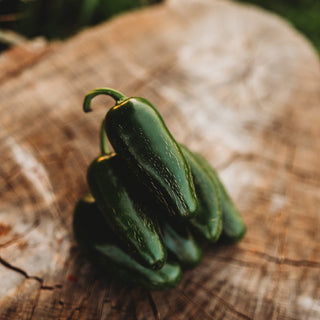
Purple Jalapeno is a beautiful and exceptionally productive heirloom pepper that brings an unexpected splash of color to the vegetable garden. Plants produce an abundance of thick-walled, jalapeno-shaped peppers that develop a deep, glossy purple color, often appearing nearly black. The peppers eventually ripen to red, creating a beautiful contrast as new peppers continue to develop. Even the flowers are ornamental, displaying delicate purple petals that complement the dark peppers.
Despite its unusual appearance, Purple Jalapeno retains the familiar flavor of a traditional jalapeno, with a somewhat more assertive heat. In our own trials, we found it comparable in heat to Craig's Grande Jalapeno ... More
Capsicum annuum
Purple Jalapeno is a beautiful and exceptionally productive heirloom pepper that brings an unexpected splash of color to the vegetable garden. Plants produce an abundance of thick-walled, jalapeno-shaped peppers that develop a deep, glossy purple color, often appearing nearly black. The peppers eventually ripen to red, creating a beautiful contrast as new peppers continue to develop. Even the flowers are ornamental, displaying delicate purple petals that complement the dark peppers.
Despite its unusual appearance, Purple Jalapeno retains the familiar flavor of a traditional jalapeno, with a somewhat more assertive heat. In our own trials, we found it comparable in heat to Craig's Grande Jalapeno but noticeably hotter than Early Jalapeno and Jalapeno Traveler. Plants are vigorous and exceptionally prolific, producing generous harvests throughout the growing season.
In the kitchen, Purple Jalapenos can be enjoyed much like their green counterparts. Their thick, crisp walls are excellent for fresh salsa, pickling, stuffing, and homemade jalapeno poppers. Harvest them purple for their unusual appearance, or allow them to mature to red for a sweeter, more fully developed flavor. Approximately 75–85 days to harvest.
Capsicum annuum
Purple Jalapeno is a beautiful and exceptionally productive heirloom pepper that brings an unexpected splash of color to the vegetable garden. Plants produce an abundance of thick-walled, jalapeno-shaped peppers that develop a deep, glossy purple color, often appearing nearly black. The peppers eventually ripen to red, creating a beautiful contrast as new peppers continue to develop. Even the flowers are ornamental, displaying delicate purple petals that com... read more
Capsicum annuum
Purple Jalapeno is a beautiful and exceptionally productive heirloom pepper that brings an unexpected splash of color to the vegetable garden. Plants produce an abundance of thick-walled, jalapeno-shaped peppers that develop a deep, glossy purple color, often appearing nearly black. The peppers eventually ripen to red, creating a beautiful contrast as new peppers continue to develop. Even the flowers are ornamental, displaying delicate purple petals that complement the dark peppers.
Despite its unusual appearance, Purple Jalapeno retains the familiar flavor of a traditional jalapeno, with a somewhat more assertive heat. In our own trials, we found it comparable in heat to Craig's Grande Jalapeno but noticeably hotter than Early Jalapeno and Jalapeno Traveler. Plants are vigorous and exceptionally prolific, producing generous harvests throughout the growing season.
In the kitchen, Purple Jalapenos can be enjoyed much like their green counterparts. Their thick, crisp walls are excellent for fresh salsa, pickling, stuffing, and homemade jalapeno poppers. Harvest them purple for their unusual appearance, or allow them to mature to red for a sweeter, more fully developed flavor. Approximately 75–85 days to harvest.