We ship to the United States, its territories and outlying islands. Returns are accepted within 30 days of receipt. Full warranty information can be found here.






✓ Plant with Confidence—Guaranteed Through 2027
 Get it between -
Open-pollinated varieties, perfect for seed saving.
Safe seeds, free of neonics and other treatments.
It's simple. If you have a problem, we make it right.

Zea mays
Northern Ute Corn is an Indigenous desert-adapted corn donated to the USDA in 1988 by LaDonna Johnson of Utah, who received the seed through her mother and grandmother. The variety is associated with the Northern Ute Tribe and originated in northeastern Utah near present-day Roosevelt and Fort Duchesne. It is notable as the most northerly adaptation of a desert corn type—traditionally grown in an arid climate with limited water. The donor suspected it to be closely related to ancient “cave corns” carbon-dated to 600–800 years old that were grown in the same region.
Northern Ute Corn is a flint-type corn that grows 7–8 feet tall, forming sturdy plants with large tassels. A small portion of plants show pu... More
Zea mays
Northern Ute Corn is an Indigenous desert-adapted corn donated to the USDA in 1988 by LaDonna Johnson of Utah, who received the seed through her mother and grandmother. The variety is associated with the Northern Ute Tribe and originated in northeastern Utah near present-day Roosevelt and Fort Duchesne. It is notable as the most northerly adaptation of a desert corn type—traditionally grown in an arid climate with limited water. The donor suspected it to be closely related to ancient “cave corns” carbon-dated to 600–800 years old that were grown in the same region.
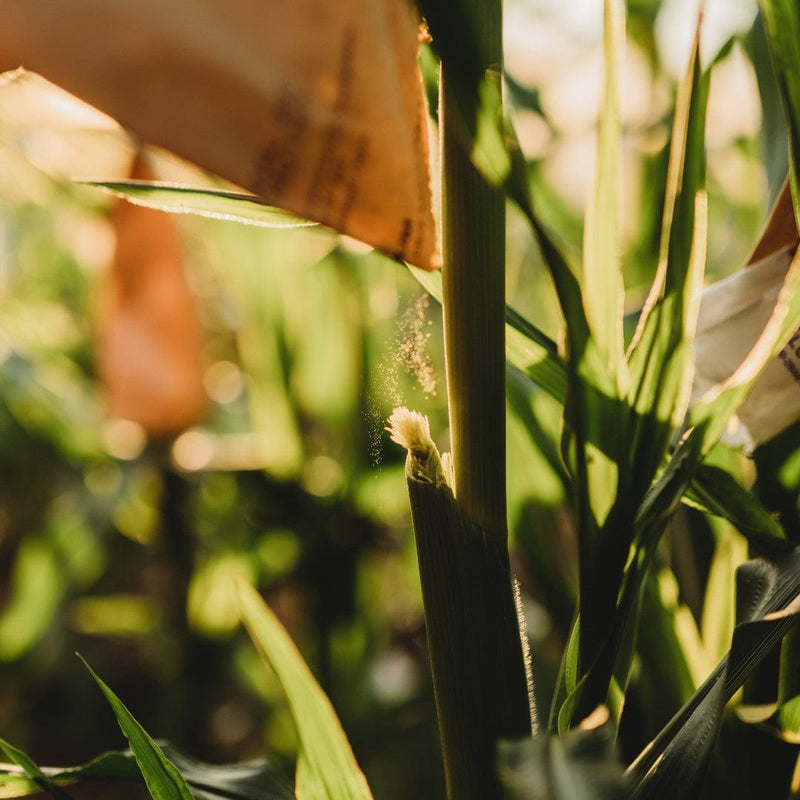
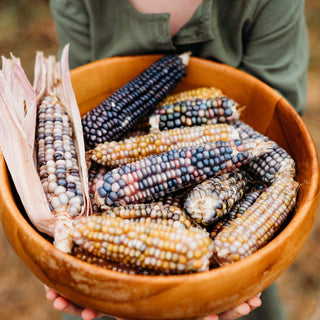
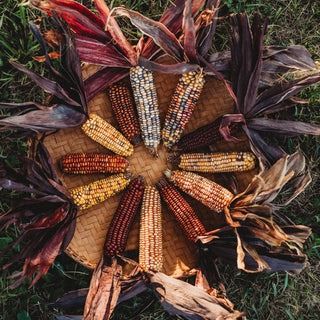
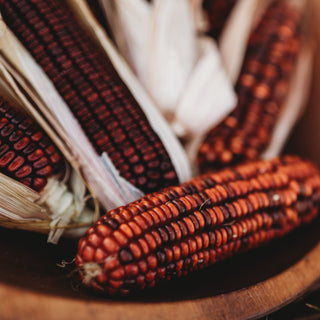
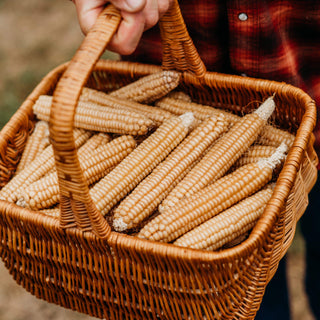
Northern Ute Corn is a flint-type corn that grows 7–8 feet tall, forming sturdy plants with large tassels. A small portion of plants show purple stalks or purple glumes, adding subtle visual variation. Ears are long and slender, typically 7–8 inches in length with 10–12 rows, packed with glossy, multicolored kernels in shades of blue, white, and yellow often accented by red stripes.
Traditionally, this corn was ground for flour and also eaten fresh. The kernels show a flinty texture with some floury starch, making it suitable for dry grinding. Its ability to produce respectable yields with minimal water, combined with its geographic and cultural significance, makes Northern Ute Corn a rare and meaningful link between ancient desert agriculture and the northern edge of its historical range. Matures approximately 115 days after sowing. Each packet contains a minimum of 50 seeds.
Seed stock generously provided by the National Genetic Resources Program. PI 707985
Zea mays
Northern Ute Corn is an Indigenous desert-adapted corn donated to the USDA in 1988 by LaDonna Johnson of Utah, who received the seed through her mother and grandmother. The variety is associated with the Northern Ute Tribe and originated in northeastern Utah near present-day Roosevelt and Fort Duchesne. It is notable as the most northerly adaptation of a desert corn type—traditionally grown in an arid climate with limited water. The donor suspected it to be closely... read more
Zea mays
Northern Ute Corn is an Indigenous desert-adapted corn donated to the USDA in 1988 by LaDonna Johnson of Utah, who received the seed through her mother and grandmother. The variety is associated with the Northern Ute Tribe and originated in northeastern Utah near present-day Roosevelt and Fort Duchesne. It is notable as the most northerly adaptation of a desert corn type—traditionally grown in an arid climate with limited water. The donor suspected it to be closely related to ancient “cave corns” carbon-dated to 600–800 years old that were grown in the same region.
Northern Ute Corn is a flint-type corn that grows 7–8 feet tall, forming sturdy plants with large tassels. A small portion of plants show purple stalks or purple glumes, adding subtle visual variation. Ears are long and slender, typically 7–8 inches in length with 10–12 rows, packed with glossy, multicolored kernels in shades of blue, white, and yellow often accented by red stripes.
Traditionally, this corn was ground for flour and also eaten fresh. The kernels show a flinty texture with some floury starch, making it suitable for dry grinding. Its ability to produce respectable yields with minimal water, combined with its geographic and cultural significance, makes Northern Ute Corn a rare and meaningful link between ancient desert agriculture and the northern edge of its historical range. Matures approximately 115 days after sowing. Each packet contains a minimum of 50 seeds.
Seed stock generously provided by the National Genetic Resources Program. PI 707985