We ship to the United States, its territories and outlying islands. Returns are accepted within 30 days of receipt. Full warranty information can be found here.

Free Shipping on Orders $35+
✓ Plant with Confidence—Guaranteed Through 2027
Get it between -
We ship to the United States, its territories and outlying islands. Returns are accepted within 30 days of receipt. Full warranty information can be found here.
We guarantee our seed to be fresh, vigorous, untreated, and true to variety.
Each packet is guaranteed through the year printed on the packet, plus one full additional growing year.
If your seeds fail to germinate, arrive damaged, or do not grow true to type, please contact us and we will make it right through replacement seed, store credit, or refund when appropriate.
View our full warranty policy here.
Open-pollinated varieties, perfect for seed saving.
Safe seeds, free of neonics and other treatments.
It's simple. If you have a problem, we make it right.
Helianthus annuus
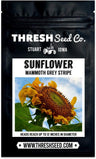
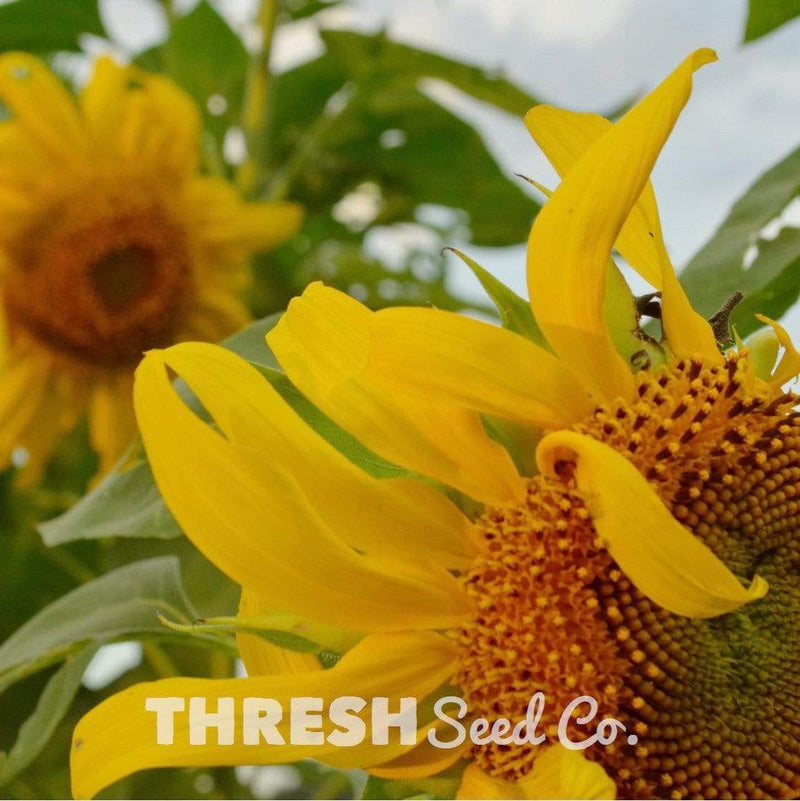
Truly a mammoth! Mammoth Grey Stripe sunflower produces colossal ten to twelve-foot-tall stalks topped by gigantic heads reaching up to 12 inches in diameter. Sturdy stems are inviting of a climb, but be warned, they're a bit prickly. Large seed heads eventually bring forth hundreds of grey-striped seeds, the weight of which flips the head upside down. At this point birds start to take notice, which is a bad thing if you intended to eat those seeds, but you'll get at least a bit of consolation watching the birds perform acrobatic feats trying to get at your ripening seeds. And once that wears off you can always cover the heads with fine mesh or breathable row cloth to keep the birds away. Mature... More
Helianthus annuus
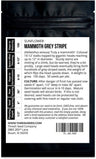
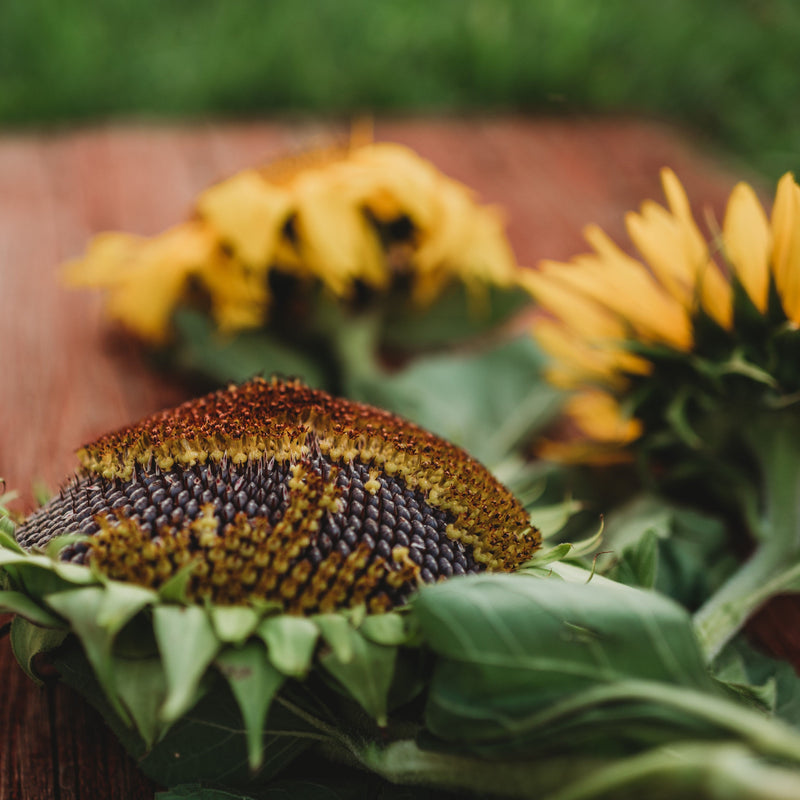
Truly a mammoth! Mammoth Grey Stripe sunflower produces colossal ten to twelve-foot-tall stalks topped by gigantic heads reaching up to 12 inches in diameter. Sturdy stems are inviting of a climb, but be warned, they're a bit prickly. Large seed heads eventually bring forth hundreds of grey-striped seeds, the weight of which flips the head upside down. At this point birds start to take notice, which is a bad thing if you intended to eat those seeds, but you'll get at least a bit of consolation watching the birds perform acrobatic feats trying to get at your ripening seeds. And once that wears off you can always cover the heads with fine mesh or breathable row cloth to keep the birds away. Matures approximately 100 days after sowing. Each packet contains a minimum of 50 seeds.
Helianthus annuus
Truly a mammoth! Mammoth Grey Stripe sunflower produces colossal ten to twelve-foot-tall stalks topped by gigantic heads reaching up to 12 inches in diameter. Sturdy stems are inviting of a climb, but be warned, they're a bit prickly. Large seed heads eventually bring forth hundreds of grey-striped seeds, the weight of which flips the head upside down. At this point birds start to take notice, which is a bad thing if you intended to eat those seeds, b... read more
Helianthus annuus
Truly a mammoth! Mammoth Grey Stripe sunflower produces colossal ten to twelve-foot-tall stalks topped by gigantic heads reaching up to 12 inches in diameter. Sturdy stems are inviting of a climb, but be warned, they're a bit prickly. Large seed heads eventually bring forth hundreds of grey-striped seeds, the weight of which flips the head upside down. At this point birds start to take notice, which is a bad thing if you intended to eat those seeds, but you'll get at least a bit of consolation watching the birds perform acrobatic feats trying to get at your ripening seeds. And once that wears off you can always cover the heads with fine mesh or breathable row cloth to keep the birds away. Matures approximately 100 days after sowing. Each packet contains a minimum of 50 seeds.
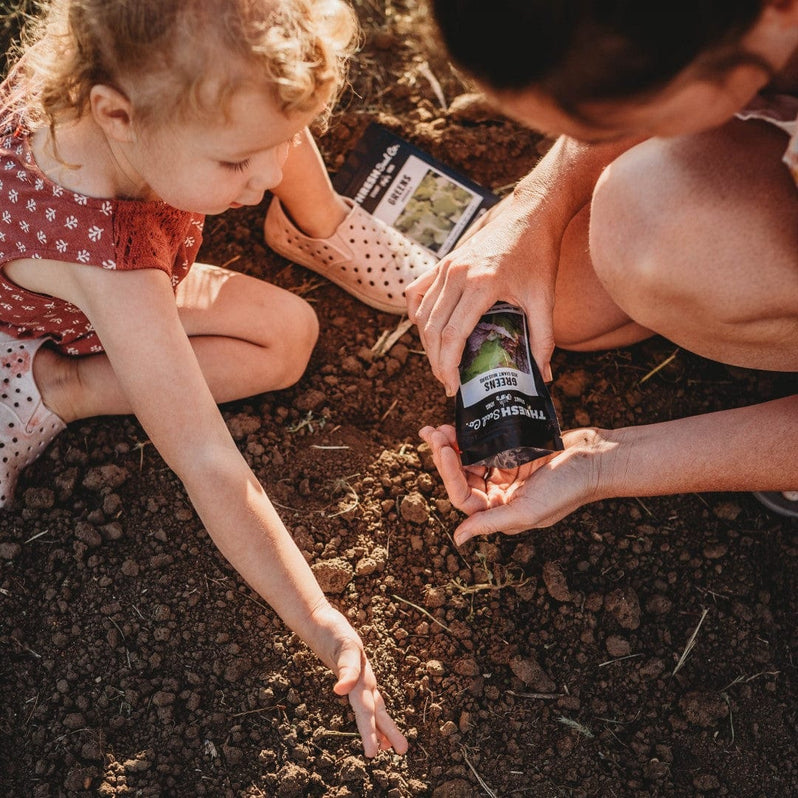
We're seed savers first—and that attitude goes into everything we do. That's why we only offer varieties that are capable of producing true-to-type seed. What's more, our resealable, mylar-lined packaging can be reused when you're ready to harvest your own seed crop.
Sunflowers are widely adapted to a variety of climates and are especially tolerant of cold temperatures. Sunflowers will flourish in a wide variety of soil types, from clay to sandy, so long as sufficient nitrogen is available throughout the growing season. The water requirements of sunflowers are similar to those of other field crops. Plants should be irrigated if drought occurs within 20 days of pollination as this period is especially critical for seed development.
After danger of frost has passed, sow seeds 6" apart, 1/2" deep in rows 36" apart. Germination will occur in 6-10 days. Thin to one plant every 24" once seedlings have reached six inches tall. Can also be started indoors 4 weeks before the average last frost date.
Transplant outdoors after danger of frost has passed. Plants should be spaced 18-24" apart to provide for ample air flow.
Sunflowers are susceptible to a number of common diseases including verticillium wilt, mildew, leaf spot, and rust. However, the extent of these diseases is usually not of consequence to the home gardener. Ensuring adequate airflow by thinning plants to the recommended spacing will reduce the incidence of disease and cultural practices such as crop rotation, tillage and removal of plant debris in the fall will limit its spread.
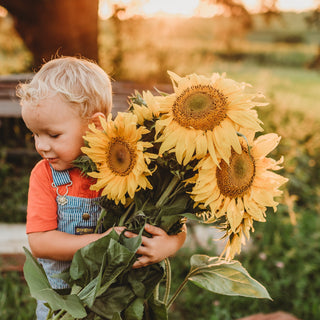
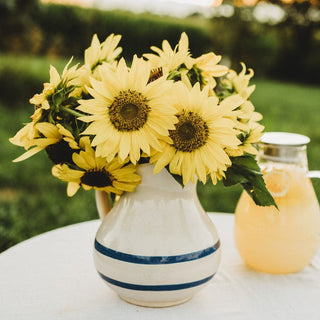
Sunflowers make great cut flowers. They are long-lasting and have a bright, cheerful appearance that adds a cheerful touch to any bouquet or arrangement. Sunflowers are also easy to care for, and can last up to a week when cut and placed in a vase with fresh water. When harvesting fresh cut flowers, cut the main head just before it blooms to encourage additional blooms on side shoots. Harvesting flowers in the morning will prevent premature wilting.
CONSIDERATIONS:
Sunflowers are outbreeding plants, relying on bees and other insects for their pollination. Varieties may be self-compatible or self-incompatible, meaning that pollen must be moved from one plant to another. Plants of different varieties must be isolated by 1/2 to 3 miles, depending on the population size and insects in the area, to maintain varietal purity. Hand pollination can be performed by bagging heads and rubbing the flowers of adjacent plants together each day for 10 consecutive days. Heads should be re-bagged after pollination to prevent pollen contamination and predation by birds.
HARVESTING SEED:
SEED LONGETIVITY:
Sunflower seeds can remain viable for up to five years if stored in a cool, dry place.
I would say I have had about 85% germination. Some shot right up, some took a little longer, and some never showed up. They are all planted in the same conditions. Luckily 25 seeds is more than what I need so I can fill in with other seeds for the no shows
Came in great packaging and germinated fast. Still waiting for them to get big as were just planted
These Mammoth sunflower seeds have sprouted indoors, and are about 2 weeks along. The plants are approximately 9" tall and should be ready to transplant in another week or so. I can hardly wait! This is one of my very favorite varieties of sunflowers. Two thumbs up!
Almost all the seeds have sprouted and are thriving in this California sun, thank you!
Great seeds
Sign up to get the latest on sales, new releases, and more...