We ship to the United States, its territories and outlying islands. Returns are accepted within 30 days of receipt. Full warranty information can be found here.






✓ Plant with Confidence—Guaranteed Through 2027
 Get it between -
Open-pollinated varieties, perfect for seed saving.
Safe seeds, free of neonics and other treatments.
It's simple. If you have a problem, we make it right.
Zea mays
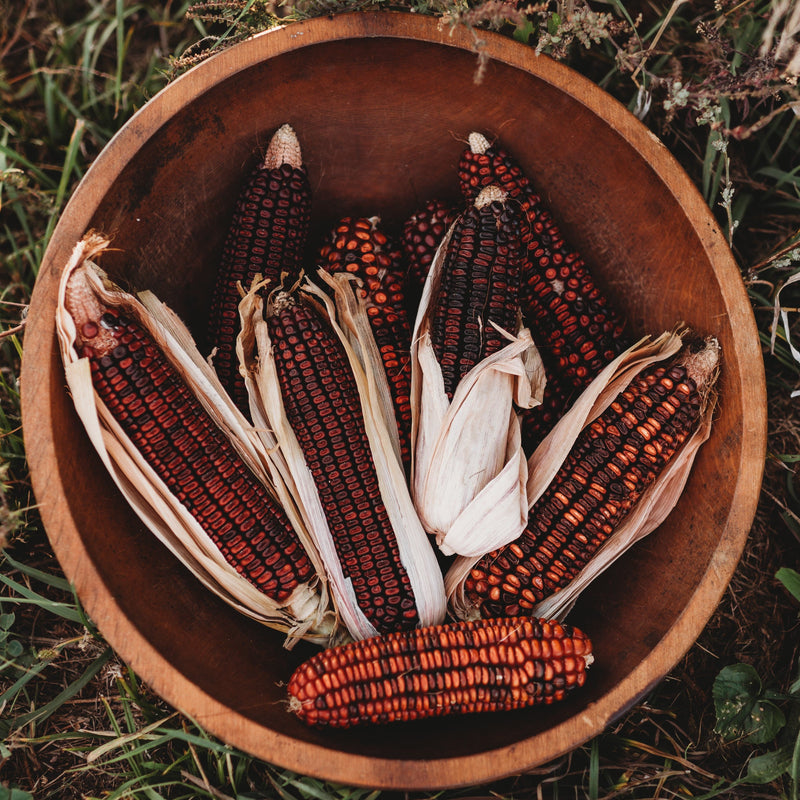
Bloody Butcher is an heirloom red corn once common throughout the hills of Virginia prior to 1845. A longtime favorite for making moonshine and bourbon, Bloody Butcher has a rich history with both commercial and home distillers, owing to its unique anthocyanin profile, which can bring about fruity undertones given the right fermentation conditions. It is also reported to be the founding line used to develop the famous Jimmy Red Corn, which is currently experiencing a resurgence in popularity among bourbon enthusiasts.
Bloody Butcher's ten to twelve-foot-tall plants produce large ears containing a mixture of light and dark red kernels with some dark striping on the pericarp (the outer covering of the k... More
Zea mays
Bloody Butcher is an heirloom red corn once common throughout the hills of Virginia prior to 1845. A longtime favorite for making moonshine and bourbon, Bloody Butcher has a rich history with both commercial and home distillers, owing to its unique anthocyanin profile, which can bring about fruity undertones given the right fermentation conditions. It is also reported to be the founding line used to develop the famous Jimmy Red Corn, which is currently experiencing a resurgence in popularity among bourbon enthusiasts.
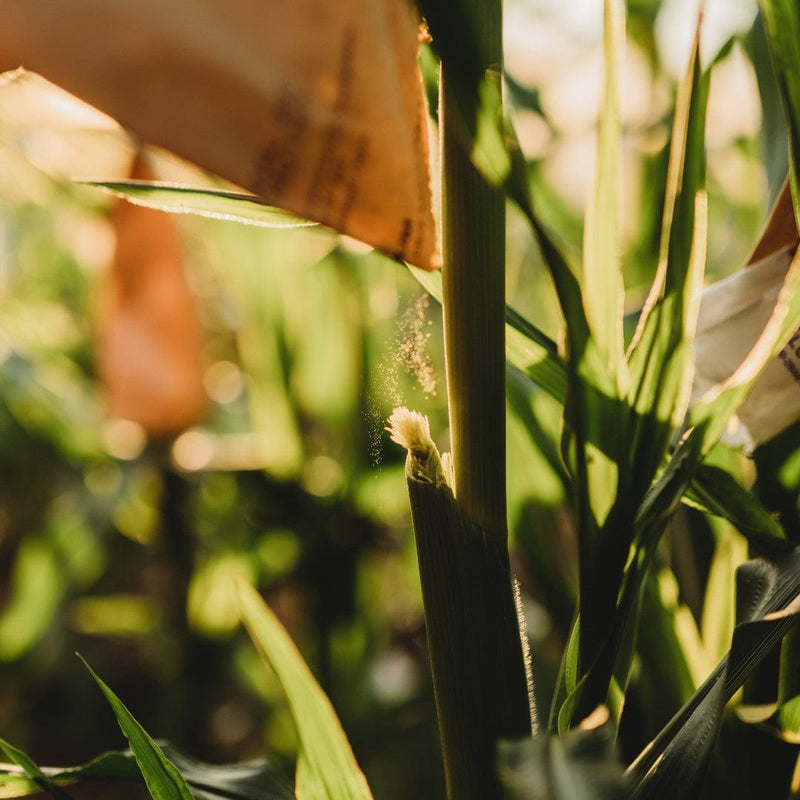
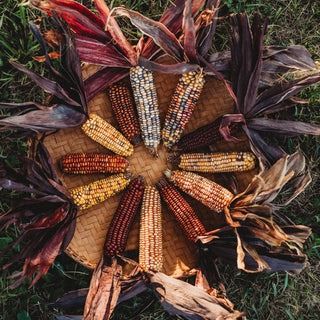
Bloody Butcher's ten to twelve-foot-tall plants produce large ears containing a mixture of light and dark red kernels with some dark striping on the pericarp (the outer covering of the kernel). Its starchy, dented kernels are well-suited to grinding into flour or grits and the attractive ears also make excellent fall decorations. Approximately 120 days to harvest. 50 seeds per packet.
Zea mays
Bloody Butcher is an heirloom red corn once common throughout the hills of Virginia prior to 1845. A longtime favorite for making moonshine and bourbon, Bloody Butcher has a rich history with both commercial and home distillers, owing to its unique anthocyanin profile, which can bring about fruity undertones given the right fermentation conditions. It is also reported to be the founding line used to develop the famous Jimmy Red Corn, which is currently experienci... read more
Zea mays
Bloody Butcher is an heirloom red corn once common throughout the hills of Virginia prior to 1845. A longtime favorite for making moonshine and bourbon, Bloody Butcher has a rich history with both commercial and home distillers, owing to its unique anthocyanin profile, which can bring about fruity undertones given the right fermentation conditions. It is also reported to be the founding line used to develop the famous Jimmy Red Corn, which is currently experiencing a resurgence in popularity among bourbon enthusiasts.
Bloody Butcher's ten to twelve-foot-tall plants produce large ears containing a mixture of light and dark red kernels with some dark striping on the pericarp (the outer covering of the kernel). Its starchy, dented kernels are well-suited to grinding into flour or grits and the attractive ears also make excellent fall decorations. Approximately 120 days to harvest. 50 seeds per packet.