We ship to the United States, its territories and outlying islands. Returns are accepted within 30 days of receipt. Full warranty information can be found here.






✓ Plant with Confidence—Guaranteed Through 2027
 Get it between -
Open-pollinated varieties, perfect for seed saving.
Safe seeds, free of neonics and other treatments.
It's simple. If you have a problem, we make it right.
Zea mays
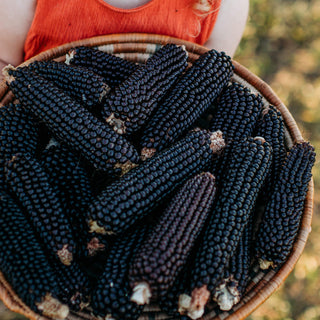
Ohio Blue Clarage is an heirloom variety of corn that produces large ears containing deep set, dark blue kernels. Originating from Ohio, this historical corn variety was once very popular, with catalogs of the day claiming that livestock producers would pay a premium for its ears, which were reported to be preferred by cattle and of a higher feed value than the common yellow dents. The kernels are initially white and contain a higher sugar content than most dent corns (which may explain why cattle love them.) In the days before modern sweet corn, this characteristic led many farmers to market the immature ears for roasting. Today, Blue Clarage corn is used primarily for grinding into colorful, blue-speckle... More
Zea mays
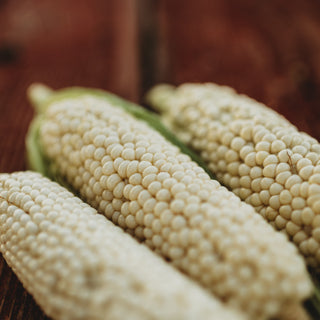
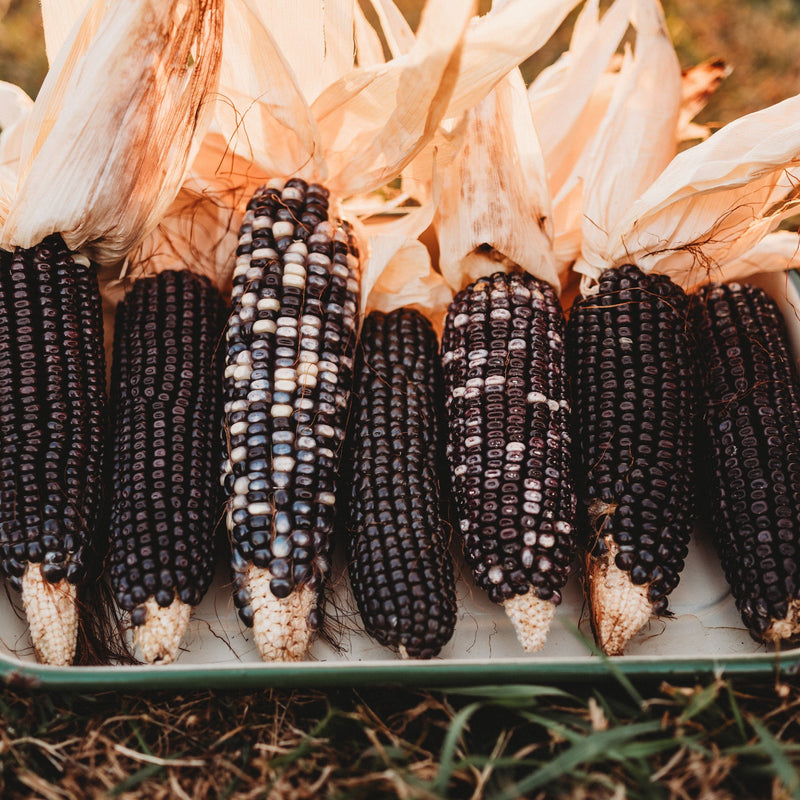
Ohio Blue Clarage is an heirloom variety of corn that produces large ears containing deep set, dark blue kernels. Originating from Ohio, this historical corn variety was once very popular, with catalogs of the day claiming that livestock producers would pay a premium for its ears, which were reported to be preferred by cattle and of a higher feed value than the common yellow dents. The kernels are initially white and contain a higher sugar content than most dent corns (which may explain why cattle love them.) In the days before modern sweet corn, this characteristic led many farmers to market the immature ears for roasting. Today, Blue Clarage corn is used primarily for grinding into colorful, blue-speckled grits and cornmeal, though it has also gained a following among craft distillers who value its ability to impart earthy and nutty flavors to whiskeys and bourbons.
As a class of open-pollinated dent corn, Clarage corn has a deep and surprisingly well-documented history that dates back to the late 1700s. It was developed by Edwin Clarridge of Fayette County, Ohio who sought to improve the corn already popular in that area. By selecting the earliest maturing ears with the deepest kernels, straightest rows and best filled tips, Mr. Clarridge developed a corn that missed the early Ohio frosts while producing the maximum yield possible. Articles of the day state that in years of early frost, neighbors would "make a beaten path to the crib of the man who has sought to raise a sure corn" like Clarage. And as one might guess, farmers soon beat a path to the seed dealer, eager to get their hands on some of that famous Clarage corn seed.
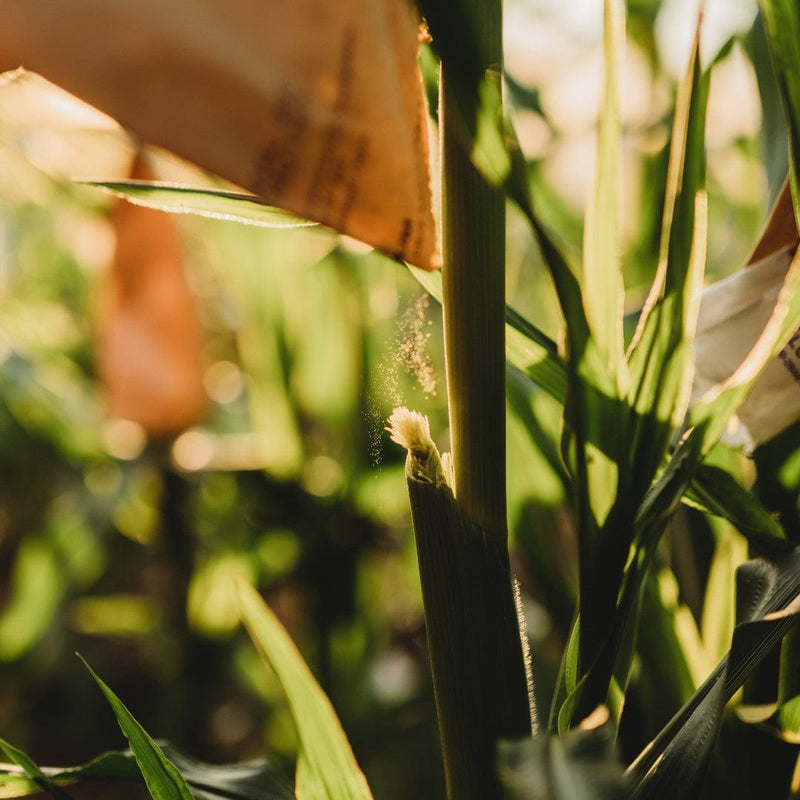
Clarage corn eventually became well-known throughout the country, with all sorts of variants marketed including Little Clarage, White Clarage, Rotten Clarage (there had apparently been a dearth of good copy writers) and of course the variety at hand, Blue Clarage. All Clarage corns are noted for their ability to produce in clay soil, although they yield equally well here on black dirt. Our Ohio Blue Clarage grows approximately 10 feet tall, producing two harvestable ears per stalk. Plants mature approximately 100 days after sowing. Each packet contains a minimum of 50 seeds.
Zea mays
Ohio Blue Clarage is an heirloom variety of corn that produces large ears containing deep set, dark blue kernels. Originating from Ohio, this historical corn variety was once very popular, with catalogs of the day claiming that livestock producers would pay a premium for its ears, which were reported to be preferred by cattle and of a higher feed value than the common yellow dents. The kernels are initially white and contain a higher sugar content than most dent ... read more
Zea mays
Ohio Blue Clarage is an heirloom variety of corn that produces large ears containing deep set, dark blue kernels. Originating from Ohio, this historical corn variety was once very popular, with catalogs of the day claiming that livestock producers would pay a premium for its ears, which were reported to be preferred by cattle and of a higher feed value than the common yellow dents. The kernels are initially white and contain a higher sugar content than most dent corns (which may explain why cattle love them.) In the days before modern sweet corn, this characteristic led many farmers to market the immature ears for roasting. Today, Blue Clarage corn is used primarily for grinding into colorful, blue-speckled grits and cornmeal, though it has also gained a following among craft distillers who value its ability to impart earthy and nutty flavors to whiskeys and bourbons.
As a class of open-pollinated dent corn, Clarage corn has a deep and surprisingly well-documented history that dates back to the late 1700s. It was developed by Edwin Clarridge of Fayette County, Ohio who sought to improve the corn already popular in that area. By selecting the earliest maturing ears with the deepest kernels, straightest rows and best filled tips, Mr. Clarridge developed a corn that missed the early Ohio frosts while producing the maximum yield possible. Articles of the day state that in years of early frost, neighbors would "make a beaten path to the crib of the man who has sought to raise a sure corn" like Clarage. And as one might guess, farmers soon beat a path to the seed dealer, eager to get their hands on some of that famous Clarage corn seed.
Clarage corn eventually became well-known throughout the country, with all sorts of variants marketed including Little Clarage, White Clarage, Rotten Clarage (there had apparently been a dearth of good copy writers) and of course the variety at hand, Blue Clarage. All Clarage corns are noted for their ability to produce in clay soil, although they yield equally well here on black dirt. Our Ohio Blue Clarage grows approximately 10 feet tall, producing two harvestable ears per stalk. Plants mature approximately 100 days after sowing. Each packet contains a minimum of 50 seeds.