We ship to the United States, its territories and outlying islands. Returns are accepted within 30 days of receipt. Full warranty information can be found here.




✓ Plant with Confidence—Guaranteed Through 2027
 Get it between -
Open-pollinated varieties, perfect for seed saving.
Safe seeds, free of neonics and other treatments.
It's simple. If you have a problem, we make it right.
Zea mays
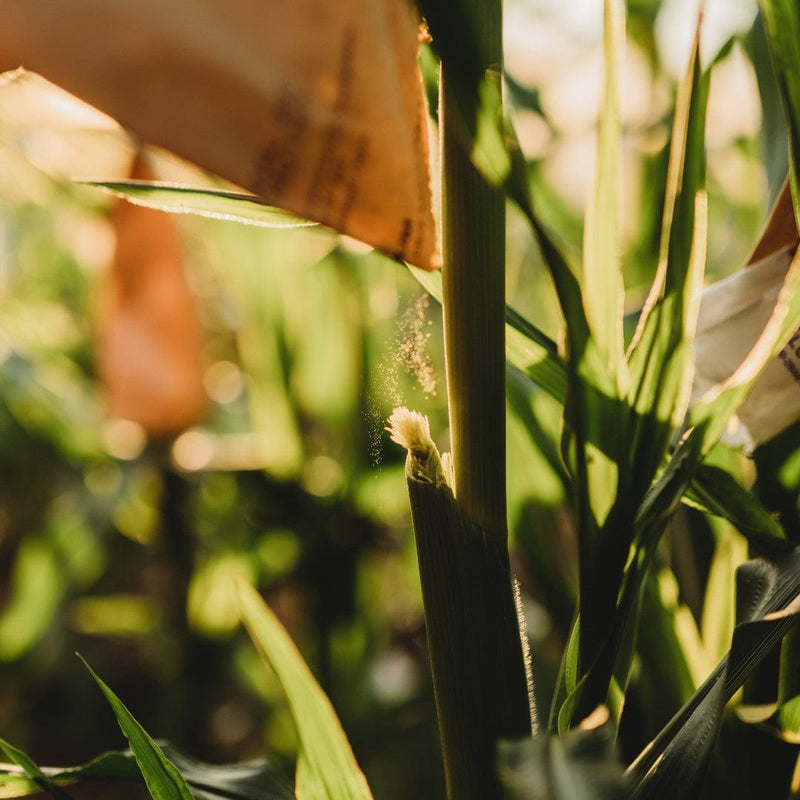
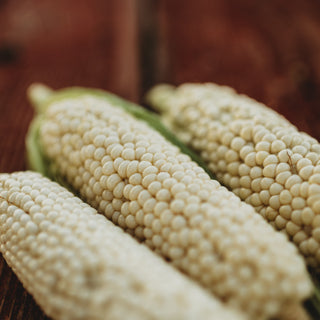
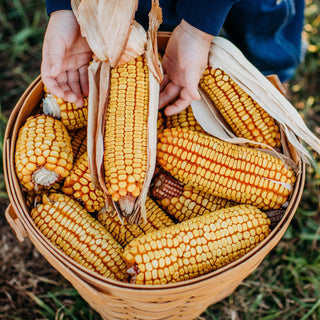
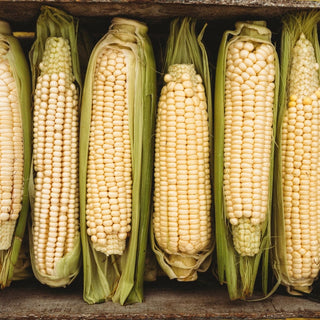
Hickory King Corn is a pre-1875 heirloom dent corn, introduced by A.O. Lee of Hickory, Virginia—and sometimes remembered as Hickory Cane. From Appalachian foothills to mountain hollows, it became a cornerstone of subsistence farming, carrying families through lean seasons with its towering stalks and dependable ears. W. Atlee Burpee praised it in 1888 as “entirely distinct from all other varieties,” noting its rare combination of massive white kernels and an unusually small cob.
Trials at the Virginia Agricultural Experiment Station in 1905 and 1906 underscored its dependability. Whereas western varieties like Boone County White surged ahead only in favorable years, Hickory King held steady yields even ... More
Zea mays
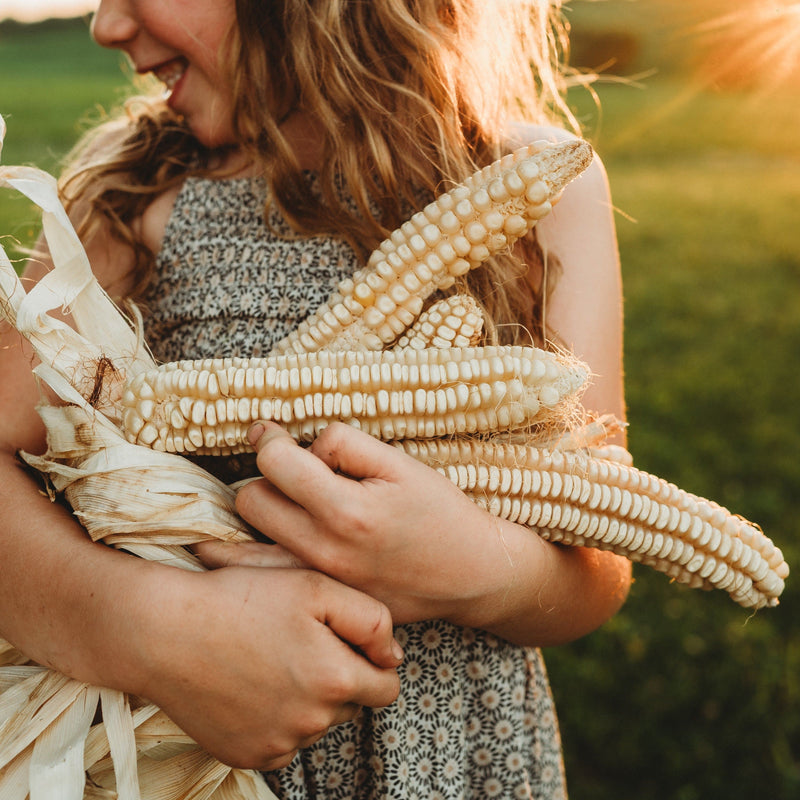
Hickory King Corn is a pre-1875 heirloom dent corn, introduced by A.O. Lee of Hickory, Virginia—and sometimes remembered as Hickory Cane. From Appalachian foothills to mountain hollows, it became a cornerstone of subsistence farming, carrying families through lean seasons with its towering stalks and dependable ears. W. Atlee Burpee praised it in 1888 as “entirely distinct from all other varieties,” noting its rare combination of massive white kernels and an unusually small cob.
Trials at the Virginia Agricultural Experiment Station in 1905 and 1906 underscored its dependability. Whereas western varieties like Boone County White surged ahead only in favorable years, Hickory King held steady yields even under less-than-favorable conditions—traits that made it invaluable on the rain-leached soils of the mountains.
By 1914, Hickory King’s reputation had spread abroad, becoming one of the most widely cultivated white dents in South Africa, valued for its large grain and adaptability to lighter soils. Though it would later be overshadowed by commodity Yellow Dent, Hickory King remains a living relic of nineteenth-century agriculture: a rare survivor from the age of regional seed traditions and family farm resilience.
Zea mays
Hickory King Corn is a pre-1875 heirloom dent corn, introduced by A.O. Lee of Hickory, Virginia—and sometimes remembered as Hickory Cane. From Appalachian foothills to mountain hollows, it became a cornerstone of subsistence farming, carrying families through lean seasons with its towering stalks and dependable ears. W. Atlee Burpee praised it in 1888 as “entirely distinct from all other varieties,” noting its rare combination of massive white kernels and an unusua... read more
Zea mays
Hickory King Corn is a pre-1875 heirloom dent corn, introduced by A.O. Lee of Hickory, Virginia—and sometimes remembered as Hickory Cane. From Appalachian foothills to mountain hollows, it became a cornerstone of subsistence farming, carrying families through lean seasons with its towering stalks and dependable ears. W. Atlee Burpee praised it in 1888 as “entirely distinct from all other varieties,” noting its rare combination of massive white kernels and an unusually small cob.
Trials at the Virginia Agricultural Experiment Station in 1905 and 1906 underscored its dependability. Whereas western varieties like Boone County White surged ahead only in favorable years, Hickory King held steady yields even under less-than-favorable conditions—traits that made it invaluable on the rain-leached soils of the mountains.
By 1914, Hickory King’s reputation had spread abroad, becoming one of the most widely cultivated white dents in South Africa, valued for its large grain and adaptability to lighter soils. Though it would later be overshadowed by commodity Yellow Dent, Hickory King remains a living relic of nineteenth-century agriculture: a rare survivor from the age of regional seed traditions and family farm resilience.