We ship to the United States, its territories and outlying islands. Returns are accepted within 30 days of receipt. Full warranty information can be found here.






✓ Plant with Confidence—Guaranteed Through 2027
 Get it between -
Open-pollinated varieties, perfect for seed saving.
Safe seeds, free of neonics and other treatments.
It's simple. If you have a problem, we make it right.

Solanum lycopersicum
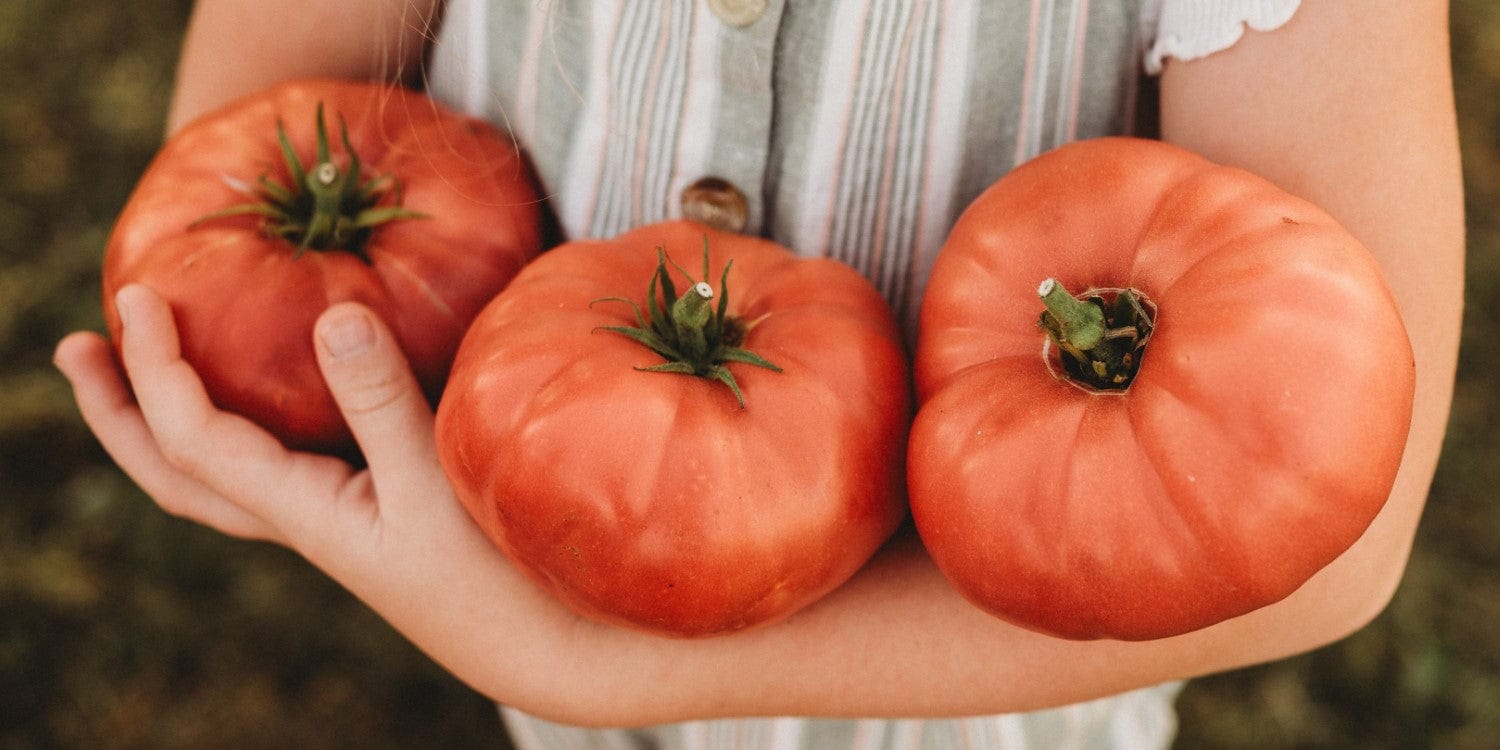
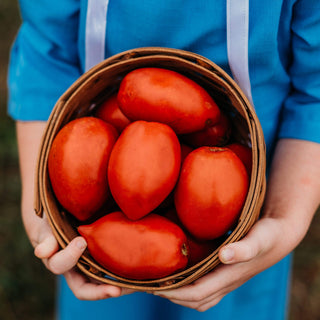
Delicious is a remarkably productive heirloom beefsteak tomato that produces enormous, beautifully formed red tomatoes with outstanding flavor. In our 2026 trials, this impressive variety produced some of the largest tomatoes we've ever grown, one was as wide as our 4-year-old's head! Even more remarkable was their abundance, with vigorous plants developing heavy clusters of these magnificent tomatoes. And while some big tomatoes tend to adopt a messy form as they size up—which, honestly, we don't mind—our Delicious tomatoes held it all together, staying smooth, attractive, and nearly blemish-free.
Introduced by Burpee in 1964 after years of selection from the old Beefsteak tomato, ... More
Solanum lycopersicum
Delicious is a remarkably productive heirloom beefsteak tomato that produces enormous, beautifully formed red tomatoes with outstanding flavor. In our 2026 trials, this impressive variety produced some of the largest tomatoes we've ever grown, one was as wide as our 4-year-old's head! Even more remarkable was their abundance, with vigorous plants developing heavy clusters of these magnificent tomatoes. And while some big tomatoes tend to adopt a messy form as they size up—which, honestly, we don't mind—our Delicious tomatoes held it all together, staying smooth, attractive, and nearly blemish-free.
Introduced by Burpee in 1964 after years of selection from the old Beefsteak tomato, Delicious was developed to produce exceptionally large tomatoes with a smoother, more uniform appearance. Its greatest claim to fame came in 1986, when Gordon Graham of Edmond, Oklahoma, grew a staggering 7-pound, 12-ounce Delicious tomato that earned a place in the Guinness Book of World Records. For nearly three decades, this remarkable specimen held the title of the world's biggest tomato, establishing Delicious as one of America's most celebrated giant tomato varieties.
Fortunately, Delicious offers far more than impressive size. Its thick, meaty red flesh has a rich, satisfying flavor that lives up to its name. Perfect for fresh slicing, just one giant tomato can provide enough generous slices for an entire family's sandwiches! The substantial flesh is equally delicious in salads, burgers, and homemade tomato sauce. For gardeners dreaming of growing enormous red tomatoes without sacrificing flavor or productivity, Delicious is an outstanding choice. Approximately 75 days to harvest. Each packet contains a minimum of 50 seeds.
Solanum lycopersicum
Delicious is a remarkably productive heirloom beefsteak tomato that produces enormous, beautifully formed red tomatoes with outstanding flavor. In our 2026 trials, this impressive variety produced some of the largest tomatoes we've ever grown, one was as wide as our 4-year-old's head! Even more remarkable was their abundance, with vigorous plants developing heavy clusters of these magnificent tomatoes. And while some big tomatoes tend to adopt a messy f... read more
Solanum lycopersicum
Delicious is a remarkably productive heirloom beefsteak tomato that produces enormous, beautifully formed red tomatoes with outstanding flavor. In our 2026 trials, this impressive variety produced some of the largest tomatoes we've ever grown, one was as wide as our 4-year-old's head! Even more remarkable was their abundance, with vigorous plants developing heavy clusters of these magnificent tomatoes. And while some big tomatoes tend to adopt a messy form as they size up—which, honestly, we don't mind—our Delicious tomatoes held it all together, staying smooth, attractive, and nearly blemish-free.
Introduced by Burpee in 1964 after years of selection from the old Beefsteak tomato, Delicious was developed to produce exceptionally large tomatoes with a smoother, more uniform appearance. Its greatest claim to fame came in 1986, when Gordon Graham of Edmond, Oklahoma, grew a staggering 7-pound, 12-ounce Delicious tomato that earned a place in the Guinness Book of World Records. For nearly three decades, this remarkable specimen held the title of the world's biggest tomato, establishing Delicious as one of America's most celebrated giant tomato varieties.
Fortunately, Delicious offers far more than impressive size. Its thick, meaty red flesh has a rich, satisfying flavor that lives up to its name. Perfect for fresh slicing, just one giant tomato can provide enough generous slices for an entire family's sandwiches! The substantial flesh is equally delicious in salads, burgers, and homemade tomato sauce. For gardeners dreaming of growing enormous red tomatoes without sacrificing flavor or productivity, Delicious is an outstanding choice. Approximately 75 days to harvest. Each packet contains a minimum of 50 seeds.