We ship to the United States, its territories and outlying islands. Returns are accepted within 30 days of receipt. Full warranty information can be found here.




✓ Plant with Confidence—Guaranteed Through 2027
 Get it between -
Open-pollinated varieties, perfect for seed saving.
Safe seeds, free of neonics and other treatments.
It's simple. If you have a problem, we make it right.

Zea mays
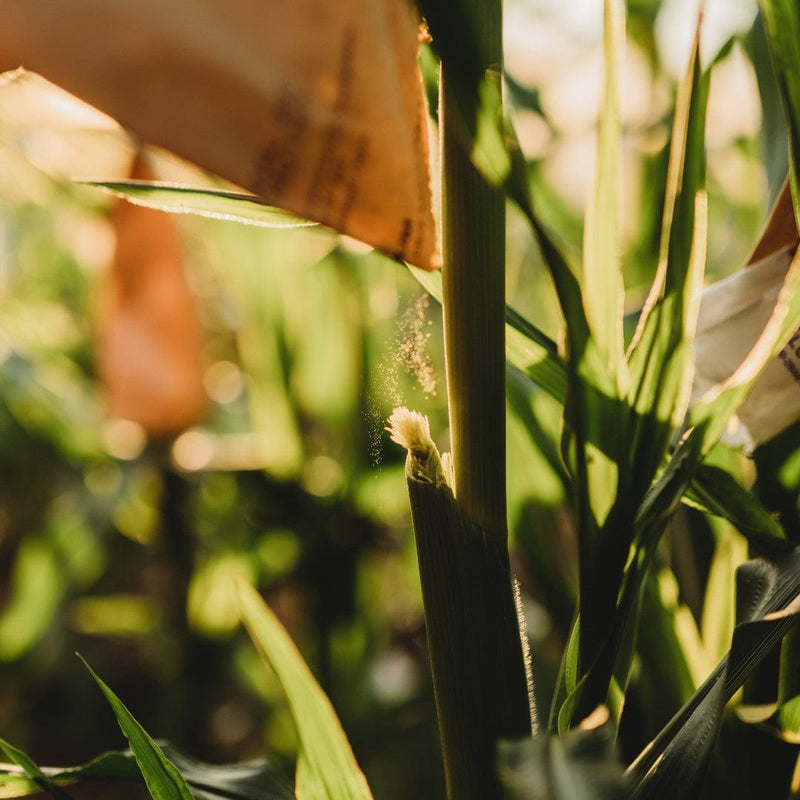
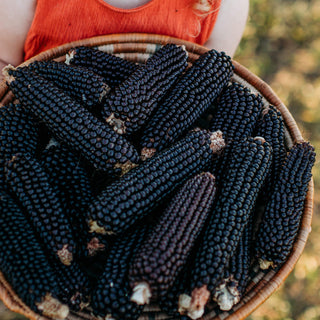
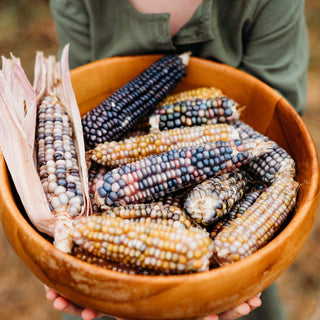
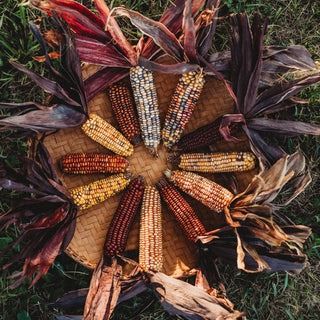
Big Horse Spotted Corn is an Indigenous flour corn collected in 1950s from the Osage Reservation in northern Oklahoma. Although little is known about the history of this variety, its beauty has endured, producing attractive, well-filled ears with a striking mix of blue, white, and bronze kernels marked by a distinctive spotted pattern.
The genetics of this variety is interesting in its own right—we think it would make great STEM project material for students interested in learning more about biology and genetics. The spotting pattern appears to be caused by a transposon (jumping gene) insertion in one of the kernel color bios... More
Zea mays
Big Horse Spotted Corn is an Indigenous flour corn collected in 1950s from the Osage Reservation in northern Oklahoma. Although little is known about the history of this variety, its beauty has endured, producing attractive, well-filled ears with a striking mix of blue, white, and bronze kernels marked by a distinctive spotted pattern.
The genetics of this variety is interesting in its own right—we think it would make great STEM project material for students interested in learning more about biology and genetics. The spotting pattern appears to be caused by a transposon (jumping gene) insertion in one of the kernel color biosynthesis genes. Dosage patterns are evident, suggesting possible Ac-Ds transposon activity. If you have a young scientist interested in studying this variety, we'd encourage the exploration. Perhaps we can even publish their findings on our blog!
As a flour corn, Bighorse has a relatively loose pericarp, making it well suited to grinding into cornmeal. Historically, Indigenous flour corns like this would have been used for flatbreads and other staple foods prepared on hot stones or griddles—the functional ancestors of modern tortillas. But even if you don't get around to grinding it, Big Horse Spotted corn is just fun to grow and would make a stunning "Indian corn" to use in fall displays. Matures approximately 115 days after sowing. Each packet contains a minimum of 50 seeds.
Seed stock generously provided by the National Genetic Resources Program. PI 213755
Zea mays
Big Horse Spotted Corn is an Indigenous flour corn collected in 1950s from the Osage Reservation in northern Oklahoma. Although little is known about the history of this variety, its beauty has endured, producing attractive, well-filled ears with a striking mix of blue, white, and bronze kernels marked by a distinctive spotted pattern.
The genetics of this variety is interesting in... read more
Zea mays
Big Horse Spotted Corn is an Indigenous flour corn collected in 1950s from the Osage Reservation in northern Oklahoma. Although little is known about the history of this variety, its beauty has endured, producing attractive, well-filled ears with a striking mix of blue, white, and bronze kernels marked by a distinctive spotted pattern.
The genetics of this variety is interesting in its own right—we think it would make great STEM project material for students interested in learning more about biology and genetics. The spotting pattern appears to be caused by a transposon (jumping gene) insertion in one of the kernel color biosynthesis genes. Dosage patterns are evident, suggesting possible Ac-Ds transposon activity. If you have a young scientist interested in studying this variety, we'd encourage the exploration. Perhaps we can even publish their findings on our blog!
As a flour corn, Bighorse has a relatively loose pericarp, making it well suited to grinding into cornmeal. Historically, Indigenous flour corns like this would have been used for flatbreads and other staple foods prepared on hot stones or griddles—the functional ancestors of modern tortillas. But even if you don't get around to grinding it, Big Horse Spotted corn is just fun to grow and would make a stunning "Indian corn" to use in fall displays. Matures approximately 115 days after sowing. Each packet contains a minimum of 50 seeds.
Seed stock generously provided by the National Genetic Resources Program. PI 213755