We ship to the United States, its territories and outlying islands. Returns are accepted within 30 days of receipt. Full warranty information can be found here.






✓ Plant with Confidence—Guaranteed Through 2027
 Get it between -
Open-pollinated varieties, perfect for seed saving.
Safe seeds, free of neonics and other treatments.
It's simple. If you have a problem, we make it right.
Zea mays
Wapsie Valley Dent is an heirloom variety of dent corn that produces 7 to 8-inch-long ears filled with golden kernels. Developed by Adolph Steinbronn of Bremer County, Iowa, Wapsie Valley Dent was selected from a cross between Reid's Yellow Dent and a once-popular dent variety known as Golden Glow. It was released to growers in 1971. Wapsie Valley Dent features well-formed ears borne on 9-foot-tall plants with good standability and overall yield. The golden kernels have a red cast, owing to their pericarp pigmentation, and are reported to be preferred by livestock with an average of 11% crude protein. This nutritional powerhouse isn't just for critters, though. Its golden kernels are well-suited for grin... More
Zea mays
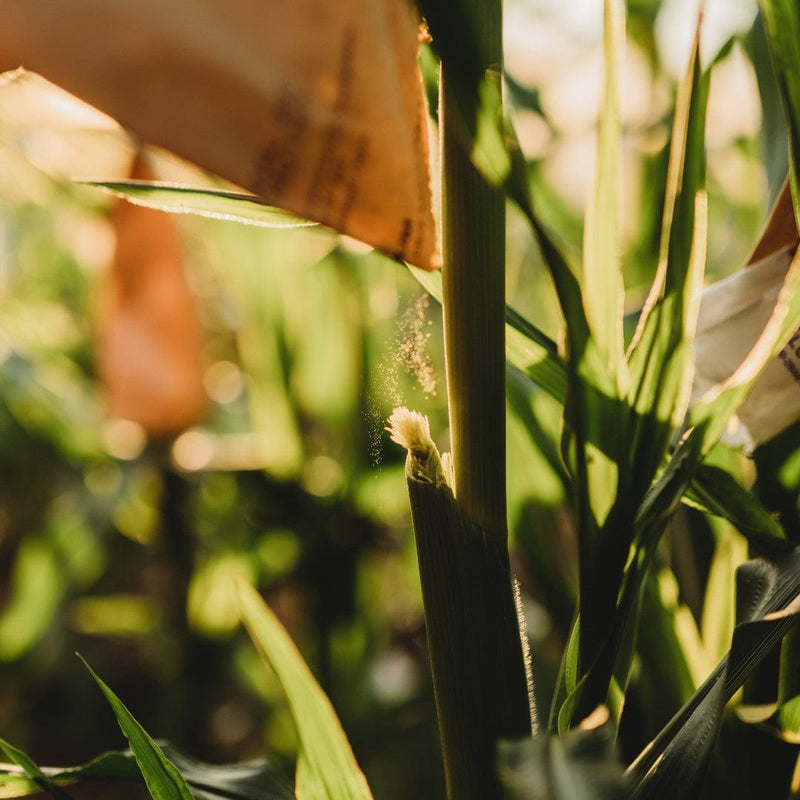
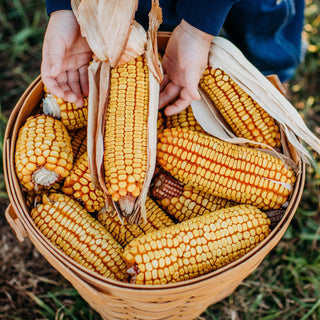
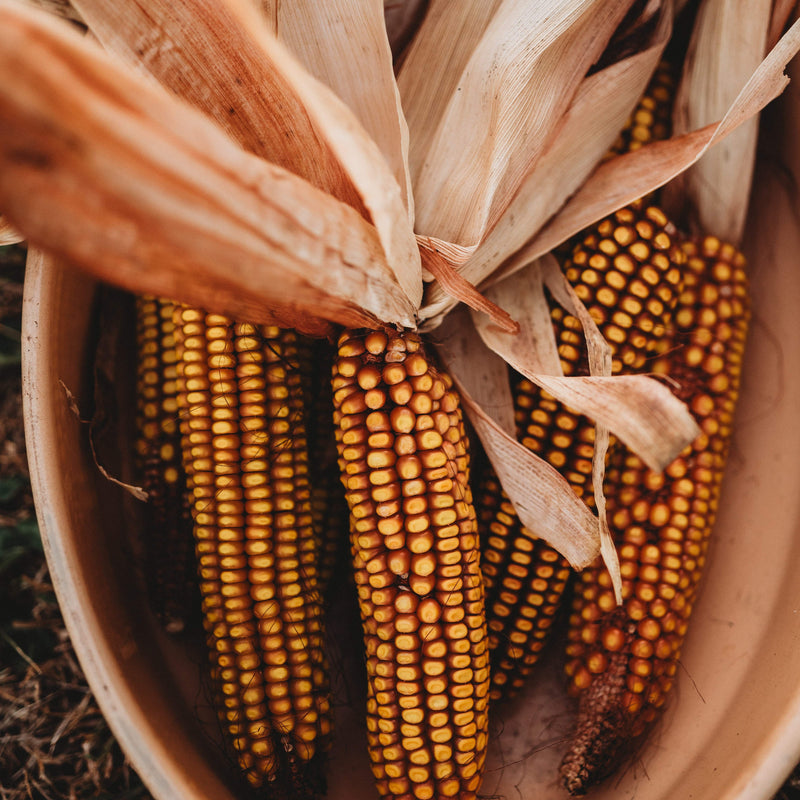
Wapsie Valley Dent is an heirloom variety of dent corn that produces 7 to 8-inch-long ears filled with golden kernels. Developed by Adolph Steinbronn of Bremer County, Iowa, Wapsie Valley Dent was selected from a cross between Reid's Yellow Dent and a once-popular dent variety known as Golden Glow. It was released to growers in 1971. Wapsie Valley Dent features well-formed ears borne on 9-foot-tall plants with good standability and overall yield. The golden kernels have a red cast, owing to their pericarp pigmentation, and are reported to be preferred by livestock with an average of 11% crude protein. This nutritional powerhouse isn't just for critters, though. Its golden kernels are well-suited for grinding into cornmeal and grits. Distillers also report that they also make an excellent, distinctly flavored bourbon.
After Steinbronn passed away, Wapsie Valley Dent was picked up and further improved by longtime corn breeder Victor Kucyk. Its performance in a variety of university and USDA trials surprised researchers, notching yields as high as 152 bushels per acre in one location, on par with the commercial checks used in the study—not bad for an open-source variety.
Although still relatively unknown today, at least by the wider corn grower community, Wapsie Valley Dent represents the life's work of a man who swore off herbicides and industrialized agriculture long before it was popular to do so. His work, combined with that of Kucyk has pushed the limits of what is possible for open-pollinated corn. Today, Steinbronn's family carries on his legacy with the operation of their regenerative organic farm in Waverly, Iowa (see link below). There they produce a variety of open-pollinated corn and small grain varieties while managing a herd of beef cattle. Wapsie Valley Dent matures approximately 87 days after sowing. Each packet contains a minimum of 50 seeds.
If you are interested in purchasing larger quantities of this variety or would like to support the Steinbronn farm directly, please visit their website here.
Zea mays
Wapsie Valley Dent is an heirloom variety of dent corn that produces 7 to 8-inch-long ears filled with golden kernels. Developed by Adolph Steinbronn of Bremer County, Iowa, Wapsie Valley Dent was selected from a cross between Reid's Yellow Dent and a once-popular dent variety known as Golden Glow. It was released to growers in 1971. Wapsie Valley Dent features well-formed ears borne on 9-foot-tall plants with good standability and overall yield. The golden ker... read more
Zea mays
Wapsie Valley Dent is an heirloom variety of dent corn that produces 7 to 8-inch-long ears filled with golden kernels. Developed by Adolph Steinbronn of Bremer County, Iowa, Wapsie Valley Dent was selected from a cross between Reid's Yellow Dent and a once-popular dent variety known as Golden Glow. It was released to growers in 1971. Wapsie Valley Dent features well-formed ears borne on 9-foot-tall plants with good standability and overall yield. The golden kernels have a red cast, owing to their pericarp pigmentation, and are reported to be preferred by livestock with an average of 11% crude protein. This nutritional powerhouse isn't just for critters, though. Its golden kernels are well-suited for grinding into cornmeal and grits. Distillers also report that they also make an excellent, distinctly flavored bourbon.
After Steinbronn passed away, Wapsie Valley Dent was picked up and further improved by longtime corn breeder Victor Kucyk. Its performance in a variety of university and USDA trials surprised researchers, notching yields as high as 152 bushels per acre in one location, on par with the commercial checks used in the study—not bad for an open-source variety.
Although still relatively unknown today, at least by the wider corn grower community, Wapsie Valley Dent represents the life's work of a man who swore off herbicides and industrialized agriculture long before it was popular to do so. His work, combined with that of Kucyk has pushed the limits of what is possible for open-pollinated corn. Today, Steinbronn's family carries on his legacy with the operation of their regenerative organic farm in Waverly, Iowa (see link below). There they produce a variety of open-pollinated corn and small grain varieties while managing a herd of beef cattle. Wapsie Valley Dent matures approximately 87 days after sowing. Each packet contains a minimum of 50 seeds.
If you are interested in purchasing larger quantities of this variety or would like to support the Steinbronn farm directly, please visit their website here.