We ship to the United States, its territories and outlying islands. Returns are accepted within 30 days of receipt. Full warranty information can be found here.






✓ Plant with Confidence—Guaranteed Through 2027
 Get it between -
Open-pollinated varieties, perfect for seed saving.
Safe seeds, free of neonics and other treatments.
It's simple. If you have a problem, we make it right.
Zea mays
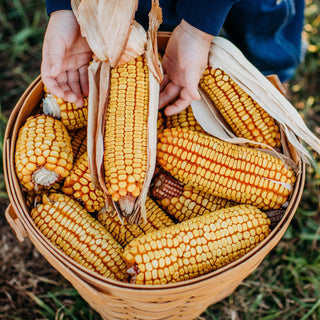
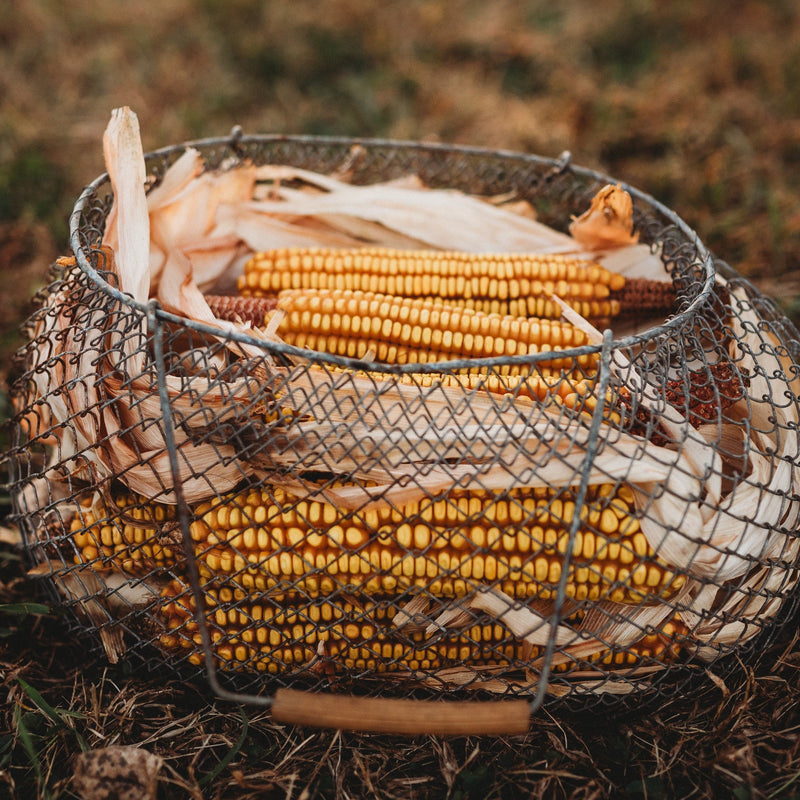
Dublin is an improved, open-pollinated variety of dent corn developed to provide modern farmers with an economical alternative to purchasing hybrid seed corn. Bred by longtime corn breeder Victor Kucyk and named after his hometown in Ontario, this short season dent corn is among several OP varieties that have pushed the limits of what is possible for open-pollinated corn. In USDA trials, Dublin produced yields as high as 127 bushels an acre, considerably lower than the commercial hybrid checks, but still a giant leap compared to the commercially available OPs, most of which date back to the 1930s.
Besides its yield, Dublin is noted for its wide adaptability and drought tolerance. In a study conducted... More
Zea mays
Dublin is an improved, open-pollinated variety of dent corn developed to provide modern farmers with an economical alternative to purchasing hybrid seed corn. Bred by longtime corn breeder Victor Kucyk and named after his hometown in Ontario, this short season dent corn is among several OP varieties that have pushed the limits of what is possible for open-pollinated corn. In USDA trials, Dublin produced yields as high as 127 bushels an acre, considerably lower than the commercial hybrid checks, but still a giant leap compared to the commercially available OPs, most of which date back to the 1930s.
Besides its yield, Dublin is noted for its wide adaptability and drought tolerance. In a study conducted by the Agricultural Research Foundation and the Dry Farming Institute, Dublin was not only the highest yielding of the twelve varieties tested, but it also maintained that mantle under both irrigated and dry-farmed conditions, indicating a suitability to a wide variety of environments.
With the cost of inputs rising and prices stagnant, many producers are taking a second look at OPs and wondering if the calculation might make sense for their operation— and if doesn't make sense yet, how long will it be before someone manages to push an OP over that red line? If you're an out-of-the-box thinker, and maybe a tinkerer, we'd encourage you to take a page from Kucyk and give corn breeding a try. Who knows, you just might be the one to accomplish what generations of passionate hobby breeders have been working towards. Dublin matures approximately Each packet contains a minimum of 50 seeds.
Zea mays
Dublin is an improved, open-pollinated variety of dent corn developed to provide modern farmers with an economical alternative to purchasing hybrid seed corn. Bred by longtime corn breeder Victor Kucyk and named after his hometown in Ontario, this short season dent corn is among several OP varieties that have pushed the limits of what is possible for open-pollinated corn. In USDA trials, Dublin produced yields as high as 127 bushels an acre, considerably lower th... read more
Zea mays
Dublin is an improved, open-pollinated variety of dent corn developed to provide modern farmers with an economical alternative to purchasing hybrid seed corn. Bred by longtime corn breeder Victor Kucyk and named after his hometown in Ontario, this short season dent corn is among several OP varieties that have pushed the limits of what is possible for open-pollinated corn. In USDA trials, Dublin produced yields as high as 127 bushels an acre, considerably lower than the commercial hybrid checks, but still a giant leap compared to the commercially available OPs, most of which date back to the 1930s.
Besides its yield, Dublin is noted for its wide adaptability and drought tolerance. In a study conducted by the Agricultural Research Foundation and the Dry Farming Institute, Dublin was not only the highest yielding of the twelve varieties tested, but it also maintained that mantle under both irrigated and dry-farmed conditions, indicating a suitability to a wide variety of environments.
With the cost of inputs rising and prices stagnant, many producers are taking a second look at OPs and wondering if the calculation might make sense for their operation— and if doesn't make sense yet, how long will it be before someone manages to push an OP over that red line? If you're an out-of-the-box thinker, and maybe a tinkerer, we'd encourage you to take a page from Kucyk and give corn breeding a try. Who knows, you just might be the one to accomplish what generations of passionate hobby breeders have been working towards. Dublin matures approximately Each packet contains a minimum of 50 seeds.