

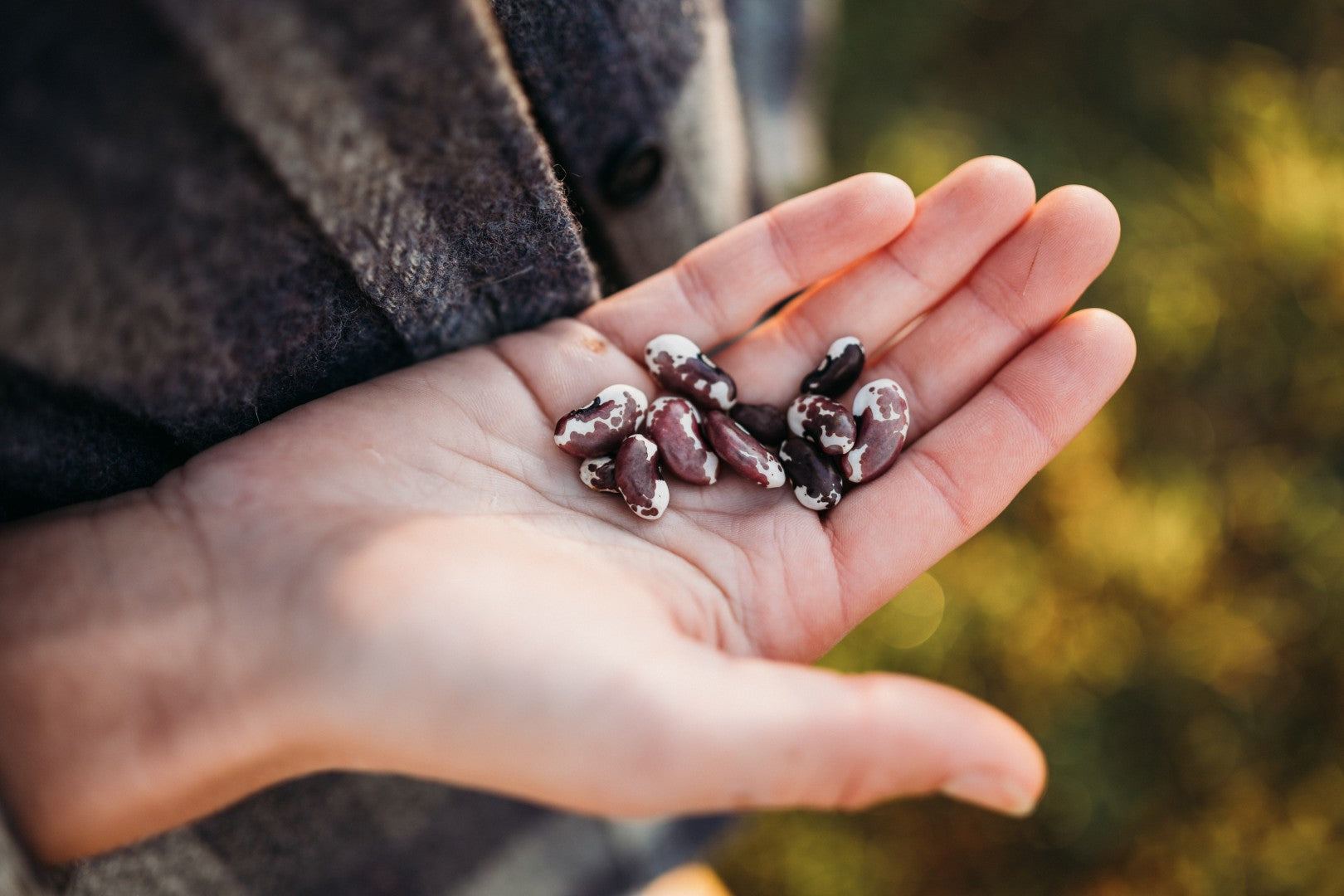
The practice of soaking seeds before planting is a tradition that dates back centuries. The Hidatsa people are known to have soaked corn seeds when planting their second crop in mid-summer, a practice thought to offset the drier soil conditions common at that time of year. Likewise, Appalachian gardeners in the late 19th century described soaking okra seeds overnight to soften their tough seed coats and hasten germination.
Today, however, amid an ever-growing volume of gardening advice, seed soaking is often presented as a universal rule—recommended for nearly every seed, in every situation, and for widely varying lengths of time. It leaves many gardeners wondering: Do I really need to soak seeds before planting? Which seeds can be soaked? And how long is too long?
This article aims to cut through some of the trendier advice and return to basics—examining what seeds actually need to germinate, when soaking offers a real advantage, and when it’s best to keep things simple. My hope is that by the end, you’ll feel equipped to decide for yourself whether a particular seed will benefit from the effort of soaking. And if you do choose to soak, I’ll share practical guidelines—along with a closely related alternative that gardeners have successfully used for generations to jump-start especially stubborn seeds.

Gehu Early Yellow Flint, a variety bred by the Mandan tribe, is a flint corn that could have been soaked when planting late in the season.
The History of Seed Soaking
In the book Buffalo Bird Woman's Garden (1917), which describes the gardening and cultural practices of the Hidatsa natives during the middle of the 19th century, Buffalo Bird Woman describes her method for seed soaking and its application.
The very last corn that we planted we sometimes put into a little tepid water, if the season was late. Seed used for replanting hills that had been destroyed by crows or magpies we also soaked. We left the seed in the water only a short time, when the water was poured off —Buffalo Bird Woman, 1917
She later describes wetting the "last-planted" seeds in her mouth when warm water was not convenient. It is clear that in either case the soaking period was short and intended only to give the seeds an easier start, not in hopes of an earlier harvest. She notes later in the section that the ears of these plants still matured later than those of the first-planted, dry seeds.
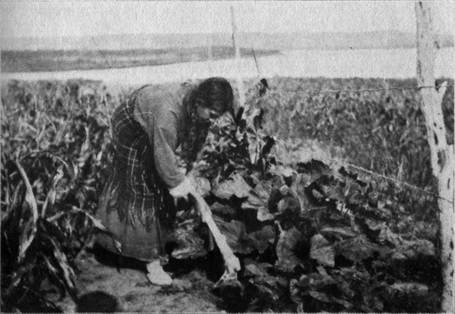
Buffalo Bird Woman's daughter-in-law demonstrates the traditional Hidatsa gardening practices. Buffalo Bird Woman's Garden, 1917.
Likewise, in Foxfire 4, Appalachian gardener Florence Brooks describes soaking okra seeds before planting.
"We always put th'seeds in a cup of warm water one night, let'em sprout, an' take'em out an' plant'em th'next day." —Foxfire 4, 1977
In my reading of these resources, I find no other mention of soaking seeds, which leads me to conclude that it was a rare practice, used only on certain seeds at certain times. So, how does one know when seed soaking should be used? We'll cover that next.

Generations of gardeners have pre-soaked okra seeds prior to planting in order to soften their seed coat and initiate germination.
Why Soak Seeds?
It's clear from the historical perspective that seed soaking has a few traditional applications. To these, I've added one of my own.
Hard Seed Coats—Certain seeds like okra and artichoke, are encased in a hard seed coat that slows water absorption and delays germination. Soaking these seeds can soften the seed coat, facilitating faster germination.
Dry Soil—Later in the season, dry soil conditions can make it difficult to get seeds started. Soaking seeds before planting helps to rehydrate the embryo contained within the seed and jumpstart germination.
Old, Dormant or Scarce Seed—When you are working with seed that is old, dormant or scarce, some babying may be warranted. Just be sure to confirm that it is a seed type that likes to be soaked. More on that later.
But as we will learn later, our good intentions do not always guarantee good results. Using the right approach is crucial to guaranteeing that our efforts are worthwhile.

Although they do have a hard seed coat, okra seeds will germinate readily in soil that is sufficiently moist. Here I'm planting dry seeds into freshly-tilled soil.
What Seeds Need to Germinate
At its core, germination is a simple process. Seeds don’t typically need special treatments or interventions to sprout—they need the right conditions. Those conditions are moisture, oxygen, and temperature, in the proper balance.
Temperature acts as the gatekeeper to germination. Unless it falls within a seed's genetically programmed "permissive" range, germination simply won't occur. In nature, this programming serves to protect seeds from germinating outside of their appropriate season.
Water is the trigger. It initiates germination by softening the seed coat and rehydrating the embryo inside, thereby activating the metabolic processes that lead to germination.
Oxygen is essential to germination because as soon as a seed begins to hydrate, it also begins to respire, using oxygen to break down stored sugars and generate the energy required for germination.
That last point matters. And as we’ll see next, it’s what makes soaking seeds prior to planting such a delicate practice.
Special note: Yes, light (or alternatively, darkness) is sometimes needed to activate the germination of specific types of seed. For the purposes of this article, we will not be discussing these requirements as they are similar for both soaked and non-soaked seeds.

Freshly harvested lima bean seeds. Variety: Early Thorogreen
When Seed Soaking Goes Wrong
You may have already sensed from my tone that I am a little cautious around the practice of seed soaking—and that comes from experience. Many times, when a customer comes to us with a germination issue, they've attempted to soak the seed before planting. To better understand why seed soaking often goes wrong, we first need to understand a little biology:
The Breathing Seed
We often think of plants in terms of photosynthesis, but they also respire—consuming oxygen to release the energy needed for growth. Seeds behave the same way. As soon as a seed absorbs water, respiration begins, well before any shoot appears.
In soil, this process usually works smoothly. Excess water drains away, air remains in the pore spaces between soil particles, and seeds continue to receive the oxygen they need as germination gets underway.

Soil acts as the perfect buffer between water and air. Pores within the soil allow water to drain away after a rain. They also surround the seed with air, a critical component of germination.
Soaking Creates a Low-Oxygen Environment
Soaking alters the balance between water and air that seeds normally experience in soil. When seeds are submerged, oxygen moves more slowly than it does through air, and the limited supply is quickly used as respiration increases.
For short periods, many seeds tolerate this just fine. But as soaking continues, oxygen levels can fall below what’s needed to sustain normal metabolic activity. At that point, energy production slows, cellular processes become less efficient, and the risk of decay begins to rise. In these cases, prolonged soaking can work against germination rather than supporting it.
Soaking Can Spread Disease
Soaking affects more than the seed—it also reshapes the microbial environment around it. All seeds, by their very nature, are not sterile. Even high-quality, professionally produced seed carries a small, natural population of microorganisms.
When seeds are submerged, moisture, warmth, and limited oxygen activate those microbes all at once. In a shared soaking container, organisms from one seed can easily spread to others. Rather than isolating problems, soaking can amplify them—seeds aren’t just hydrating, they’re effectively marinating together in conditions that favor decay over germination.
In soil, moisture arrives gradually and seeds germinate individually, with oxygen and drainage acting as natural safeguards. Soaking bypasses those checks.

Emerging seedlings with cotyledons. Photo by onehundredseventyfive on Unsplash.
Seed Soaking: A Controlled Experiment
With the potential benefits and tradeoffs of seed soaking in mind, the next step was to see how those factors play out during germination. To explore how different seed types respond to soaking, we ran a simple, controlled experiment.
Seeds were soaked for varying lengths of time—0 (no soaking), 4, 12, 24, and 48 hours—then placed in a germination chamber held at 83°F and 85% humidity. Germination was evaluated daily over six days using paper towels, eliminating soil variability and allowing the effects of soaking alone to be observed.

Average germination across all crops for the six days of the germination experiment.
The Results
To better understand how soaking influenced germination, the results are summarized below as a set of broad patterns observed across crops and soak durations. Together, these points describe how soaking affected both the timing and extent of germination under controlled conditions.
-
Short-duration soaking often reduced the time needed to reach maximum germination.
In most cases, seeds soaked for brief periods reached their full germination sooner than untreated seed. This effect was most apparent in okra, sweet corn, and cucumber, where soaking shifted a greater share of sprouting to earlier days in the germination window. -
Soaking did not increase germination potential.
Across treatments, final germination percentages generally converged on similar values. The primary exception was the longest soak duration, which departed from this pattern. -
Long soaking durations were more likely to harm germination than help it.
As soaking time increased, germination potential declined in several crops, with the 48-hour treatment producing clear losses. This suggests that any benefit from soaking is confined to relatively short windows. -
Soaking was not universally beneficial across seed types.
While some crops tolerated or responded positively to brief soaking, others did not. Beans, in particular, showed marked sensitivity, with even short soak durations sharply reducing germination.
The Takeaway
Taken together, these results suggest that soaking is not required for germination to occur—every crop tested germinated successfully without it. However, when applied selectively and for short durations, soaking can advance the timing of germination in certain seeds. Its value, then, lies not in increasing germination potential, but in addressing specific circumstances where earlier or more synchronized emergence may be desirable.

Germinating bean seeds. Photo by imsogabriel stock on Unsplash.
The Breakdown
The overall results tell only part of the story. When broken down by crop, the response to seed soaking varies considerably. What follows is a closer look at how each seed type performed, highlighting where soaking proved helpful, where it made little difference, and where it clearly worked against successful germination.
Okra
It’s perhaps unsurprising that the seed with the strongest historical precedent for soaking also showed the clearest response. With okra, soaking shifted germination earlier—the 12- and 24-hour treatments produced a large share of sprouted seeds by the first day and reached maximum germination sooner than the short-soak or untreated seeds. Final germination percentages, however, ultimately converged, and longer soaking quickly became detrimental.

Germination response to soaking in Clemson okra.
Corn
Corn tolerated soaking remarkably well and showed a clear response in early germination. Seeds soaked for 4 to 24 hours produced substantially higher emergence by the first day compared to untreated seed, indicating that soaking accelerated the onset of germination. All treatments reached high germination levels within a few days, but soaked seeds reached that point sooner, resulting in a more concentrated and synchronized emergence.

Germination response to soaking in Golden Bantam sweet corn.
Cucumbers
Cucumbers proved to be fairly tolerant of soaking and showed a consistent response in early germination. Brief soaking increased the number of seeds that sprouted in the first day, with the 4-, 12-, and 24-hour treatments all producing earlier emergence than untreated seed. The 24-hour soak, in particular, shifted a large share of germination into the earliest part of the window.

Germination response to soaking in Straight Eight cucumber.
Despite these early differences, all cucumber treatments—aside from the longest soak—reached similarly high final germination percentages within a few days of sowing. As with the other crop types, soaking did not increase germination potential, but it did compress the timing of emergence. This suggests that while cucumbers don’t require soaking to germinate well, they tolerate it readily and may benefit from brief soaking when earlier or more synchronized sprouting is desired.
Beans
Beans, however, told a very different story.
In full disclosure, this result wasn’t entirely unexpected. Almost without exception, when a customer is having trouble germinating beans, they're attempted to soak them first. This is especially true of Roma II beans, which are extremely intolerant of excess moisture during germination. So, to give beans a fair run, we included both Roma II and another variety, Jade which, as far as we know, does not have this issue.

Germination response to soaking in Roma II beans.

Germination response to soaking in Jade bush beans.
As you can see the results are stark. Both Jade and Roma responded poorly to soaking, even at short durations. With Jade, a 4-hour soak reduced overall germination by more than half, and longer soaks resulted in little to no recovery. Roma proved even more sensitive: the 4-hour treatment yielded just 6% germination compared to 82% for untreated seed, with longer soak durations effectively eliminating germination altogether. In contrast to crops that tolerated or benefitted from soaking, beans appeared to be injured early by excess moisture and were unable to recover.
Although not unexpected, I was a little surprised by just how detrimental soaking was in beans, so I did a little digging and apparently this is a well-known and studied phenomenon. It even has a name—soaking injury. I did find some research showing that dissolved oxygen rapidly decreases during the first 3 hours of soaking, so it's possible that a very short soak might have been less damaging but again, with these results, who would want to risk it?

Although soaking seeds before planting isn't required, it can be helpful in certain situations.
When to Soak Seeds
The results of the experiment are clear: where soaking had a benefit, it wasn’t in whether seeds germinated, but in when they did—often producing faster and more uniform emergence within a narrower window. In most cases, that timing shift has little consequence. In a few specific situations, however, it can be useful.
Soaking may be beneficial when:
Soil conditions are dry, such as during late-season planting, when pre-hydrating seed can help ensure quicker and more even emergence.
Seeds have a hard seed coat, as with okra, where soaking can soften the coat and reduce the time needed for germination to begin.
Outside of these contexts, soaking offers little advantage and is unnecessary for successful germination. Just as importantly, not all seeds can be soaked—an issue explored in the following section. Before getting there, it’s worth summarizing a few practical guidelines that emerged from the experiment.
Keys to Successful Seed Soaking
-
Choose seed types that tolerate soaking.
Some seeds are easily damaged by excess moisture. Knowing the crop—and whether it benefits from soaking—is essential. -
Use clean, tepid water.
Water should be fresh and only slightly warm to the touch—never hot. -
Keep soaking durations short.
Any benefit from soaking appears confined to brief periods. Longer soak times increase risk without improving outcomes.
Should you decide to try seed soaking for yourself, following the guidelines outlined above will maximize the benefits while minimizing the risks.

Fast-germinating greens like mizuna do not benefit from soaking. Their seeds initiate germination quickly anyways, often within hours of sowing.
Seeds That Should Not Be Soaked
While soaking can be useful in specific situations, the evidence—both experimental and historical—suggests that some seeds are better left untreated. In these cases, soaking offers little benefit and can introduce unnecessary risk.
-
Beans (e.g., bush beans, pole beans, lima, edamame, runners)
Beans consistently perform poorly when soaked. Even short soaking durations can reduce germination and increase the likelihood of rot and disease. Unless you’re preparing them for the kitchen, beans are best planted dry. -
Fast-germinating vegetables
Crops such as cabbage, kale, broccoli, radishes, mustard, and cowpeas typically germinate quickly on their own—often within a few days—even under cool conditions. Soaking provides little advantage and is unnecessary. -
Lightweight, slow-germinating seeds
Vegetables like carrots, parsnips, parsley, and beets are not conducive to soaking. These seeds are naturally lightweight and won’t sink when soaked. For these crops, better results are achieved by chitting or interplanting with faster-germinating seeds like radishes. Read more about that here.
In short, soaking is not a universal solution. For many common garden crops, planting dry seed into suitable conditions remains the simplest—and most reliable—approach.

Chitting seeds before planting is an alternative approach with fewer risks and potentially more benefits.
An Alternative Approach—Chitting Seeds
Alright, you've seen mentioned a few times now the curiously named method of chitting in seeds before planting. To "chit" a seed means simply to pre-sprout it prior to planting. Soaking may be part of the chitting process, or it may not, but whatever the case, chitting never consists of soaking alone—the seeds must be allowed to sprout (i.e. in the presence of air).
How to Chit Seeds
Here's a simple, straightforward approach I've used for chitting in seeds:
- Prepare a damp towel and bag. Place the towel in a zip-top bag and sprinkle dry seeds on top. Seal, allowing some air to remain inside the bag.
-
Provide warmth. Place the bag somewhere warm and visible so it can be checked daily.
Tip: Always confirm the preferred germination temperature for the seed you’re starting. - Monitor closely. Check seeds at least once a day for signs of sprouting.
- Plant promptly. As soon as the radicle (the emerging root) appears, remove the seed and plant it immediately. Do not delay as the root will become brittle and will be prone to snapping.
- Repeat as needed. Continue removing and planting seeds as they sprout until all viable seeds have germinated.

Bells of Ireland are one of my favorite seeds to chit. In fact, it's the only way I'll start them.
Which Seeds Can Be Chitted In?
Chitting is most useful for seeds that germinate slowly, require warmer conditions than early spring soils can provide, or are too valuable to risk uneven emergence.
- Seeds sold in small quantities—such as peppers—are often chitted to improve efficiency. While not strictly necessary, chitting helps ensure that each planting cell receives a viable seedling and reduces waste.
- Heat-loving crops like melons, squash, and cucumbers germinate best at higher soil temperatures than are often unavailable early in the season. Chitting allows these seeds to be started under warm, controlled conditions before planting.
- Crops with tough seed coats, such as okra and artichoke, may benefit from chitting, which allows germination to begin without prolonged exposure to excess moisture.
- Hard-to-germinate seeds like Bells of Ireland and sweet peas respond well to chitting. In my own experience, Bells of Ireland germinate most reliably when chitted—first chilled briefly in the refrigerator, then moved to warmth to trigger sprouting. The same approach likely applies to other hard-seeded ornamentals.
- Early planted peas are sometimes chitted to encourage more uniform emergence very early in the season, though peas generally germinate well without intervention so long as the ground isn't frozen.

Chitting cucurbits like melons and squash allows them to be planted early without subjecting the young plants to transplanting shock.
Benefits of Chitting Seeds
Beyond the benefits already discussed, chitting seeds can lead to earlier harvests. I don’t say this because chitting somehow accelerates plant development, but rather because it allows the gardener to get ahead of the typical planting cycle. Let me explain.
There’s often a window in spring when the danger of frost has passed, yet soil temperatures remain too cool for reliable germination of certain heat-loving crops. Cucurbits such as cucumbers and melons, for example, prefer soil temperatures around 75°F—a threshold that often isn’t reached until weeks after the last frost.
Chitting seeds like these allows the gardener to start plants a few weeks early without subjecting them to the stresses of transplanting. Likewise, beans, which despise both soaking and transplanting, can be chitted and planted a little earlier than otherwise possible. This can reduce losses to common soil pathogens, such as those responsible for damping off—a condition in which seeds rot before emergence.
It’s important to note that chitting and soaking are not interchangeable in this respect. Soaking a seed—regardless of duration—and then planting it into cool soil is likely to end in disappointment, and seed rot. This approach only works when seeds are allowed to sprout before sowing them.

Final Thoughts
Seed soaking is neither a relic of the past nor a universal requirement—it is a tool, and like most tools in the garden, it works best when applied with intention. Historically, it was used sparingly and purposefully, and the experimental results here reinforce that wisdom. Soaking does not improve whether seeds germinate, only when they do—and even then, only for certain crops, under certain conditions, and for short durations.
For most gardeners, planting dry seed into well-prepared soil remains the simplest and most reliable approach. When conditions call for intervention—dry soils, hard seed coats, or especially valuable seed—brief soaking or, better yet, chitting can offer real advantages without introducing unnecessary risk. The key is understanding what the seed actually needs, rather than applying a one-size-fits-all solution.
In the end, successful germination isn’t about doing more—it’s about doing what’s appropriate. When we let biology, history, and careful observation guide our choices, seeds tend to do what they’ve always done best: grow.
Want to learn more about seed starting? Check out our other seed starting articles including Direct-Seeding vs. Transplanting and Selecting the Best Soil for Your Seeds


