We ship to the United States, its territories and outlying islands. Returns are accepted within 30 days of receipt. Full warranty information can be found here.

Free Shipping on Orders $35+
✓ Plant with Confidence—Guaranteed Through 2027
Get it between -
We ship to the United States, its territories and outlying islands. Returns are accepted within 30 days of receipt. Full warranty information can be found here.
We guarantee our seed to be fresh, vigorous, untreated, and true to variety.
Each packet is guaranteed through the year printed on the packet, plus one full additional growing year.
If your seeds fail to germinate, arrive damaged, or do not grow true to type, please contact us and we will make it right through replacement seed, store credit, or refund when appropriate.
Full warranty policy here.
Open-pollinated varieties, perfect for seed saving.
Safe seeds, free of neonics and other treatments.
It's simple. If you have a problem, we make it right.
Raphanus sativus
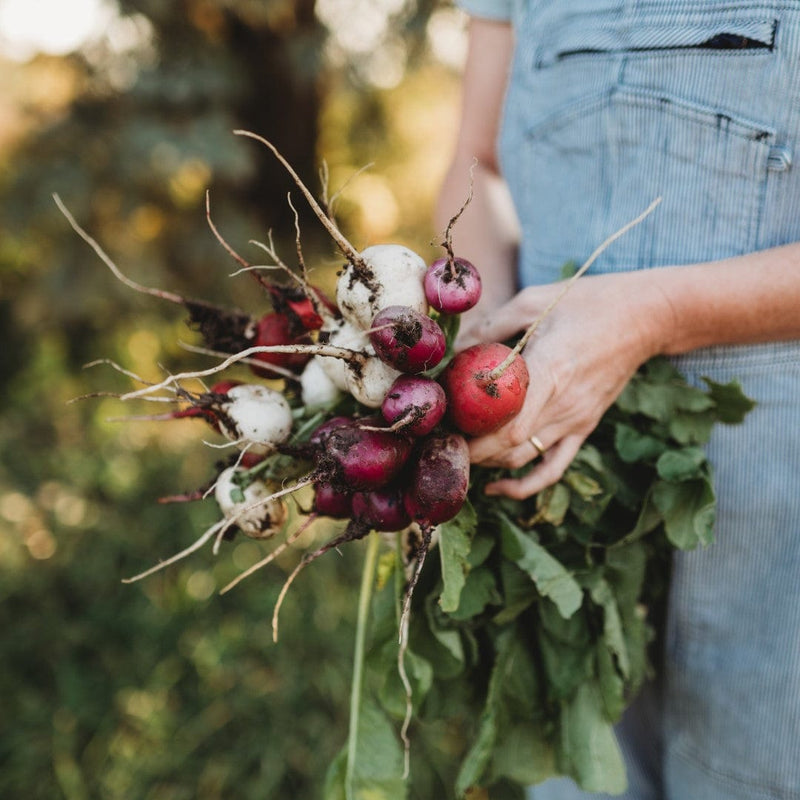
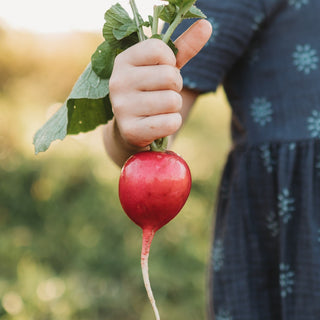
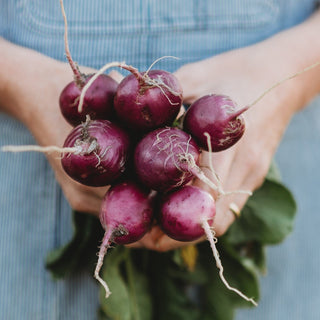
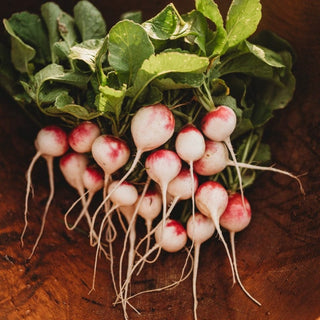
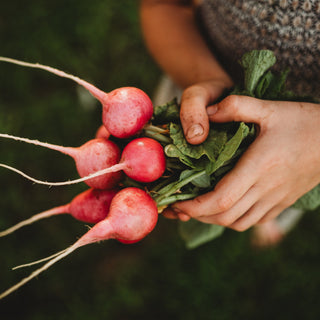
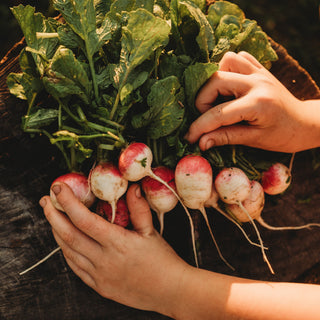
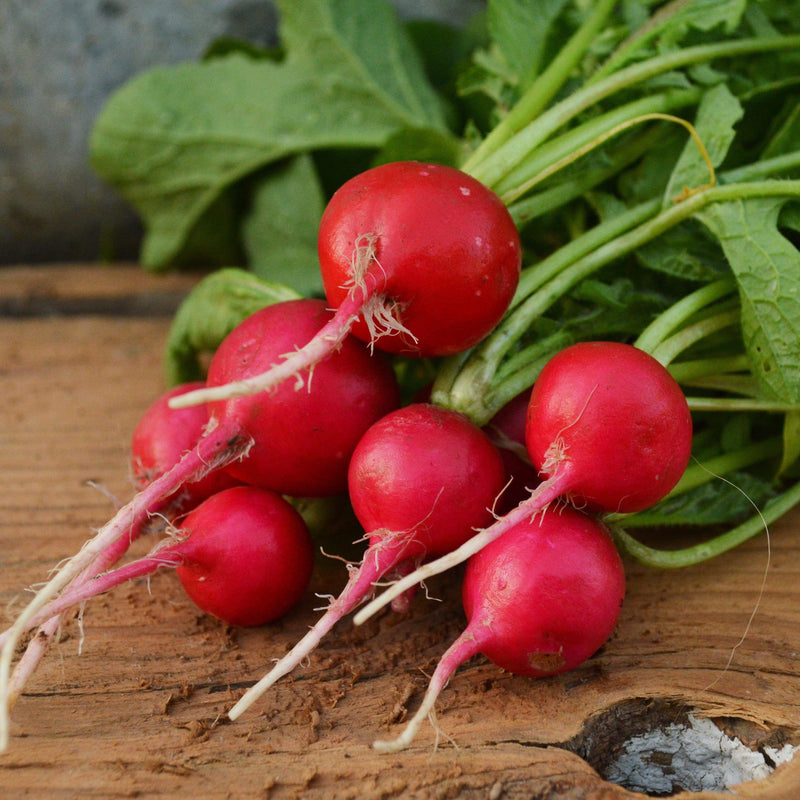
Champion is an open-pollinated radish variety that produces uniform, globe shaped radishes with crimson skins and crisp, white centers. Roots have a mild, delightful flavor and a refreshing crisp texture. A dependable variety for both spring and fall planting. Champion radishes are ready to harvest approximately 25 days from sowing. Each packet contains a minimum of 150 seeds.
Raphanus sativus
Champion is an open-pollinated radish variety that produces uniform, globe shaped radishes with crimson skins and crisp, white centers. Roots have a mild, delightful flavor and a refreshing crisp texture. A dependable variety for both spring and fall planting. Champion radishes are ready to harvest approximately 25 days from sowing. Each packet contains a minimum of 150 seeds.
New varieties come and go, but an heirloom is one that has stood the test of time. Families have stewarded these seeds for generations because they valued their dependability and flavor as much as they did their history—and we can think of no better recommendation than that.
Radishes require well-drained soil that is rich in organic matter and has a pH between 6.0 and 7.0. They also require full sun or partial shade, with at least 6 hours of sunlight per day. Soil should be moist but not waterlogged, and it is important to keep the soil consistently moist to prevent the radishes from becoming woody and bitter. Radishes prefer cool weather and perform best when sown in the spring or fall. Successive sowings can be made every 7-10 days throughout spring and fall or a continuous harvest.
Plant seeds outdoors as soon as soil can be worked. Sow seeds 1/4" deep, 1/2" apart, in rows 12-18" apart. Germination will occur in 5-10 days. Thin to 1" spacing after seedlings have emerged.
Not recommended
Insect Pests
Radishes can usually be grown without problems, however in certain areas they may be affected by certain insect pests, including flea beetles and root maggots. Flea beetles cause small holes in the leaves, while root maggots damage the roots and can cause the radish to become stunted. These pests can be controlled by using row covers and practicing crop rotation. Severe infestations flea beetles can be controlled using insecticidal soap, while root maggots can be treated by sprinkling diatomaceous earth around the plants to limit population growth.
Diseases & Other Problems
Radishes are susceptible to a few diseases, however they are rarely a serious issue. The most common problem encountered when growing radishes is premature bolting, which can be caused by excessive heat and/or crowding. Avoid planting radishes in late spring or summer as they will bolt too quickly. Also be sure to thin the radishes after planting and keep weed competition at a minimum. Regular watering will also help the plants avoid stress and improve the flavor of the radishes. Finally, be sure to harvest the radishes before they become overly mature. Radishes grow very quickly when they reach maturity and may split when a dry spell is quenched by a heavy rain.
Radishes can be harvested when they reach the desired size, usually 3-4 weeks after planting. To harvest, gently pull the radish from the soil, being careful not to damage the root. Cut off the leaves and roots, leaving a small amount of stem attached to the root to help preserve moisture. Radishes can be stored in the refrigerator for up to two weeks in a plastic bag or container.
CONSIDERATIONS:
Radishes are outbreeding plants with insects performing the predominant share of pollination. They will cross with all varieties of wild and domesticated radishes so isolation by distance or physical barrier is necessary. To ensure varietal purity, plantings may be caged with introduced pollinators.
HARVESTING SEED:
Harvest seed stalks when a majority of the pods have turned brown and dried. Cut the stalks or pull entire plants and lay flat or hang in a well-ventilated area to allow the plants to dry completely. Crush the pods with a hammer or stomp to release the seeds. Note that this may require a good bit of effort as the pods can be a bit challenging to open. Winnow the seeds to remove the chaff and store in an airtight container.
SEED LONGETIVITY:
Radish seeds will remain viable for five years when stored properly.
Sign up to get the latest on sales, new releases, and more...