We ship to the United States, its territories and outlying islands. Returns are accepted within 30 days of receipt. Full warranty information can be found here.




✓ Plant with Confidence—Guaranteed Through 2027
 Get it between -
Open-pollinated varieties, perfect for seed saving.
Safe seeds, free of neonics and other treatments.
It's simple. If you have a problem, we make it right.

Sorghum bicolor
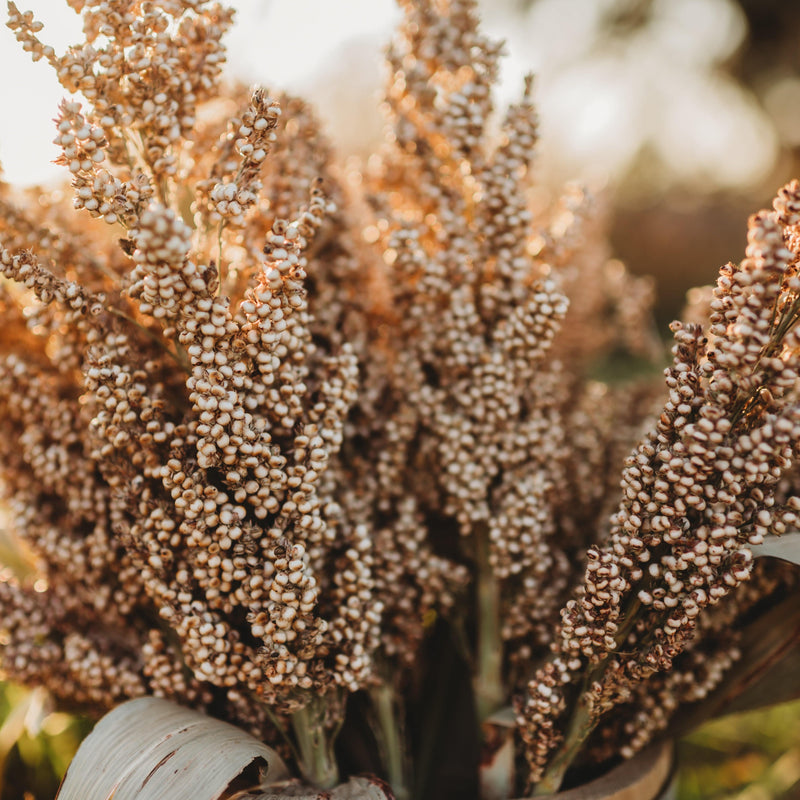
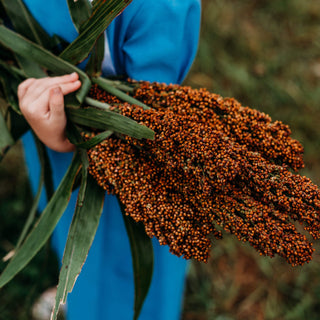
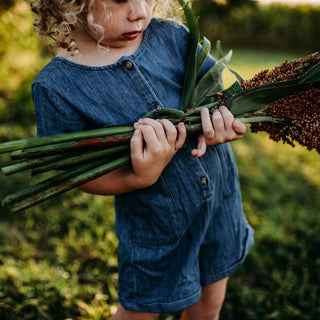
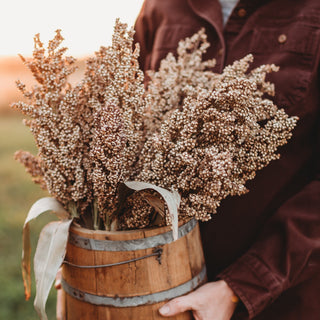
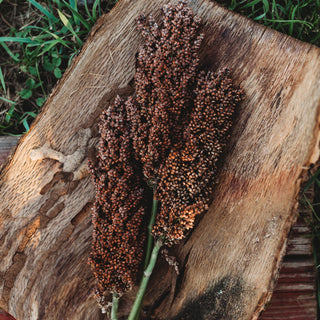
Sonnen Heirloom is an uncommon broomcorn sorghum noted for its elegant structure and subtle straw coloration. In our trials, plants reached about 8–9 feet tall and produced long, loose, fully exserted heads—often nearing 2 feet in length. The airy panicles carry attractive crimson-red seeds, while purple striping along the leaves adds visual interest throughout the season.
Although little has been formally published about Sonnen itself, its provenance adds important context. The variety was donated to the USDA in 1990 by Dr. Henry Hadley, a professor at the University of Illinois known for his work in sorghum genetics and broomcorn breeding. Hadley’s research focused on evaluating traits such as ... More
Sorghum bicolor
Sonnen Heirloom is an uncommon broomcorn sorghum noted for its elegant structure and subtle straw coloration. In our trials, plants reached about 8–9 feet tall and produced long, loose, fully exserted heads—often nearing 2 feet in length. The airy panicles carry attractive crimson-red seeds, while purple striping along the leaves adds visual interest throughout the season.
Although little has been formally published about Sonnen itself, its provenance adds important context. The variety was donated to the USDA in 1990 by Dr. Henry Hadley, a professor at the University of Illinois known for his work in sorghum genetics and broomcorn breeding. Hadley’s research focused on evaluating traits such as plant height, brush length, and broom-making suitability, placing Sonnen within a serious breeding and evaluation program even if its own description was never widely recorded.
Today, Sonnen Heirloom is well suited to broom-making, particularly for long-handled brooms that benefit from extended bristles. Its graceful heads and rich seed color also make it a beautiful choice for fall decorations, wreaths, and dried arrangements—a reminder that functional crops were once valued as much for their beauty as for their use. Sonnen heirloom matures approximately 110 days after sowing. Each packet contains a minimum of 100 seeds.
Seed Stock for this variety was generously provided by the USDA's National Genetic Resources Program. PI 704432
Sorghum bicolor
Sonnen Heirloom is an uncommon broomcorn sorghum noted for its elegant structure and subtle straw coloration. In our trials, plants reached about 8–9 feet tall and produced long, loose, fully exserted heads—often nearing 2 feet in length. The airy panicles carry attractive crimson-red seeds, while purple striping along the leaves adds visual interest throughout the season.
Although little has been formally published about Sonnen itself, its provenance... read more
Sorghum bicolor
Sonnen Heirloom is an uncommon broomcorn sorghum noted for its elegant structure and subtle straw coloration. In our trials, plants reached about 8–9 feet tall and produced long, loose, fully exserted heads—often nearing 2 feet in length. The airy panicles carry attractive crimson-red seeds, while purple striping along the leaves adds visual interest throughout the season.
Although little has been formally published about Sonnen itself, its provenance adds important context. The variety was donated to the USDA in 1990 by Dr. Henry Hadley, a professor at the University of Illinois known for his work in sorghum genetics and broomcorn breeding. Hadley’s research focused on evaluating traits such as plant height, brush length, and broom-making suitability, placing Sonnen within a serious breeding and evaluation program even if its own description was never widely recorded.
Today, Sonnen Heirloom is well suited to broom-making, particularly for long-handled brooms that benefit from extended bristles. Its graceful heads and rich seed color also make it a beautiful choice for fall decorations, wreaths, and dried arrangements—a reminder that functional crops were once valued as much for their beauty as for their use. Sonnen heirloom matures approximately 110 days after sowing. Each packet contains a minimum of 100 seeds.
Seed Stock for this variety was generously provided by the USDA's National Genetic Resources Program. PI 704432