We ship to the United States, its territories and outlying islands. Returns are accepted within 30 days of receipt. Full warranty information can be found here.





✓ Plant with Confidence—Guaranteed Through 2027
 Get it between -
Open-pollinated varieties, perfect for seed saving.
Safe seeds, free of neonics and other treatments.
It's simple. If you have a problem, we make it right.

Sorghum bicolor
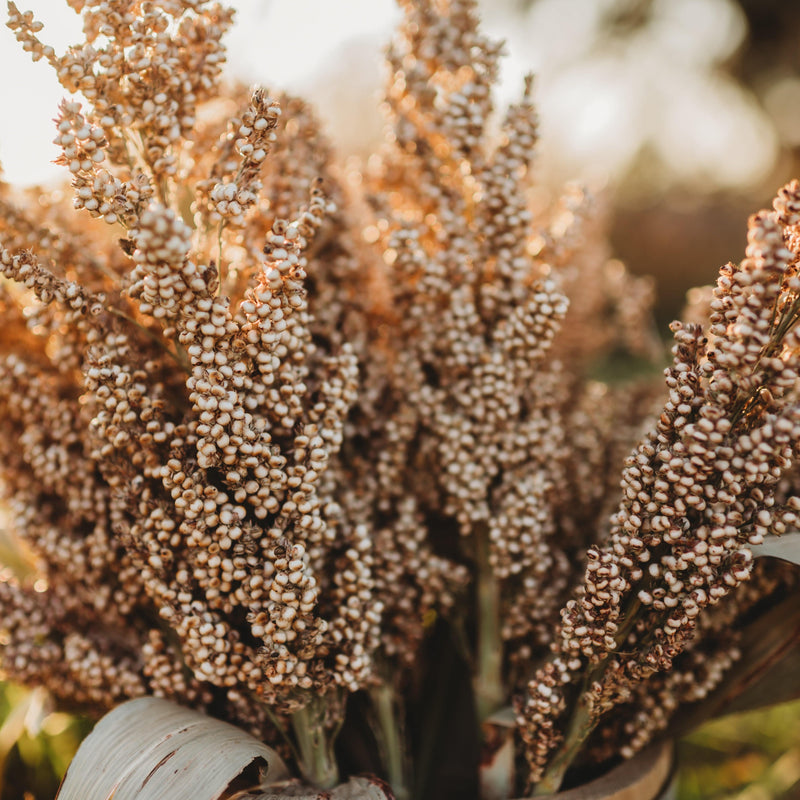
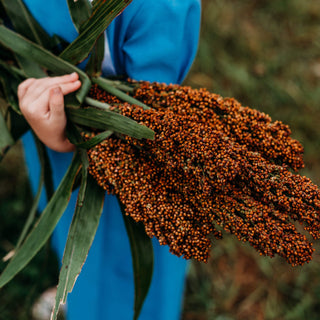
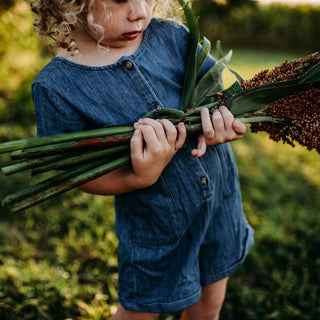
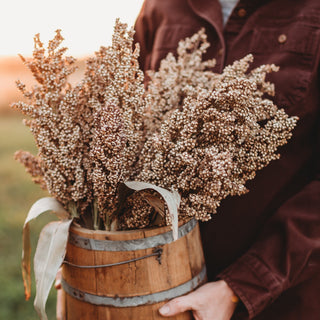
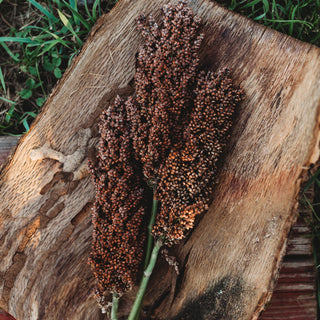
Hungarian Red Broomcorn is an heirloom variety of sorghum that produces long, highly branched heads reaching up to 1.75 feet in length. Plants typically form one to three flowering stems and grow 9–11½ feet tall, producing dense panicles filled with reddish-brown, ovate seeds held in brown glumes. In the garden, the plants are upright and dramatic, finishing the season with vibrant red heads that add both height and color to the landscape.
The variety entered the modern seed-saving community in the early 2000s. Hungarian Red was acquired by Seed Savers Exchange in 2004 after passing through several stewards, including Shane Murphy, who obtained it from the Abundant Life Seed Foundation in 2001. T... More
Sorghum bicolor
Hungarian Red Broomcorn is an heirloom variety of sorghum that produces long, highly branched heads reaching up to 1.75 feet in length. Plants typically form one to three flowering stems and grow 9–11½ feet tall, producing dense panicles filled with reddish-brown, ovate seeds held in brown glumes. In the garden, the plants are upright and dramatic, finishing the season with vibrant red heads that add both height and color to the landscape.
The variety entered the modern seed-saving community in the early 2000s. Hungarian Red was acquired by Seed Savers Exchange in 2004 after passing through several stewards, including Shane Murphy, who obtained it from the Abundant Life Seed Foundation in 2001. The Abundant Life Seed Foundation played an important role in preserving rare crop varieties before much of its collection was lost to a fire in 2003, making the survival of this variety especially meaningful.
Hungarian Red Broom corn is well suited to traditional broom-making, decorative arrangements, or use as a statement plant. Its long, flexible bristles carry a subtle reddish tint near the tips, but its appeal goes beyond function. Broomcorn like this recalls a time when even the simplest household tools were made with care and craftsmanship—meant to be seen, used, and appreciated rather than hidden away. Matures approximately 105-110 days after sowing. Each packet contains a minimum of 100 seeds.
Sorghum bicolor
Hungarian Red Broomcorn is an heirloom variety of sorghum that produces long, highly branched heads reaching up to 1.75 feet in length. Plants typically form one to three flowering stems and grow 9–11½ feet tall, producing dense panicles filled with reddish-brown, ovate seeds held in brown glumes. In the garden, the plants are upright and dramatic, finishing the season with vibrant red heads that add both height and color to the landscape.
The variety... read more
Sorghum bicolor
Hungarian Red Broomcorn is an heirloom variety of sorghum that produces long, highly branched heads reaching up to 1.75 feet in length. Plants typically form one to three flowering stems and grow 9–11½ feet tall, producing dense panicles filled with reddish-brown, ovate seeds held in brown glumes. In the garden, the plants are upright and dramatic, finishing the season with vibrant red heads that add both height and color to the landscape.
The variety entered the modern seed-saving community in the early 2000s. Hungarian Red was acquired by Seed Savers Exchange in 2004 after passing through several stewards, including Shane Murphy, who obtained it from the Abundant Life Seed Foundation in 2001. The Abundant Life Seed Foundation played an important role in preserving rare crop varieties before much of its collection was lost to a fire in 2003, making the survival of this variety especially meaningful.
Hungarian Red Broom corn is well suited to traditional broom-making, decorative arrangements, or use as a statement plant. Its long, flexible bristles carry a subtle reddish tint near the tips, but its appeal goes beyond function. Broomcorn like this recalls a time when even the simplest household tools were made with care and craftsmanship—meant to be seen, used, and appreciated rather than hidden away. Matures approximately 105-110 days after sowing. Each packet contains a minimum of 100 seeds.