We ship to the United States, its territories and outlying islands. Returns are accepted within 30 days of receipt. Full warranty information can be found here.

Free Shipping on Orders $35+
✓ Plant with Confidence—Guaranteed Through 2027
Get it between -
We ship to the United States, its territories and outlying islands. Returns are accepted within 30 days of receipt. Full warranty information can be found here.
We guarantee our seed to be fresh, vigorous, untreated, and true to variety.
Each packet is guaranteed through the year printed on the packet, plus one full additional growing year.
If your seeds fail to germinate, arrive damaged, or do not grow true to type, please contact us and we will make it right through replacement seed, store credit, or refund when appropriate.
Full warranty policy here.
Open-pollinated varieties, perfect for seed saving.
Safe seeds, free of neonics and other treatments.
It's simple. If you have a problem, we make it right.
Citrullus lanatus
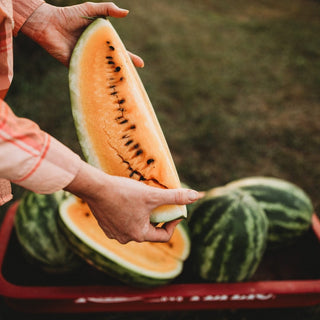
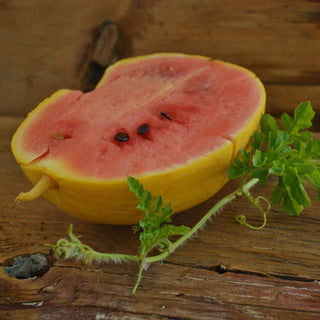
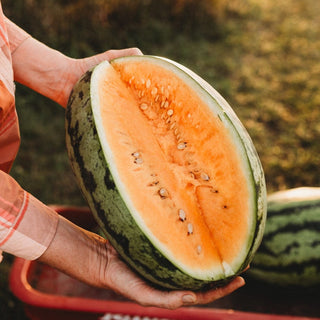
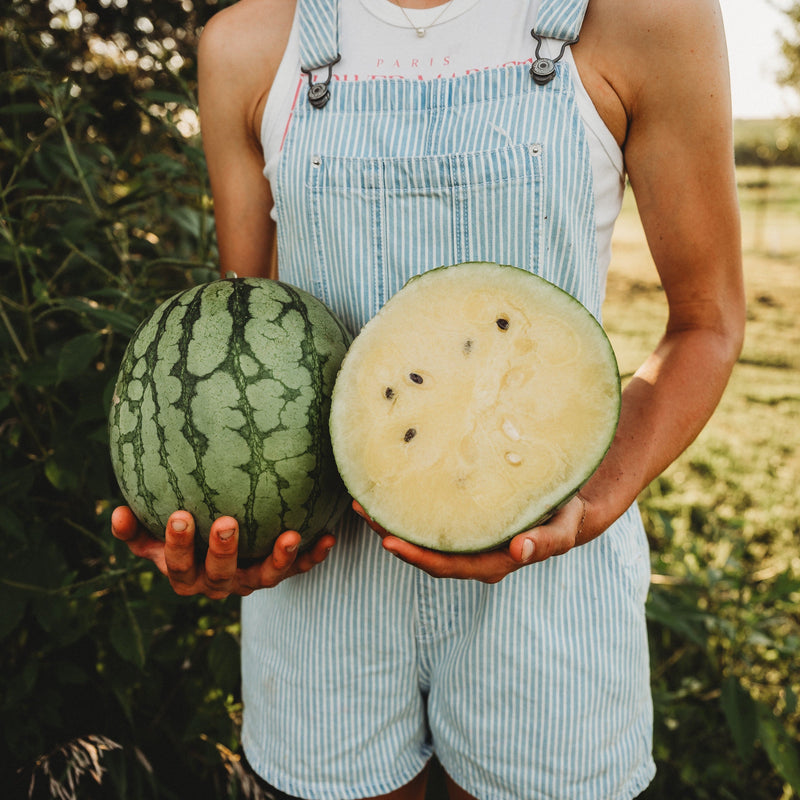
Among the earliest watermelons we offer, Petite Yellow matures in just 65 to 75 days—perfect for short seasons or impatient gardeners eager for their first taste of summer. While its name suggests otherwise, our fruits typically reach 5 to 10 pounds—small enough to handle easily but large enough to share. The rind is thin, the flesh a striking canary yellow, and the sweetness nothing short of exceptional.
When cut open, Petite Yellow has a charming tendency to “pop” as the knife pierces the rind, a sure sign that something juicy and refreshing awaits inside. Its crisp, sugary texture and bright, tropical flavor make it a standout on hot afternoons and a favorite among children—ours included. In... More
Citrullus lanatus
Among the earliest watermelons we offer, Petite Yellow matures in just 65 to 75 days—perfect for short seasons or impatient gardeners eager for their first taste of summer. While its name suggests otherwise, our fruits typically reach 5 to 10 pounds—small enough to handle easily but large enough to share. The rind is thin, the flesh a striking canary yellow, and the sweetness nothing short of exceptional.
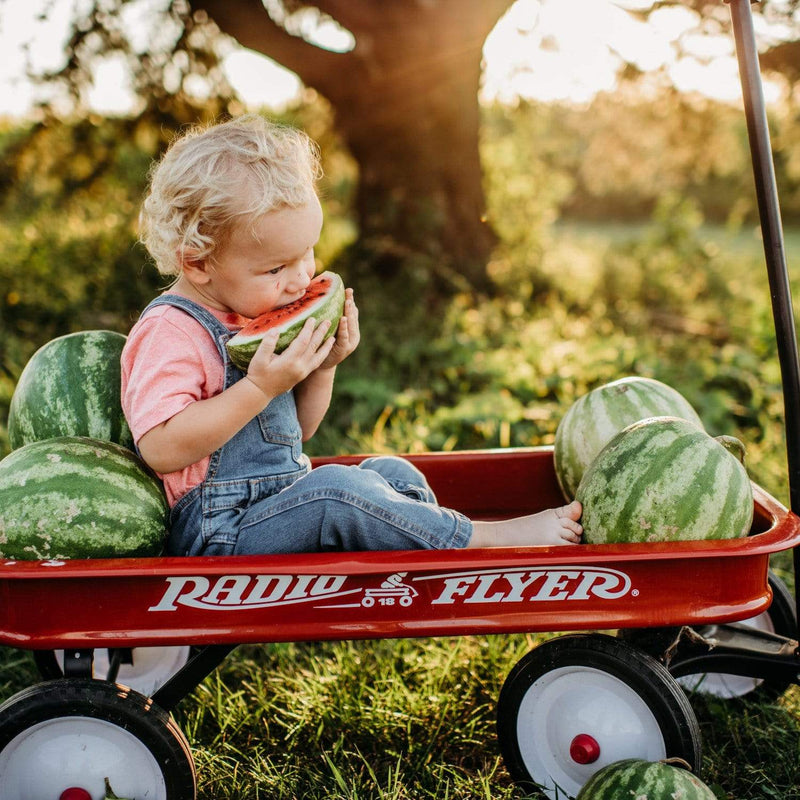
When cut open, Petite Yellow has a charming tendency to “pop” as the knife pierces the rind, a sure sign that something juicy and refreshing awaits inside. Its crisp, sugary texture and bright, tropical flavor make it a standout on hot afternoons and a favorite among children—ours included. In fact, this was our daughter’s top pick of the year, and it’s easy to see why.
Compact, early, and irresistibly sweet, Petite Yellow is a must-try for anyone looking to add color and cheer to their garden. Perfect for home gardens, small spaces, or anyone craving the unique flavor of a yellow watermelon. Matures 65-75 days from sowing. Each packet contains a minimum of 25 seeds.
Citrullus lanatus
Among the earliest watermelons we offer, Petite Yellow matures in just 65 to 75 days—perfect for short seasons or impatient gardeners eager for their first taste of summer. While its name suggests otherwise, our fruits typically reach 5 to 10 pounds—small enough to handle easily but large enough to share. The rind is thin, the flesh a striking canary yellow, and the sweetness nothing short of exceptional.
When cut open, Petite Yellow has a charming ... read more
Citrullus lanatus
Among the earliest watermelons we offer, Petite Yellow matures in just 65 to 75 days—perfect for short seasons or impatient gardeners eager for their first taste of summer. While its name suggests otherwise, our fruits typically reach 5 to 10 pounds—small enough to handle easily but large enough to share. The rind is thin, the flesh a striking canary yellow, and the sweetness nothing short of exceptional.
When cut open, Petite Yellow has a charming tendency to “pop” as the knife pierces the rind, a sure sign that something juicy and refreshing awaits inside. Its crisp, sugary texture and bright, tropical flavor make it a standout on hot afternoons and a favorite among children—ours included. In fact, this was our daughter’s top pick of the year, and it’s easy to see why.
Compact, early, and irresistibly sweet, Petite Yellow is a must-try for anyone looking to add color and cheer to their garden. Perfect for home gardens, small spaces, or anyone craving the unique flavor of a yellow watermelon. Matures 65-75 days from sowing. Each packet contains a minimum of 25 seeds.
New varieties come and go, but an heirloom is one that has stood the test of time. Families have stewarded these seeds for generations because they valued their dependability and flavor as much as they did their history—and we can think of no better recommendation than that.
Watermelons prefer well-draining soil with a pH between 6.0-7.0 and plenty of organic matter. The soil should be warm (at least 60°F) at planting time and the area should receive full sun for at least 6-8 hours per day. Watermelons are heavy feeders and require regular watering, especially during the fruiting stage. However, it's important not to overwater, as this can cause fruit to split and reduce flavor. Mulching around the base of the plants can help retain moisture and suppress weeds. It's also important to rotate watermelon crops every few years to prevent disease build-up in the soil.
Direct sow seeds outdoors 2 weeks after last frost, once soil temps have reached 70 degrees. Sow 3-5 seeds per hill with 3 to 4 feet between hills and to 8 feet between rows. Under ideal conditions germination will occur in 5-8 days. Alternatively, seeds can be sown indoors roughly 3-4 weeks before the last frost.
Transplant outdoors after danger of frost has passed. Make a mound of soil and transplant 2-3 plants into the "hill". Continue along in the row, spacing additional hills 2-3 feet apart. If planting multiple rows, space 8 feet apart.
Insect Pests
Watermelons can be affected by a range of insect pests, including aphids, cut worms, and cabbage loopers. Aphids can be controlled using insecticidal soap while cutworms and cabbage loopers can be controlled using biological controls such as Bacillus thuringiensis (Bt). Regular scouting and early detection can also help prevent serious damage.
Diseases & Other Problems
Watermelons can be affected by various diseases, including anthracnose, leaf blight, downy mildew, bacterial fruit blotch, fusarium wilt, and mosaic viruses (both watermelon and cucumber mosaic virus). Other problems include blossom-end rot and cracking due to uneven watering. It's important to rotate crops, practice tillage and/or remove debris at the end of the growing season to prevent disease buildup in the soil.
To harvest watermelon, wait for the tendril closest to the fruit to dry out and the skin to turn dull. Gently roll the melon to expose its underbelly, which will change from pale green or white to pale yellow. Cut the stem a few inches above the fruit and gently place it in a basket. To store watermelon, keep it in a cool, dry place for up to a week or in the fridge for up to two weeks. Cut watermelon should be wrapped in plastic and refrigerated for up to four days.
CONSIDERATIONS:
Watermelon is an outbreeding plant with male and female flowers present on different parts of the plant. Watermelon will cross pollinate with other varieties of watermelon, but will not cross with muskmelon, honeydew, cucamelon, or bitter melon. Isolate different varieties of watermelon by at least a half mile to ensure varietal purity. Alternatively, watermelon varieties may be caged with introduced pollinators. Hand-pollination of melons is relatively easy, but has a low success rate, even under ideal conditions.
HARVESTING SEED:
Wait until melons are fully mature. Harvest the melon and scoop the seeds and pulp into a bucket. Cover with netting or pantyhose and allow to ferment for 1 day to free the seeds from the pulp (this can also help eliminate bacterial fruit blotch). Spray a heavy stream of water into the bucket to mix the seeds and separate any remaining pulp. Pour off floating seeds and pulp. Repeat until the water runs clear. Pour seeds onto a screen or strainer to remove water, then spread flat on a screen or cookie sheet and place in a warm, well-ventilated place to finish drying.
SEED LONGETIVITY:
Watermelon seeds remain viable for 6 years when stored under ideal conditions.
Sign up to get the latest on sales, new releases, and more...