We ship to the United States, its territories and outlying islands. Returns are accepted within 30 days of receipt. Full warranty information can be found here.

Free Shipping on Orders $35+
✓ Plant with Confidence—Guaranteed Through 2027
Get it between -
We ship to the United States, its territories and outlying islands. Returns are accepted within 30 days of receipt. Full warranty information can be found here.
We guarantee our seed to be fresh, vigorous, untreated, and true to variety.
Each packet is guaranteed through the year printed on the packet, plus one full additional growing year.
If your seeds fail to germinate, arrive damaged, or do not grow true to type, please contact us and we will make it right through replacement seed, store credit, or refund when appropriate.
Full warranty policy here.
Open-pollinated varieties, perfect for seed saving.
Safe seeds, free of neonics and other treatments.
It's simple. If you have a problem, we make it right.
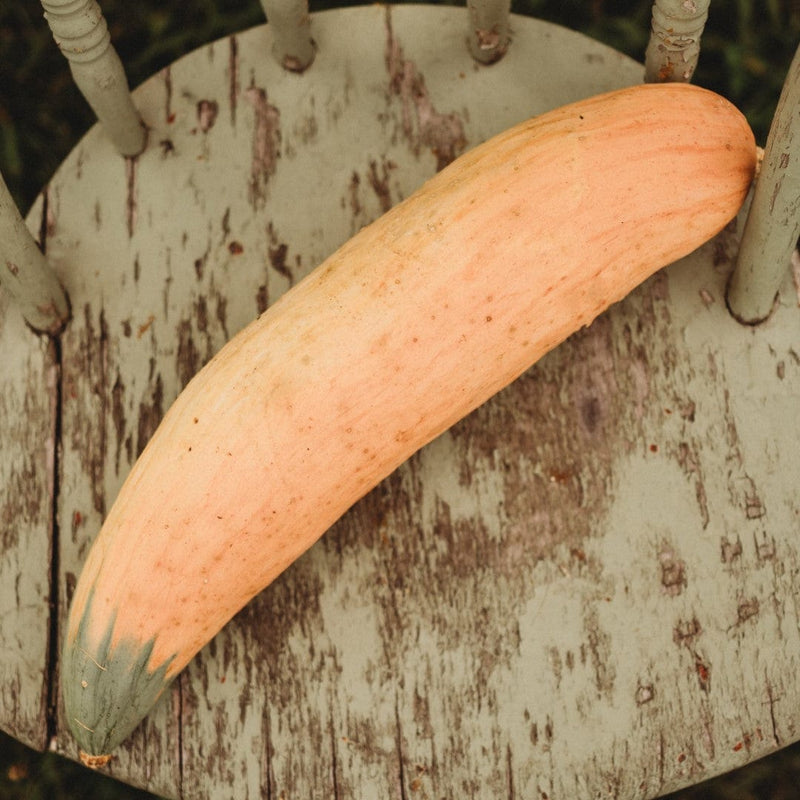
Cucurbita maxima
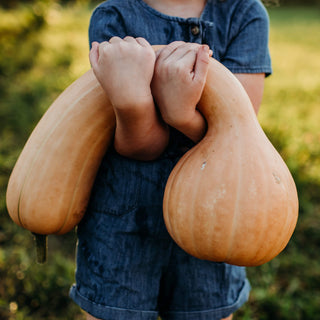
North Georgia Candy Roaster is an heirloom variety of winter squash that produces long, pink, banana-type squash with distinctive blue-green coloring emanating from the stem end. Originating from Appalachia, candy roaster squash have been a part of mountain culture for generations and were once cultivated by the Cherokee Indians. Numerous types have been spun off over the years, some with more blunt, rounded ends, for example, versus this one which has more tapered ends. Regardless of their shape, candy roaster squash are prized for their high sugar content and smooth, finely grained texture. They are a favorite for roasting because their sugars caramelize in high heat, creating a crunchy, candy-li... More
Cucurbita maxima
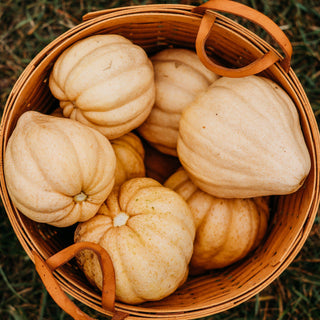
North Georgia Candy Roaster is an heirloom variety of winter squash that produces long, pink, banana-type squash with distinctive blue-green coloring emanating from the stem end. Originating from Appalachia, candy roaster squash have been a part of mountain culture for generations and were once cultivated by the Cherokee Indians. Numerous types have been spun off over the years, some with more blunt, rounded ends, for example, versus this one which has more tapered ends. Regardless of their shape, candy roaster squash are prized for their high sugar content and smooth, finely grained texture. They are a favorite for roasting because their sugars caramelize in high heat, creating a crunchy, candy-like crust that is complemented by the soft, sweet flesh. North Georgia Candy Roaster squash are easy to grow from seed and mature approximately 90-100 days after sowing. Each packet contains a minimum of 25 seeds.

Cucurbita maxima
North Georgia Candy Roaster is an heirloom variety of winter squash that produces long, pink, banana-type squash with distinctive blue-green coloring emanating from the stem end. Originating from Appalachia, candy roaster squash have been a part of mountain culture for generations and were once cultivated by the Cherokee Indians. Numerous types have been spun off over the years, some with more blunt, rounded ends, for example, versus this one which has mo... read more
Cucurbita maxima
North Georgia Candy Roaster is an heirloom variety of winter squash that produces long, pink, banana-type squash with distinctive blue-green coloring emanating from the stem end. Originating from Appalachia, candy roaster squash have been a part of mountain culture for generations and were once cultivated by the Cherokee Indians. Numerous types have been spun off over the years, some with more blunt, rounded ends, for example, versus this one which has more tapered ends. Regardless of their shape, candy roaster squash are prized for their high sugar content and smooth, finely grained texture. They are a favorite for roasting because their sugars caramelize in high heat, creating a crunchy, candy-like crust that is complemented by the soft, sweet flesh. North Georgia Candy Roaster squash are easy to grow from seed and mature approximately 90-100 days after sowing. Each packet contains a minimum of 25 seeds.

There’s strength in simplicity, and grace in a life lived close to the land. In a world that moves too fast and speaks too loud, we believe in choosing the quiet path—the one that leads to hard work, patience, humility, neighborliness, and at the end of the day, a peace you can feel in your bones.
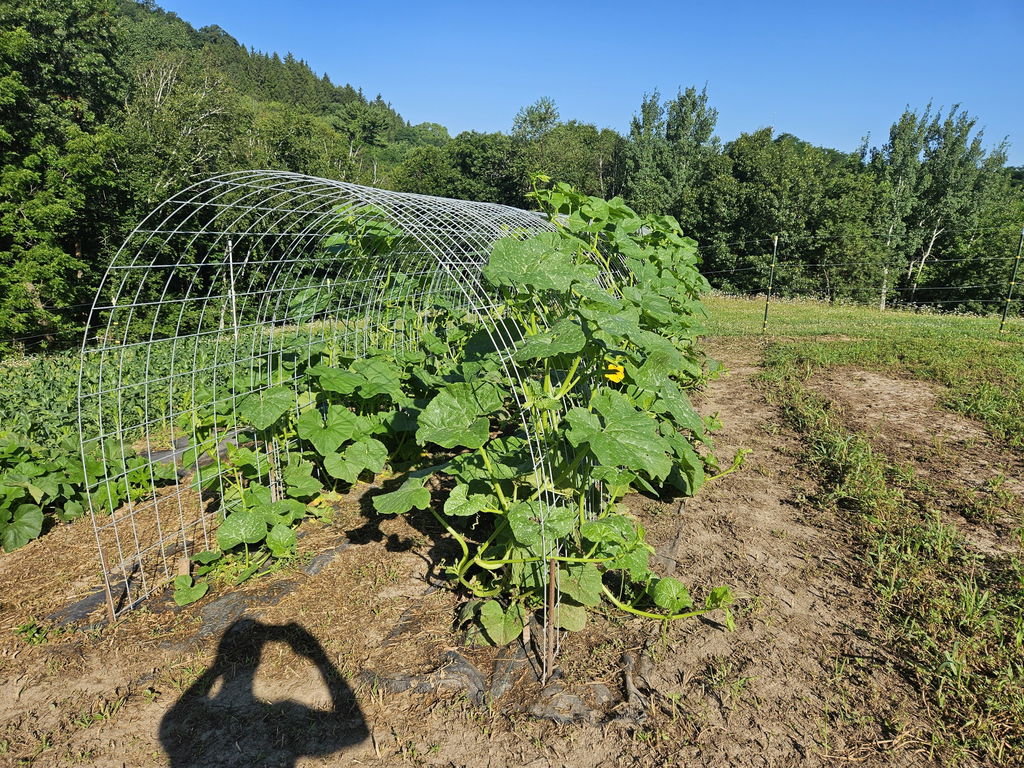
Winter squash thrives in well-draining, fertile soil with a pH between 6.0 and 7.0. The ideal soil temperature for planting is between 70-95°F (21-35°C), and a soil temperature of at least 60°F (16°C) is needed for seeds to germinate. Winter squash requires full sun exposure, which means at least six to eight hours of direct sunlight per day. To maximize fruit set and yield, it's important to provide consistent moisture to the plant throughout the growing season.
After danger of frost has passed, sow seeds in hills with 4-5 seeds per hill and hills spaced 6ft in all directions. Germination will occur in 7-14 days. Once seeds have germinated thin to 3 seedlings per hill.
Not recommended
Insect Pests
Winter squash can be affected by several insect pests, including squash bugs and cucumber beetles. To prevent infestations, it's important to rotate crops and remove and destroy all plant residue at the end of season.
Diseases & Other Problems
Winter squash can be affected by several diseases, including powdery mildew, downy mildew, and bacterial wilt. Other problems that can affect winter squash include blossom end rot, which is caused by calcium deficiency and/or drought, and fruit rot, which is caused by fungal infections. To avoid problems, water deeply but infrequently (once per week), ideally from a drip hose. If watering overhead, water in the morning so that the leaves can dry more quickly. Finally, to ensure proper pollination, grow at least three plants of each variety. Male and female flowers of a single vine will often not "nick" with one another.
Winter squash should be harvested when the fruit is fully mature and the skin is hard enough to resist puncture with a fingernail. Cut the squash from the vine, leaving a few inches of stem attached, and avoid twisting or pulling the fruit. After harvesting, winter squash should be cured by storing it in a warm, dry location for several weeks to help harden the skin and improve flavor. Once cured, winter squash can be stored in a cool, dry location with good ventilation, such as a basement or pantry. Be sure to check the squash regularly for signs of spoilage and use any damaged or soft fruit immediately. Properly stored, winter squash can keep for several months.
CONSIDERATIONS:
Squash is an outbreeding plant with male and female flowers being borne separately, but on the same plant. Pollination occurs primarily by insects. The different species of squash (C. pepo, C. maxima, C. mixta, C. moshata, C. ficifolia, and C. foetidissima) are generally regarded to be incompatible, although some debate exists about whether hybridization between species can occur. For the average gardener, it is probably safe to produce one variety of each species in a given year, even in close proximity. Multiple varieties of the same species need to be isolated by at least half a mile. Hand-pollination is relatively easy, however care must be taken to utilize as many plants as possible to ensure that inbreeding depression does not occur.
HARVESTING SEED:
To harvest squash seed, wait until the squash reach full maturity. Allowing a post-harvest curing period may help improve germination but is not necessary. Cut open the squash and scoop out the seeds. Seeds may be washed to remove any pump that remains and dried on a paper towel. Alternatively, our preferred method is to put the seeds and pulp in a bucket and add just enough water to submerge the seeds. Place a plate and weight on top to keep the seeds from floating on top of the water. Allow to ferment for 1-2 days. Stir vigorously or mix with a drill fitted with a paint mixer, add water and allow the seeds to sink to the bottom. Pour off water, pulp, and non-viable (floating) seeds. Repeat until water runs clean.
SEED LONGETIVITY:
Squash seeds remain viable for six years when stored under ideal conditions.
It was my first time ordering from this company. The ordering was an easy process. They filled and shipped the seeds right away and I received them in a short amount of time. Too early to plant but I’m very excited to try this squash.
Sign up to get the latest on sales, new releases, and more...