We ship to the United States, its territories and outlying islands. Returns are accepted within 30 days of receipt. Full warranty information can be found here.

Free Shipping on Orders $35+
✓ Plant with Confidence—Guaranteed Through 2027
Get it between -
We ship to the United States, its territories and outlying islands. Returns are accepted within 30 days of receipt. Full warranty information can be found here.
We guarantee our seed to be fresh, vigorous, untreated, and true to variety.
Each packet is guaranteed through the year printed on the packet, plus one full additional growing year.
If your seeds fail to germinate, arrive damaged, or do not grow true to type, please contact us and we will make it right through replacement seed, store credit, or refund when appropriate.
Full warranty policy here.
Open-pollinated varieties, perfect for seed saving.
Safe seeds, free of neonics and other treatments.
It's simple. If you have a problem, we make it right.
Cucurbita pepo
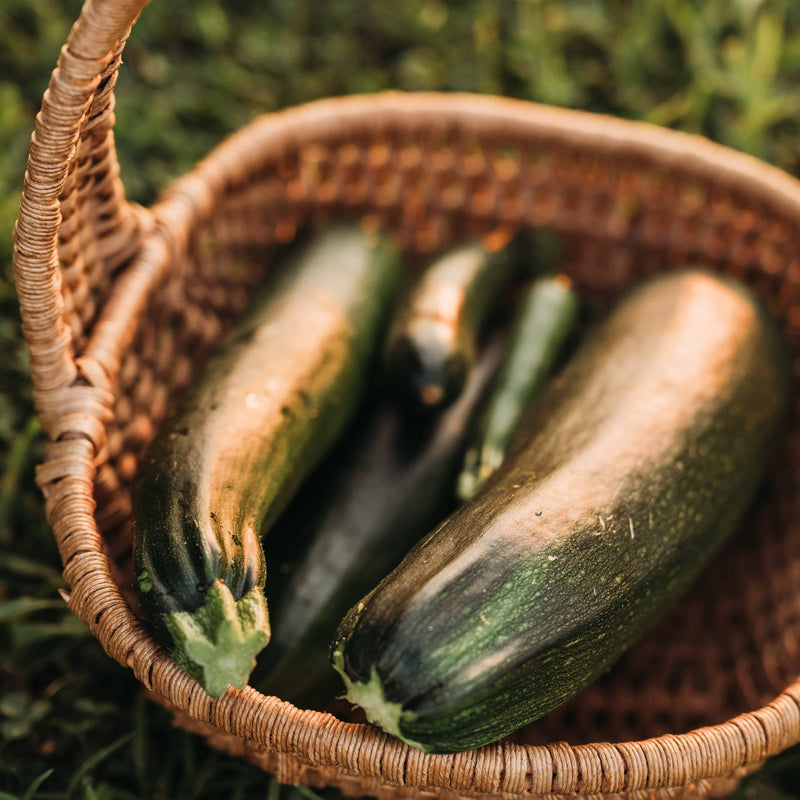
A reliable classic with deep American roots, Fordhook Zucchini is an early and prolific heirloom introduced by the Burpee Seed Company in the 1940s. It quickly became a home-garden staple for its vigorous growth, uniform fruit, and consistent yields—a reputation it still holds today.
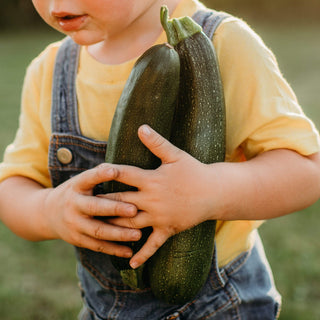
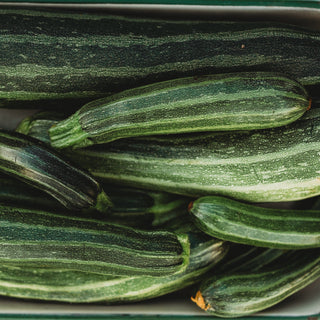
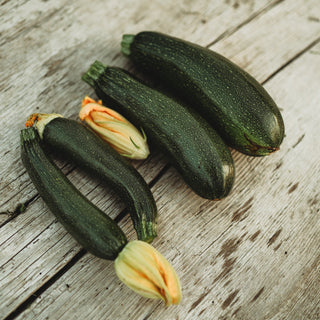
The glossy, dark-green zucchini are straight, smooth, and tender, best harvested at 6–8 inches for peak flavor and texture. Plants are compact and bushy, making them well-suited for smaller gardens or raised beds while still producing heavily through the season. In our trials, Fordhook stood out for its resilience and steady output, continuing to bear long after other varieties began to fade.
Whether you’re fry... More
Cucurbita pepo
A reliable classic with deep American roots, Fordhook Zucchini is an early and prolific heirloom introduced by the Burpee Seed Company in the 1940s. It quickly became a home-garden staple for its vigorous growth, uniform fruit, and consistent yields—a reputation it still holds today.
The glossy, dark-green zucchini are straight, smooth, and tender, best harvested at 6–8 inches for peak flavor and texture. Plants are compact and bushy, making them well-suited for smaller gardens or raised beds while still producing heavily through the season. In our trials, Fordhook stood out for its resilience and steady output, continuing to bear long after other varieties began to fade.
Whether you’re frying, roasting, grilling, or baking, this dependable variety delivers the mild, buttery flavor and firm texture gardeners have counted on for generations. Fordhook Zucchini represents the golden era of American home gardening—when reliability and flavor went hand in hand. Harvests begin approximately 57 days after sowing. Each packet contains a minimum of 25 seeds.
Cucurbita pepo
A reliable classic with deep American roots, Fordhook Zucchini is an early and prolific heirloom introduced by the Burpee Seed Company in the 1940s. It quickly became a home-garden staple for its vigorous growth, uniform fruit, and consistent yields—a reputation it still holds today.
The glossy, dark-green zucchini are straight, smooth, and tender, best harvested at 6–8 inches for peak flavor and texture. Plants are compact and bushy, making them well-... read more
Cucurbita pepo
A reliable classic with deep American roots, Fordhook Zucchini is an early and prolific heirloom introduced by the Burpee Seed Company in the 1940s. It quickly became a home-garden staple for its vigorous growth, uniform fruit, and consistent yields—a reputation it still holds today.
The glossy, dark-green zucchini are straight, smooth, and tender, best harvested at 6–8 inches for peak flavor and texture. Plants are compact and bushy, making them well-suited for smaller gardens or raised beds while still producing heavily through the season. In our trials, Fordhook stood out for its resilience and steady output, continuing to bear long after other varieties began to fade.
Whether you’re frying, roasting, grilling, or baking, this dependable variety delivers the mild, buttery flavor and firm texture gardeners have counted on for generations. Fordhook Zucchini represents the golden era of American home gardening—when reliability and flavor went hand in hand. Harvests begin approximately 57 days after sowing. Each packet contains a minimum of 25 seeds.
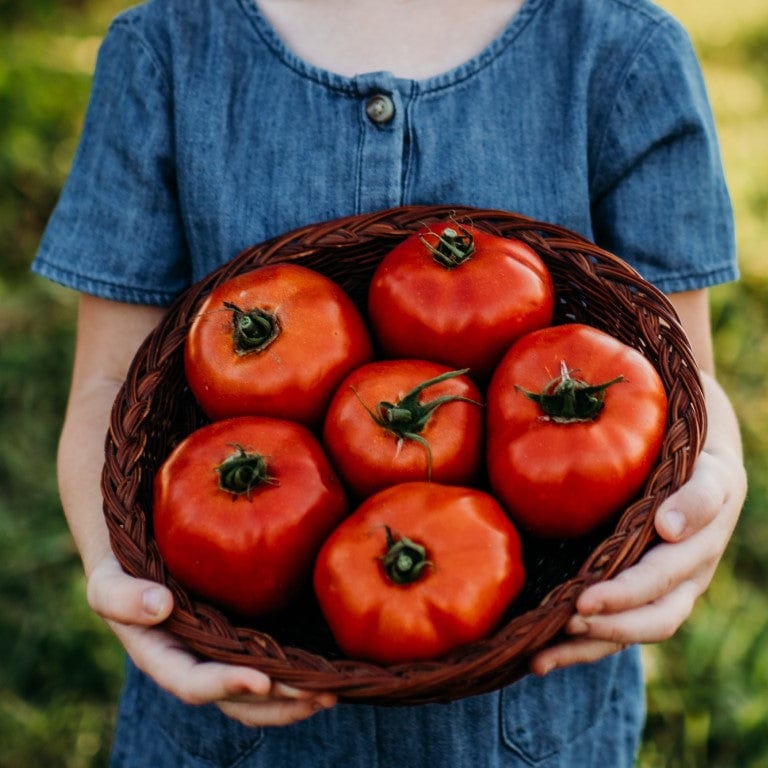
With the produce aisles becoming more and more flavorless and processed food ever more flavorful, it's easy to see how vegetables have gotten a bad rap, but we're on a mission to change that. With our easy-to-grow, flavorful heirlooms, we aim to help families produce their own delicious, healthful food, all while fostering a love for gardening.
Zucchini thrives in well-draining, fertile soil with a pH between 6.0 and 7.0. The ideal soil temperature for planting is between 70-95°F (21-35°C), and a soil temperature of at least 60°F (16°C) is needed for seeds to germinate. Zucchini requires full sun exposure, which means at least six to eight hours of direct sunlight per day. To maximize fruit set and yield, it's important to provide consistent moisture to the plant throughout the growing season.
After danger of frost has passed, sow seeds in hills with 4-5 seeds per hill and hills spaced 6ft in all directions. Germination will occur in 7-14 days. Once seeds have germinated thin to 3 seedlings per hill.
Not recommended
Insect Pests
Zucchini can be affected by a few insect pests, including squash bugs and cucumber beetles. To prevent infestations, it's important to rotate crops and remove and destroy all plant residue at the end of season.
Diseases & Other Problems
Some diseases that may affect zucchini include powdery mildew, downy mildew, and bacterial wilt. Other problems that can affect zucchini include blossom end rot, which is caused by calcium deficiency and/or drought, and fruit rot, which is caused by fungal infections. To avoid problems, water deeply but infrequently (once per week), ideally from a drip hose. If watering overhead, water in the morning so that the leaves can dry more quickly. Finally, to ensure proper pollination, grow at least three plants of the same species (most Zucchini belong to C. pepo). Male and female flowers of a single vine will often not synchronize with one another.
Zucchini should be harvested when the fruit is small and tender, usually no more than 6-8 inches long. To harvest, gently twist the fruit from the stem or use pruning shears to cut the stem just above the fruit. Harvesting regularly encourages continued production throughout the growing season. Zucchini can be stored in the refrigerator for up to a week, but it is best to use it as soon as possible since it will quickly lose flavor and texture. Avoid washing zucchini until ready to use, as excess moisture can cause the fruit to spoil more quickly.
CONSIDERATIONS:
Zucchini is an outbreeding plant with male and female flowers being borne separately, but on the same plant. Pollination occurs primarily by insects. The different species of squash (C. pepo, C. maxima, C. mixta, C. moshata, C. ficifolia, and C. foetidissima) are generally regarded to be incompatible, although some debate exists about whether hybridization between species can occur. For the typical gardener, it is probably safe to produce one variety of each species in a given year, even in close proximity. Multiple varieties of the same species need to be isolated by at least half a mile. Hand-pollination is relatively easy; however, care must be taken to utilize as many plants as possible to ensure that inbreeding depression does not occur.
HARVESTING SEED:
To harvest zucchini seed, wait until the fruit reach full maturity. Allowing a post-harvest curing period may help improve germination but is not necessary. Cut open the squash and scoop out the seeds. Seeds may be washed to remove any pump that remains and dried on a paper towel. Alternatively, our preferred method is to put the seeds and pulp in a bucket and add just enough water to submerge the seeds. Place a plate and weight on top to keep the seeds from floating on top of the water. Allow to ferment for 1-2 days. Stir vigorously or mix with a drill fitted with a paint mixer, add water and allow the seeds to sink to the bottom. Pour off water, pulp, and non-viable (floating) seeds. Repeat until water runs clean.
SEED LONGETIVITY:
Zucchini seeds remain viable for six years when stored under ideal conditions.
Sign up to get the latest on sales, new releases, and more...