We ship to the United States, its territories and outlying islands. Returns are accepted within 30 days of receipt. Full warranty information can be found here.






✓ Plant with Confidence—Guaranteed Through 2027
 Get it between -
Open-pollinated varieties, perfect for seed saving.
Safe seeds, free of neonics and other treatments.
It's simple. If you have a problem, we make it right.

Helianthus annuus
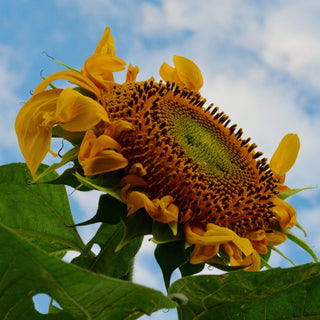
Mongolian Giant Sunflower is a large sunflower variety grown for its impressive size and abundant seed production. Plants grow tall and sturdy, often reaching 10–14 feet under good conditions, and are topped with massive flower heads that can exceed a foot across in their mature seed head stage. Thick stalks and strong root systems help support the heavy blooms as they mature.
The large, striped seeds prized for eating, roasting, and feeding birds or livestock. As the flowers mature, the heads naturally droop, helping protect developing seeds from rain and birds until harvest. Mongolian Giant performs well in full sun and average soils. It appreciates having room to stretch and will produce lar... More
Helianthus annuus
Mongolian Giant Sunflower is a large sunflower variety grown for its impressive size and abundant seed production. Plants grow tall and sturdy, often reaching 10–14 feet under good conditions, and are topped with massive flower heads that can exceed a foot across in their mature seed head stage. Thick stalks and strong root systems help support the heavy blooms as they mature.
The large, striped seeds prized for eating, roasting, and feeding birds or livestock. As the flowers mature, the heads naturally droop, helping protect developing seeds from rain and birds until harvest. Mongolian Giant performs well in full sun and average soils. It appreciates having room to stretch and will produce larger heads if given ample space
Equally at home in the garden, along fence lines, or planted as a living windbreak, Mongolian Giant Sunflower brings both beauty and utility to the landscape. Whether grown for seed, wildlife, or sheer visual impact, Mongolian Giant is a reliable choice for gardeners looking to grow the biggest sunflowers.
Helianthus annuus
Mongolian Giant Sunflower is a large sunflower variety grown for its impressive size and abundant seed production. Plants grow tall and sturdy, often reaching 10–14 feet under good conditions, and are topped with massive flower heads that can exceed a foot across in their mature seed head stage. Thick stalks and strong root systems help support the heavy blooms as they mature.
The large, striped seeds prized for eating, roasting, and feeding birds o... read more
Helianthus annuus
Mongolian Giant Sunflower is a large sunflower variety grown for its impressive size and abundant seed production. Plants grow tall and sturdy, often reaching 10–14 feet under good conditions, and are topped with massive flower heads that can exceed a foot across in their mature seed head stage. Thick stalks and strong root systems help support the heavy blooms as they mature.
The large, striped seeds prized for eating, roasting, and feeding birds or livestock. As the flowers mature, the heads naturally droop, helping protect developing seeds from rain and birds until harvest. Mongolian Giant performs well in full sun and average soils. It appreciates having room to stretch and will produce larger heads if given ample space
Equally at home in the garden, along fence lines, or planted as a living windbreak, Mongolian Giant Sunflower brings both beauty and utility to the landscape. Whether grown for seed, wildlife, or sheer visual impact, Mongolian Giant is a reliable choice for gardeners looking to grow the biggest sunflowers.