We ship to the United States, its territories and outlying islands. Returns are accepted within 30 days of receipt. Full warranty information can be found here.






✓ Plant with Confidence—Guaranteed Through 2027
 Get it between -
Open-pollinated varieties, perfect for seed saving.
Safe seeds, free of neonics and other treatments.
It's simple. If you have a problem, we make it right.
Zea mays
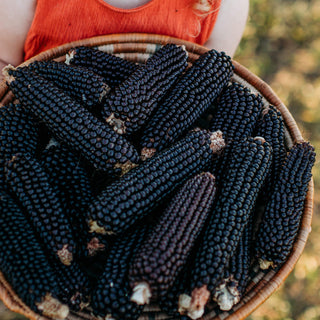
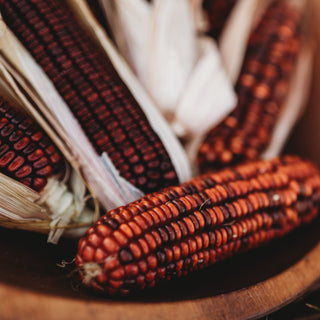
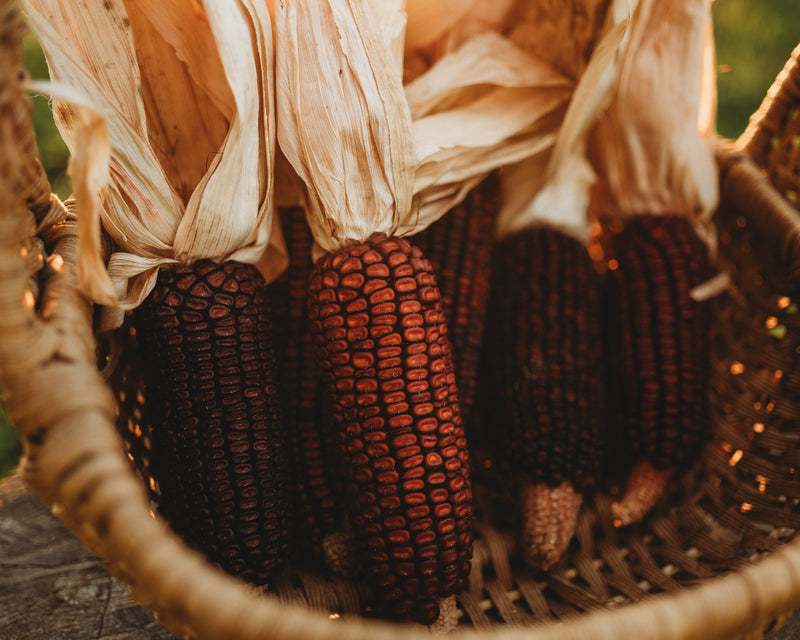
Jimmy Red Corn is more than an heirloom—it’s a legend. Once grown in secrecy on James Island, South Carolina, by moonshiners who prized it for whiskey, this deep-red corn nearly vanished when its last caretaker passed away. Two surviving ears preserved the variety, sparking its modern revival and securing its place as one of the South’s most storied crops.
Often confused with Bloody Butcher, Jimmy Red is a distinct selection of that lineage. A few seed companies have tried to rebrand Bloody Butcher as Jimmy Red, but our trials tell a different story. In 2024 we compared three Jimmy Red sources alongside a widely circulated strain of Bloody Butcher: two were indistinguishable from Bloody Butcher... More
Zea mays
Jimmy Red Corn is more than an heirloom—it’s a legend. Once grown in secrecy on James Island, South Carolina, by moonshiners who prized it for whiskey, this deep-red corn nearly vanished when its last caretaker passed away. Two surviving ears preserved the variety, sparking its modern revival and securing its place as one of the South’s most storied crops.
Often confused with Bloody Butcher, Jimmy Red is a distinct selection of that lineage. A few seed companies have tried to rebrand Bloody Butcher as Jimmy Red, but our trials tell a different story. In 2024 we compared three Jimmy Red sources alongside a widely circulated strain of Bloody Butcher: two were indistinguishable from Bloody Butcher, while the third showed stiffer stalks, stronger resistance to lodging, and a greater proportion of dark red kernels. This is the strain we’ve chosen to introduce.
Celebrated by chefs, bakers, and distillers, Jimmy Red corn produces meal and grits with a flavor described as nutty, buttery, and sweet—qualities that also make it a favorite for bourbon. To plant Jimmy Red is to grow not just a crop but a rare survivor, one that nearly slipped into history and now endures with renewed strength. Matures approximately 90-110 days after sowing. Each packet contains a minimum of 50 seeds.
Zea mays
Jimmy Red Corn is more than an heirloom—it’s a legend. Once grown in secrecy on James Island, South Carolina, by moonshiners who prized it for whiskey, this deep-red corn nearly vanished when its last caretaker passed away. Two surviving ears preserved the variety, sparking its modern revival and securing its place as one of the South’s most storied crops.
Often confused with Bloody Butcher, Jimmy Red is a distinct selection of that lineage. A few s... read more
Zea mays
Jimmy Red Corn is more than an heirloom—it’s a legend. Once grown in secrecy on James Island, South Carolina, by moonshiners who prized it for whiskey, this deep-red corn nearly vanished when its last caretaker passed away. Two surviving ears preserved the variety, sparking its modern revival and securing its place as one of the South’s most storied crops.
Often confused with Bloody Butcher, Jimmy Red is a distinct selection of that lineage. A few seed companies have tried to rebrand Bloody Butcher as Jimmy Red, but our trials tell a different story. In 2024 we compared three Jimmy Red sources alongside a widely circulated strain of Bloody Butcher: two were indistinguishable from Bloody Butcher, while the third showed stiffer stalks, stronger resistance to lodging, and a greater proportion of dark red kernels. This is the strain we’ve chosen to introduce.
Celebrated by chefs, bakers, and distillers, Jimmy Red corn produces meal and grits with a flavor described as nutty, buttery, and sweet—qualities that also make it a favorite for bourbon. To plant Jimmy Red is to grow not just a crop but a rare survivor, one that nearly slipped into history and now endures with renewed strength. Matures approximately 90-110 days after sowing. Each packet contains a minimum of 50 seeds.