We ship to the United States, its territories and outlying islands. Returns are accepted within 30 days of receipt. Full warranty information can be found here.





✓ Plant with Confidence—Guaranteed Through 2027
 Get it between -
Open-pollinated varieties, perfect for seed saving.
Safe seeds, free of neonics and other treatments.
It's simple. If you have a problem, we make it right.

Sorghum bicolor
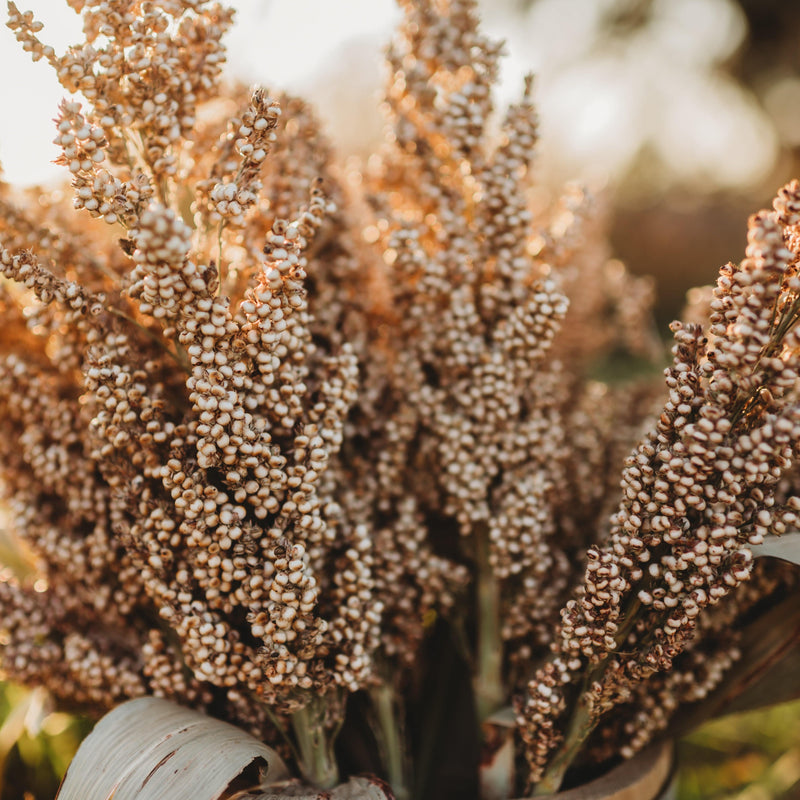
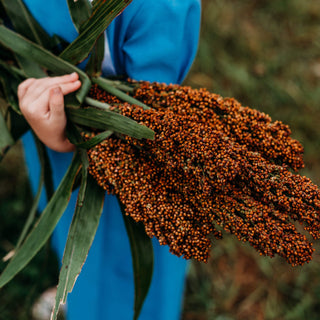
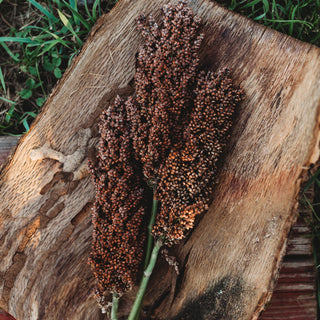
Tennessee Red is an heirloom broomcorn sorghum distinguished by its striking contrast of color and excellent field performance. Plants grow 8½–11 feet tall and produce fully exserted panicles that often reach up to 2 feet in length. The bristles mature to a warm golden, straw-like hue, setting off the bright red seeds in dramatic fashion. In our trials, the plants stood tall and upright with no notable lodging issues, even as the long heads matured—an impressive trait for a broomcorn with such generous panicles.
The history of Tennessee Red is well documented within the seed-saving community. It was acquired by Seed Savers Exchange through Glenn Drowns, who received the variety from Louise Bastab... More
Sorghum bicolor
Tennessee Red is an heirloom broomcorn sorghum distinguished by its striking contrast of color and excellent field performance. Plants grow 8½–11 feet tall and produce fully exserted panicles that often reach up to 2 feet in length. The bristles mature to a warm golden, straw-like hue, setting off the bright red seeds in dramatic fashion. In our trials, the plants stood tall and upright with no notable lodging issues, even as the long heads matured—an impressive trait for a broomcorn with such generous panicles.
The history of Tennessee Red is well documented within the seed-saving community. It was acquired by Seed Savers Exchange through Glenn Drowns, who received the variety from Louise Bastable of Massachusetts. Bastable, in turn, obtained it in 1988 from George Darby of Kentucky, who had acquired the broomcorn locally. The plants are notable for their extensive red pigmentation throughout, including red glumes that fully cover the grain, a characteristic that contributes color as well as identity to the finished brush.
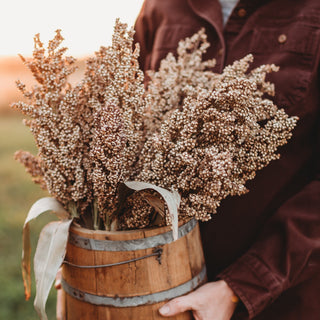
Tennessee Red is well suited to traditional broom-making, where its long, flexible bristles and red pigmentation add both function and visual interest. The golden heads and red seeds also make it an appealing choice for dried arrangements, where the contrast feels both refined and timeless. Like many heirloom broomcorns, Tennessee Red reflects an era when crops were valued not only for what they produced, but for how they looked and how they were used—practical plants that carried beauty right into the home. Matures approximately 110 days after sowing. Each packet contains a minimum of 100 seeds.
Sorghum bicolor
Tennessee Red is an heirloom broomcorn sorghum distinguished by its striking contrast of color and excellent field performance. Plants grow 8½–11 feet tall and produce fully exserted panicles that often reach up to 2 feet in length. The bristles mature to a warm golden, straw-like hue, setting off the bright red seeds in dramatic fashion. In our trials, the plants stood tall and upright with no notable lodging issues, even as the long heads matured—an impres... read more
Sorghum bicolor
Tennessee Red is an heirloom broomcorn sorghum distinguished by its striking contrast of color and excellent field performance. Plants grow 8½–11 feet tall and produce fully exserted panicles that often reach up to 2 feet in length. The bristles mature to a warm golden, straw-like hue, setting off the bright red seeds in dramatic fashion. In our trials, the plants stood tall and upright with no notable lodging issues, even as the long heads matured—an impressive trait for a broomcorn with such generous panicles.
The history of Tennessee Red is well documented within the seed-saving community. It was acquired by Seed Savers Exchange through Glenn Drowns, who received the variety from Louise Bastable of Massachusetts. Bastable, in turn, obtained it in 1988 from George Darby of Kentucky, who had acquired the broomcorn locally. The plants are notable for their extensive red pigmentation throughout, including red glumes that fully cover the grain, a characteristic that contributes color as well as identity to the finished brush.
Tennessee Red is well suited to traditional broom-making, where its long, flexible bristles and red pigmentation add both function and visual interest. The golden heads and red seeds also make it an appealing choice for dried arrangements, where the contrast feels both refined and timeless. Like many heirloom broomcorns, Tennessee Red reflects an era when crops were valued not only for what they produced, but for how they looked and how they were used—practical plants that carried beauty right into the home. Matures approximately 110 days after sowing. Each packet contains a minimum of 100 seeds.