We ship to the United States, its territories and outlying islands. Returns are accepted within 30 days of receipt. Full warranty information can be found here.






✓ Plant with Confidence—Guaranteed Through 2027
 Get it between -
Open-pollinated varieties, perfect for seed saving.
Safe seeds, free of neonics and other treatments.
It's simple. If you have a problem, we make it right.
Beta vulgaris
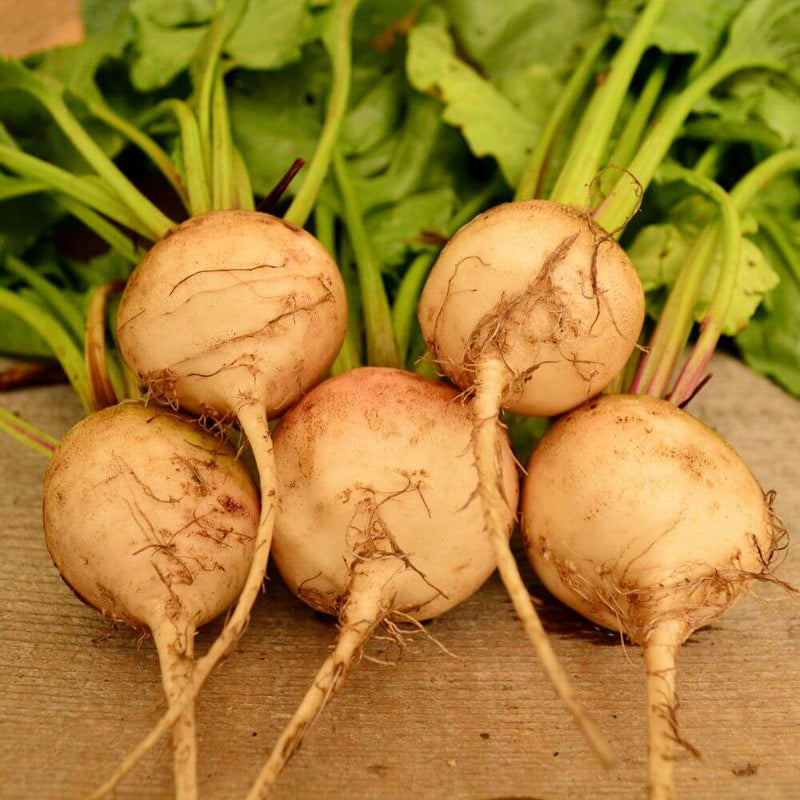
Albino Beet is a beautiful Dutch heirloom producing smooth, round, snow-white beets with tender flesh and an exceptionally sweet, mild flavor. Unlike traditional red beets, these unusual white beetroots have a delicate earthiness that makes them especially appealing to those who find conventional beets too strongly flavored. The roots typically reach 2–3 inches in diameter, with attractive green foliage that can also be harvested and enjoyed as beet greens.
Originating in the Netherlands, Albino is an old-fashioned, open-pollinated variety that has been preserved and shared among heirloom gardeners for generations. Its brilliant white coloring extends all the way through the roots, making it a stri... More
Beta vulgaris
Albino Beet is a beautiful Dutch heirloom producing smooth, round, snow-white beets with tender flesh and an exceptionally sweet, mild flavor. Unlike traditional red beets, these unusual white beetroots have a delicate earthiness that makes them especially appealing to those who find conventional beets too strongly flavored. The roots typically reach 2–3 inches in diameter, with attractive green foliage that can also be harvested and enjoyed as beet greens.
Originating in the Netherlands, Albino is an old-fashioned, open-pollinated variety that has been preserved and shared among heirloom gardeners for generations. Its brilliant white coloring extends all the way through the roots, making it a striking alternative to the familiar red and golden varieties. Best of all, Albino beets contain none of the red pigment responsible for staining cutting boards, hands, and other ingredients.
The tender, sweet roots are wonderful roasted, steamed, or sliced into colorful salads alongside other beet varieties. Their mild flavor also makes them an excellent choice for fresh eating, while the nutritious greens can be prepared much like Swiss chard. For gardeners looking for something a little different, Albino offers all the versatility of a traditional garden beet with a uniquely delicate flavor and beautiful, stain-free flesh. Approximately 55 days from sowing.
Beta vulgaris
Albino Beet is a beautiful Dutch heirloom producing smooth, round, snow-white beets with tender flesh and an exceptionally sweet, mild flavor. Unlike traditional red beets, these unusual white beetroots have a delicate earthiness that makes them especially appealing to those who find conventional beets too strongly flavored. The roots typically reach 2–3 inches in diameter, with attractive green foliage that can also be harvested and enjoyed as beet greens.read more
Beta vulgaris
Albino Beet is a beautiful Dutch heirloom producing smooth, round, snow-white beets with tender flesh and an exceptionally sweet, mild flavor. Unlike traditional red beets, these unusual white beetroots have a delicate earthiness that makes them especially appealing to those who find conventional beets too strongly flavored. The roots typically reach 2–3 inches in diameter, with attractive green foliage that can also be harvested and enjoyed as beet greens.
Originating in the Netherlands, Albino is an old-fashioned, open-pollinated variety that has been preserved and shared among heirloom gardeners for generations. Its brilliant white coloring extends all the way through the roots, making it a striking alternative to the familiar red and golden varieties. Best of all, Albino beets contain none of the red pigment responsible for staining cutting boards, hands, and other ingredients.
The tender, sweet roots are wonderful roasted, steamed, or sliced into colorful salads alongside other beet varieties. Their mild flavor also makes them an excellent choice for fresh eating, while the nutritious greens can be prepared much like Swiss chard. For gardeners looking for something a little different, Albino offers all the versatility of a traditional garden beet with a uniquely delicate flavor and beautiful, stain-free flesh. Approximately 55 days from sowing.