We ship to the United States, its territories and outlying islands. Returns are accepted within 30 days of receipt. Full warranty information can be found here.






✓ Plant with Confidence—Guaranteed Through 2027
 Get it between -
Open-pollinated varieties, perfect for seed saving.
Safe seeds, free of neonics and other treatments.
It's simple. If you have a problem, we make it right.
Lagenaria siceraria
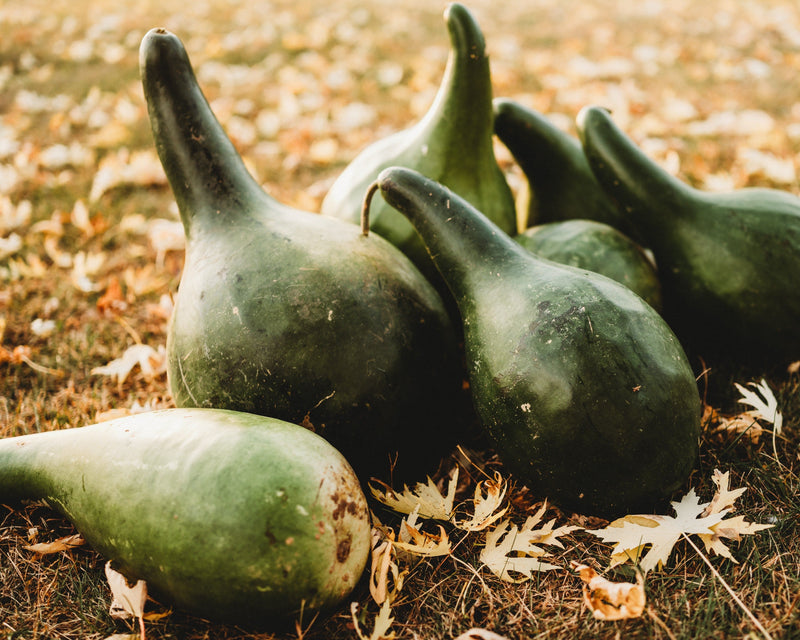
The Martinhouse Bottle Gourd is a specialty gourd variety that produces tall gourds with wide, round bowls that are popular for using as birdhouses for Purple Martins. A refined selection of the Birdhouse gourd, the Martin House Bottle Gourd features larger bowls and a non-pinched stem. They typically grow to 15 inches tall with 10-inch-wide bowls that provide ample space for the Martin parents and their growing hatchlings. Some natural variation may be present even within gourds on a single plant, so take care to select the gourds with the largest bowls as this will allow the parents to build their nest farther back and away from the reach of predators. A full guide on attracting and providing ... More
Lagenaria siceraria
The Martinhouse Bottle Gourd is a specialty gourd variety that produces tall gourds with wide, round bowls that are popular for using as birdhouses for Purple Martins. A refined selection of the Birdhouse gourd, the Martin House Bottle Gourd features larger bowls and a non-pinched stem. They typically grow to 15 inches tall with 10-inch-wide bowls that provide ample space for the Martin parents and their growing hatchlings. Some natural variation may be present even within gourds on a single plant, so take care to select the gourds with the largest bowls as this will allow the parents to build their nest farther back and away from the reach of predators. A full guide on attracting and providing housing for Purple Martins can be found here.
Helpful Hint: Trellis vines to encourage the development of straight necks.
For thousands of years—dating back to at least the times of Native Americans—humans have played an active role in providing housing for Purple Martins. Tribes of the southeastern United States, such as the Chocktaw and Chickasaw, would place gourds on tall poles to protect the nestlings from ground predators. This practice was later picked up by settlers and continues to this day. Over the years, Martins have formed a close relationship with humans and are now known to nest almost exclusively near human activity. As secondary cavity dwellers, they rely solely on existing cavities for building their nests, typically using human-made houses or hollow tree trunks.
Welcoming Purple Martins to your yard or garden can be a fun and rewarding activity as they are known for their acrobatic flight and musical pre-dawn songs. They are social birds and love to keep watch of their human hosts. In the winter, they will migrate to South America (usually Brazil or Bolivia) but will typically return to the same nesting location the following spring. Their homecoming is always an exciting event for the humans who joyfully share their space. The Martinhouse Bottle Gourd matures approximately 110 days after sowing. Vines grow 15-35 feet. Each packet contains a minimum of 25 seeds.
Lagenaria siceraria
The Martinhouse Bottle Gourd is a specialty gourd variety that produces tall gourds with wide, round bowls that are popular for using as birdhouses for Purple Martins. A refined selection of the Birdhouse gourd, the Martin House Bottle Gourd features larger bowls and a non-pinched stem. They typically grow to 15 inches tall with 10-inch-wide bowls that provide ample space for the Martin parents and their growing hatchlings. Some natural variation may ... read more
Lagenaria siceraria
The Martinhouse Bottle Gourd is a specialty gourd variety that produces tall gourds with wide, round bowls that are popular for using as birdhouses for Purple Martins. A refined selection of the Birdhouse gourd, the Martin House Bottle Gourd features larger bowls and a non-pinched stem. They typically grow to 15 inches tall with 10-inch-wide bowls that provide ample space for the Martin parents and their growing hatchlings. Some natural variation may be present even within gourds on a single plant, so take care to select the gourds with the largest bowls as this will allow the parents to build their nest farther back and away from the reach of predators. A full guide on attracting and providing housing for Purple Martins can be found here.
Helpful Hint: Trellis vines to encourage the development of straight necks.
For thousands of years—dating back to at least the times of Native Americans—humans have played an active role in providing housing for Purple Martins. Tribes of the southeastern United States, such as the Chocktaw and Chickasaw, would place gourds on tall poles to protect the nestlings from ground predators. This practice was later picked up by settlers and continues to this day. Over the years, Martins have formed a close relationship with humans and are now known to nest almost exclusively near human activity. As secondary cavity dwellers, they rely solely on existing cavities for building their nests, typically using human-made houses or hollow tree trunks.
Welcoming Purple Martins to your yard or garden can be a fun and rewarding activity as they are known for their acrobatic flight and musical pre-dawn songs. They are social birds and love to keep watch of their human hosts. In the winter, they will migrate to South America (usually Brazil or Bolivia) but will typically return to the same nesting location the following spring. Their homecoming is always an exciting event for the humans who joyfully share their space. The Martinhouse Bottle Gourd matures approximately 110 days after sowing. Vines grow 15-35 feet. Each packet contains a minimum of 25 seeds.